
WASHINGTON: For two decades, the entire world was under threat from an insidious group, which at its peak claimed the lives of thousands through a series of bombings and attacks, including the events of Sept. 11, 2001, which to this day remains the deadliest terror attack in history.
Al-Qaeda, once among the top terror threats in the world, has largely faded from relevance in recent years, with the last attack for which it claimed responsibility being a 2019 shooting at a naval air station in Florida that killed three and injured eight.
With its founder and leader Osama bin Laden shot to death in a US raid in Pakistan in 2011, his successor Ayman Al-Zawahiri killed by a US drone strike in Afghanistan last year, and multiple other senior leaders hunted down and arrested or slain, it seemed there was nowhere left for the group to hide.

Combo image showing Al-Qaeda leader Osama Bin Laden (L) and his successor Ayman al-Zawahiri, who were killed by US anti-terror operatives on May 2, 2011, and July 31, 2022. (AFP)
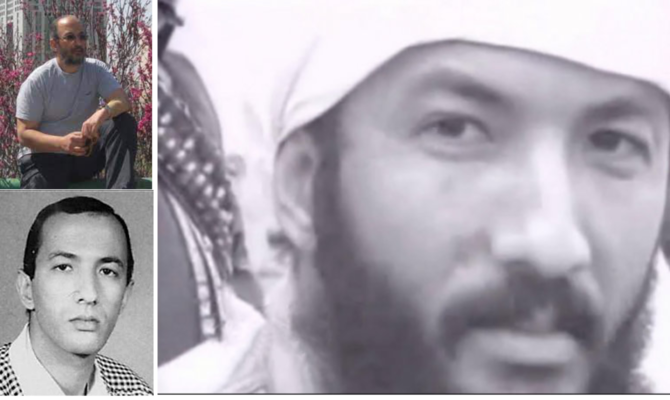
However, this presumption changed with a UN report published earlier this week. Prepared by the UN’s experts, it concluded that Saif Al-Adel, a former colonel in the Egyptian special forces and one of the last surviving lieutenants of bin Laden, is now the “de-facto leader” of the international terror group.
The report’s significance, however, was not limited to its identification of Al-Qaeda’s new leader. It revealed one of the reasons Al-Adel has managed to stay alive for so long: Shelter given to him by the Iranian government in Tehran.
Al-Adel was one of the terror group’s earliest members, having left Egypt for Afghanistan in 1988. There, he joined Maktab Al-Khidamat, an Al-Qaeda forerunner that was founded by bin Laden and Al-Zawahiri, among others. Having been an expert in explosives in the Egyptian military, Al-Adel trained members of the Taliban after the end of the Soviet-Afghan war.
There, he regularly conferred with bin Laden and Khalid Sheikh Mohammed, a man called “the principal architect of the 9/11 attacks” by the 9/11 Commission Report.
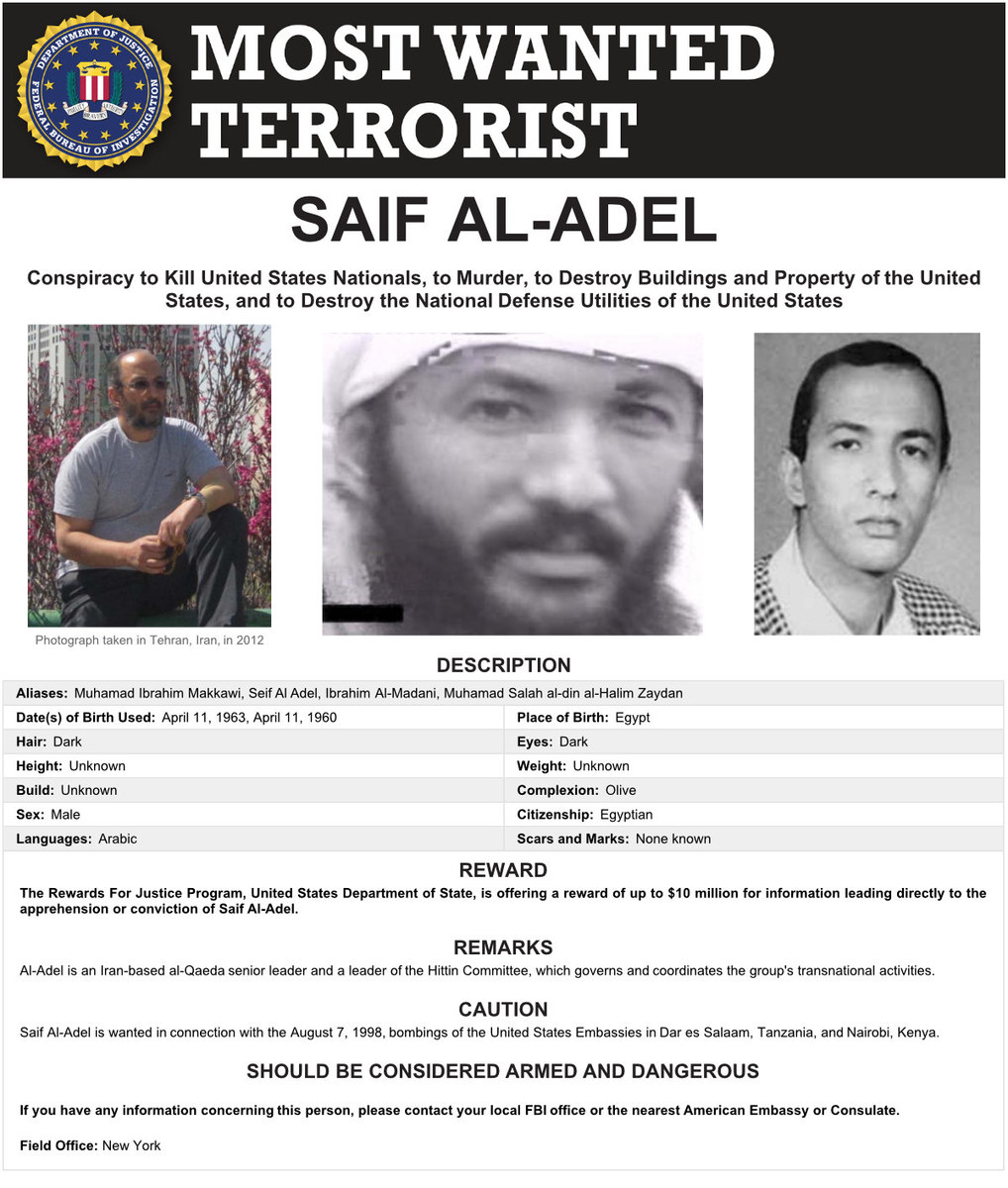
Al-Adel would eventually flee Afghanistan in late 2001 and set up shop in neighboring Iran following US military intervention in the former. Reports suggest that though he was officially under house arrest in Tehran, he was given relative freedom to travel to Pakistan and convene with high-ranking Al-Qaeda members since about 2010.
The UN report, based on member state intelligence, helps shed additional light on Al-Adel’s whereabouts. His presence in Iran, a country that technically claims it is adamantly opposed to Al-Qaeda and its offshoots, has helped the terror organization avoid total eradication.
“It is very significant that Saif Al-Adel — now the head of Al-Qaeda — lives and operates out of Tehran. The Iranian government has made a shrewd calculation that by hosting and enabling Al-Qaeda, it can both control the group and supercharge their efforts to attack Iran’s enemies,” former senior State Department official Gabriel Noronha told Arab News.
FASTFACTS
In 2021, then US Secretary of State Mike Pompeo said: “Tehran has allowed Al-Qaeda to fundraise, to freely communicate with Al-Qaeda members around the world, and to perform many other functions that were previously directed from Afghanistan or Pakistan.”
Other US officials believe Iran’s relationship with Al-Qaeda is transactional in nature, helping the terror group when it suits the leadership’s purposes, and cracking down on it at other times.
Al-Adel had a direct role in a number of deadly bomb plots, including planning the 1998 bombings of the US embassies in Dar es Salaam and Nairobi that killed more than 200 people. US and Saudi intelligence maintain that Al-Adel, while based in Tehran, provided instructions for the 2003 terror attack against three separate residential compounds in the Saudi capital Riyadh that killed 39 people.

A view of the US Embassy in in Nairobi, Kenya, days after after car bomb attack that killed at least 280 Kenyans and 12 Americans on August 7, 1998. (AFP file)
Now believed to be the high commander of Al-Qaeda, Al-Adel is using the relative safety of his base of operations in Iran to keep the terror group viable at a time when it has lost sanctuaries in other parts of the world.
“The State Department disclosed in January 2021 that Iran had provided Al-Adel and Al-Qaeda with a base of operations and logistical support, such as providing passports, to help facilitate Al-Qaeda’s terror plots. If they are left on their own, they will absolutely start conducting more terror attacks around the world. For now, they are regrouping, building more resources, recruits and capabilities,” Noronha said.
In 2020, a close associate of Al-Adel, Abu Muhammad Al-Masri, was reportedly eliminated by Israeli agents in Tehran. Al-Adel, however, remains at large.
Opinion
This section contains relevant reference points, placed in (Opinion field)
Al-Adel’s tactical prowess and expertise helped to propel Al-Qaeda into the international spotlight as one of the world’s most dangerous terror entities, and his presence in Iran would not be possible without authorization at the highest levels.
Iran’s Islamic Revolutionary Guard Corps, or IRGC, have used the presence of Al-Qaeda in the region — as well as that of Daesh, a splinter group from Al-Qaeda’s Iraq and Syria branch — as justification for the expansion of Iranian-backed forces in Iraq, Syria, and elsewhere in the Middle East.
However, experts say that this is a clear exercise in hypocrisy by Iran. Iranian officials have often carried out paramilitary campaigns and efforts to dominate governance in Iraq and Syria under the guise of fighting Al-Qaeda and Daesh.
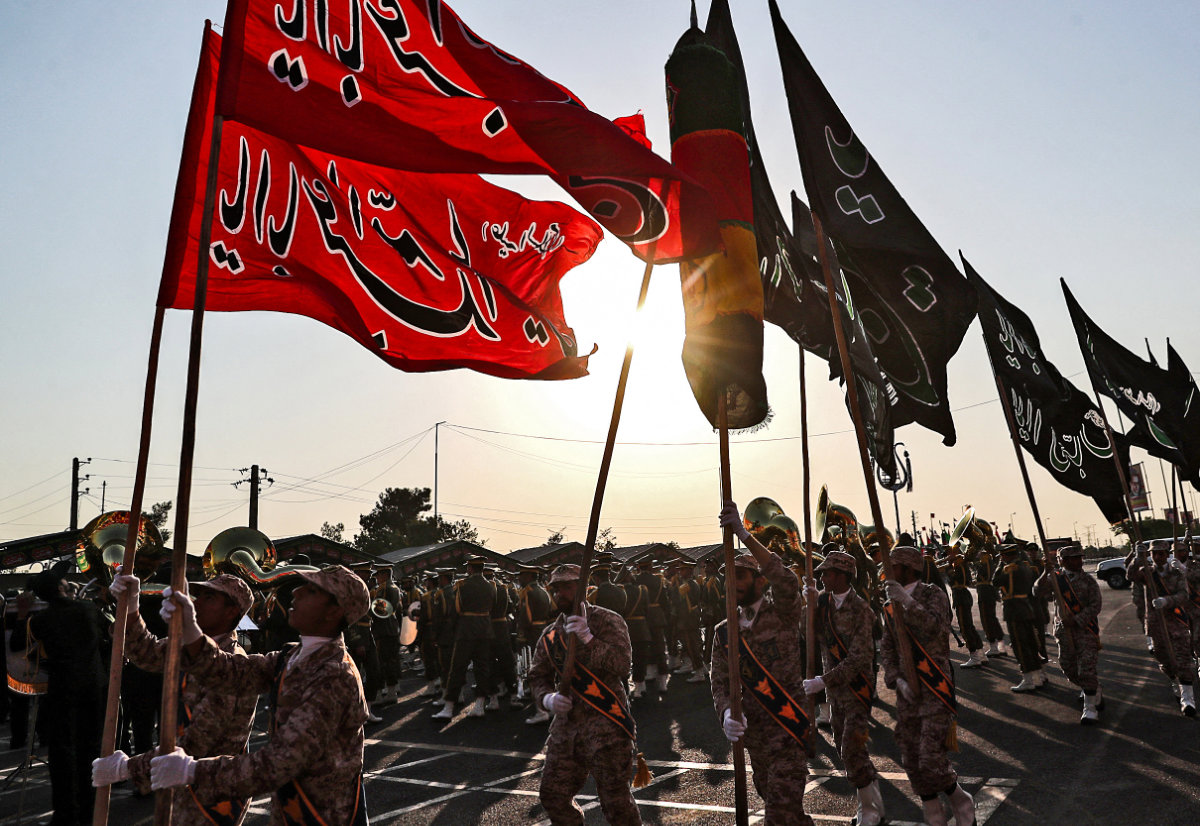
Members of Iran’s Islamic Revolutionary Guard Corps fly the flag during a military drill. (AFP)
“The Iranians constantly accuse the US, absurdly, of having created Daesh to attack them and of continuing to support Daesh, Fred Kagan, a scholar at the American Enterprise Institute, told Arab News. “This even though the Iranians themselves have benefited from the extensive US counterterrorism operations without which Daesh would still have a large and powerful territorial caliphate.
“The hypocrisy of the Islamic Republic really stands out, as it becomes more and more clear that Tehran has been harboring a very senior Al-Qaeda leader for many years.”
According to Western intelligence officials, another way in which Iran was able to play both sides in attempting to portray the IRGC and its proxies as fighting terror, while in reality enabling the expansion and activities of Al-Qaeda, was through Tehran’s facilitation of the transit of a number of key high-profile Al-Qaeda operatives from South Asia into Syria.
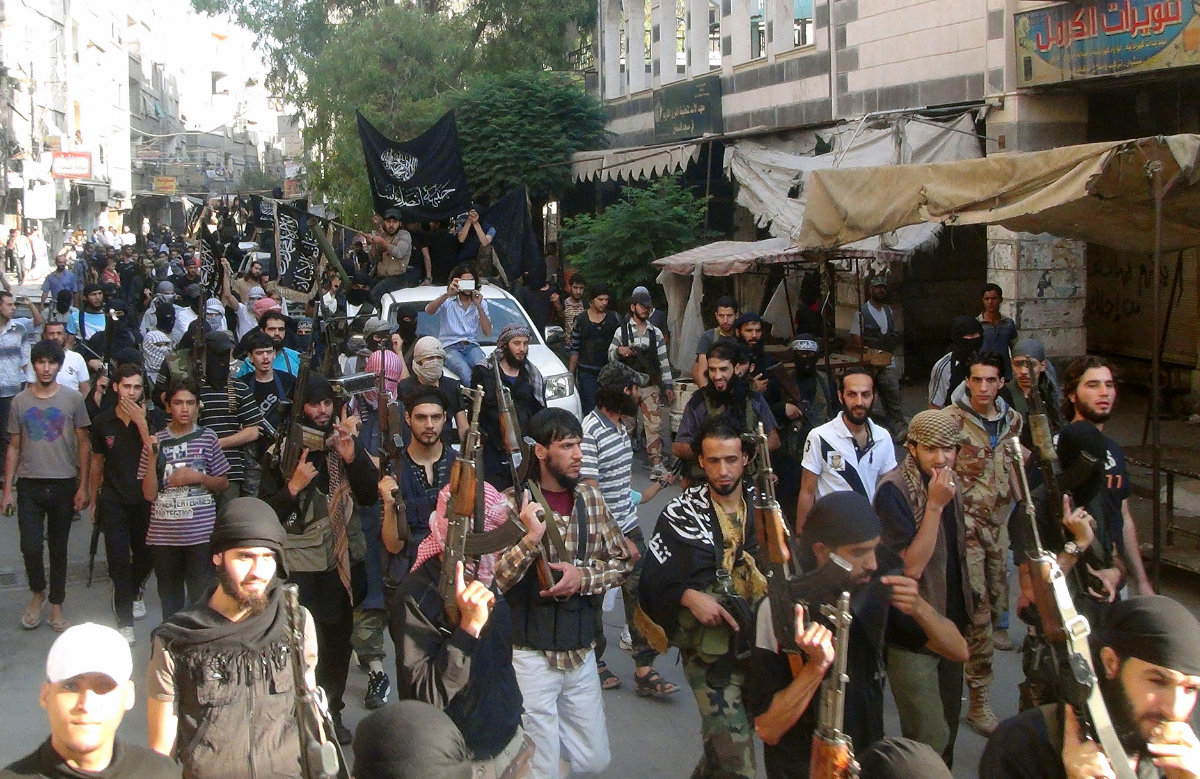
Fighters of the Al-Nusra Front, an affiliate of the Al-Qaeda group in Syria, parade at the Yarmuk Palestinian refugee camp, south of Damascus, on July 28, 2014. (AFP)
A 2012 press release from the Department of the Treasury stated that the then-leader of Al-Qaeda’s Iran network, Muhsin Al-Fadlhi, ran “a core pipeline” of funding and fighters that were sent to Syria. David S. Cohen, the US undersecretary for terrorism and financial intelligence at the time, confirmed what he called “Iran’s ongoing complicity in this network’s operation.”
Al-Fadhli himself was killed in a US airstrike in Syria’s Idlib governorate in 2015. The recent UN report has re-ignited the public conversation on just how deeply embedded Iran’s relationship with Al-Qaeda could have been for years.
A report by nonprofit group United Against a Nuclear Iran stated: “An intercepted letter reportedly sent to the IRGC in 2008 by Ayman Al-Zawahiri, Al-Qaeda’s current leader, revealed an even deeper relationship between Iran and Al-Qaeda than previously thought.”
Iran’s motive seems to be broader in scope. For a time, Al-Qaeda posed a serious threat to Arab Gulf States, the Levant and North Africa, and was able to establish various “franchises” in sub-Saharan Africa.
“The Islamic Republic of Iran wants to weaken and divide Sunni governments. What better way to do that than by empowering the most radical Sunni factions so they can undermine governments from within?” Noronha said.
In comments to the Voice of America’s news website, Edmund Fitton-Brown, a former senior UN counterterrorism official who is now an adviser to the nonprofit Counter Extremism Project, said: “The presence of Al-Qaeda in Iran is a sort of a chip that the Iranians have. They’re not entirely sure how or when they might play it but . . . it was something that they considered to have potential value.”
Unsurprisingly, Iran continues to deny its relationship with Al-Qaeda. Rejecting the UN report, the country’s permanent mission to the UN in New York said on Feb. 13: “It is worth noting that the address for the so-called newly appointed Al-Qaeda leader is incorrect.” Dismissing the findings as “misinformation,” the Iranians said they could “potentially hinder efforts to combat terrorism.”
Of course, publicly revealing the extent of support provided by Iran’s extraterritorial unconventional warfare and military intelligence arm, Quds Force, to a group that has killed thousands of Sunni and Shiite Muslims throughout the world, would be politically embarrassing, exposing a cynical streak in the regime’s driving ideology.
The UN report is a reminder that at a time when Al-Qaeda is facing irrelevance with its top leadership dwindling, a sanctuary in Tehran has thrown it a welcoming lifeline.