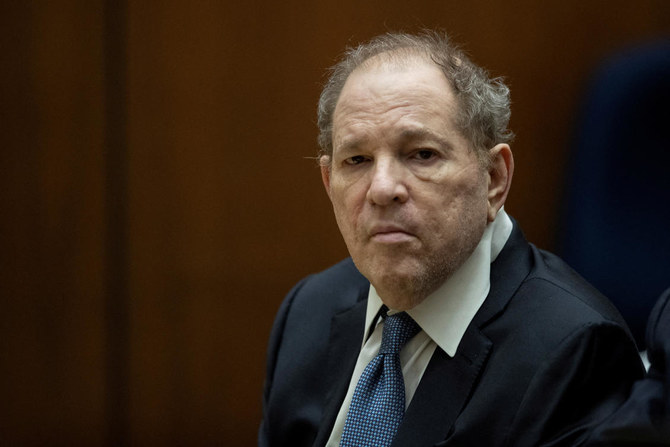
LOS ANGELES: A Los Angeles judge on Thursday sentenced Harvey Weinstein to 16 years in prison after a jury convicted him of the 2013 rape and sexual assault of an Italian actor and model.
The sentence comes on top of the more than 20 years the 70-year-old Weinstein has left to serve for a similar 2020 conviction in New York, furthering the fall of the onetime movie magnate who became a #MeToo magnet.
Weinstein directly appealed to Los Angeles Superior Court Judge Lisa B. Lench, saying: “I maintain that I’m innocent. I never raped or sexually assaulted Jane Doe 1.” The woman who Weinstein was convicted of raping sobbed in the courtroom as he spoke.
Moments earlier she had told the judge about the pain she felt after being attacked by Weinstein. “Before that night I was a very happy and confident woman. I valued myself and the relationship I had with God,” the woman, who was identified in court only as Jane Doe 1, said. “I was excited about my future. Everything changed after the defendant brutally assaulted me. There is no prison sentence long enough to undo the damage.”
Lench handed down the sentence Thursday after rejecting a motion by Weinstein’s lawyers for a new trial.
Jurors in December convicted Weinstein of one count of rape and two counts of sexual assault against the woman who at the trial’s opening in October gave a dramatic and emotional account of him arriving uninvited at her hotel room, talking his way in and assaulting her during a film festival.
The jury spared Weinstein an even longer sentence when they acquitted him of the sexual battery of a massage therapist and failed to reach verdicts on counts involving two other women.
The defense contended during the trial that Weinstein had consensual sex with two of the women he was charged with assaulting and that two others — including the one who led to his conviction — were making up the incidents entirely.
Last week, Lench rejected a request from Gloria Allred, an attorney for some of the women who testified at trial, to allow others to make similar statements in court about the man who has for five years been a magnet for the #MeToo movement.
“I’m not going to make this an open forum on Mr. Weinstein’s conduct,” Lench said at the time.
The Associated Press does not typically name people who say they have been sexually assaulted.
Legal uncertainties will remain on both coasts for Weinstein.
New York’s highest court has agreed to hear his appeal in his rape and sexual assault convictions there. And prosecutors in Los Angeles have yet to say whether they will retry Weinstein on counts they were unable to reach a verdict on.
It is not yet clear where he will serve his time while these issues are decided.
His New York sentence would be served before a California prison term, though a retrial or other issues could keep him from being sent back there soon.
Weinstein is eligible for parole in New York in 2039.


![]()

Harvey Weinstein gets 16 years for rape, sexual assault
Short Url
https://arab.news/99zg3
Harvey Weinstein gets 16 years for rape, sexual assault
- Victim spoke about the trauma of the attack and urged the judge to sentence Weinstein to the maximum term


Latest updates


Recommended


© 2026 SAUDI RESEARCH & PUBLISHING COMPANY, All Rights Reserved And subject to Terms of Use Agreement.