

Egypt records highest-level foreign direct investment  

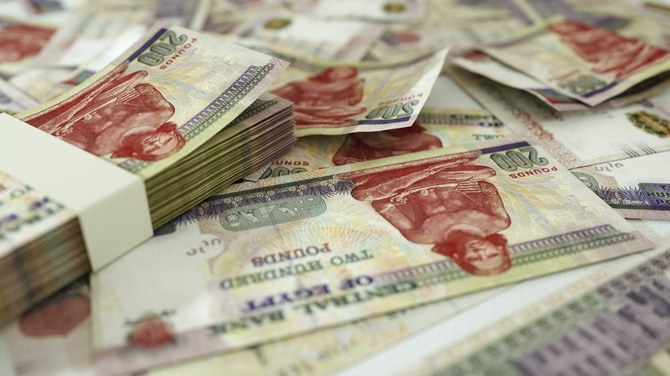
The Prime Minister said in a press conference that the country recorded a 94 percent growth in foreign investment on a year-on-year basis. (Shutterstock)
Short Url
Updated 23 February 2023
Follow

Egypt records highest-level foreign direct investment  

RIYADH: Egypt recorded the highest-ever foreign direct investment in a single quarter during July to September 2022, amounting to $3.3 billion, according to the country’s Prime Minister Mostafa Madbouly. 

The Prime Minister said in a press conference that the country recorded a 94 percent growth in foreign investment on a year-on-year basis.  

Foreign direct investments in Egypt during the last fiscal year, 2021-2022, reached the highest in 10 years amounting to $8.9 billion.  

Egypt’s economy has been experiencing turbulence ever since the Russian invasion of Ukraine resulting in a rise in oil and commodity prices.  

In December, the International Monetary Fund agreed to provide Egypt with $3 billion through a 46-month agreement within the Extended Fund Facility framework.  

The decision made it possible to disburse an immediate payment of $347 million to help meet the needs of the balance of payments and support the budget.  

The IMF expected the agreement to encourage investments into the country worth approximately $14 billion from international and regional partners including Gulf countries.  

Gulf allies pledged Egypt with $20 billion in deposits and investments to support the country’s economy.  

The Egyptian currency was devalued by 22 percent against the US dollar in January 2023, increasing losses to 93 percent over the preceding 12 months as a result of the IMF’s terms to leave the exchange rate of the local currency flexible.

“The permanent shift to a flexible exchange rate system will mitigate the severity of external shocks and prevent the re-emergence of imbalances and will allow monetary policy to focus on reducing inflation gradually,” Kristalina Georgieva, managing director of the IMF, said in a statement.  

She added that structural reforms will also help reduce the state’s footprint as well as ensure fair competition between the public and private sectors, promoting the private sector, and enhancing governance and transparency.  

Moreover, the IMF estimates that Egypt will face an external financing gap of $16 billion in the next 46 months.  


Reforms target sustained growth in Saudi real estate sector, says Al-Hogail

Updated 26 January 2026
Follow

Reforms target sustained growth in Saudi real estate sector, says Al-Hogail

RIYADH: The Real Estate Future Forum opened its doors for its first day at the Four Seasons Riyadh, with prominent global and local figures coming together to engage with one of the Kingdom’s most prospering sectors.

With new regulations, laws, and investments underway, 2026 is expected to be a year of momentous progress for the real estate sector in the Kingdom.

The forum opened with a video highlighting the sector’s progress in the Kingdom, during which an emphasis was placed on the forum’s ability to create global reach, representation, as well as agreements worth a cumulative $50 billion

With the Kingdom now opening up real estate ownership to foreigners, this year’s Real Estate Future Forum is placing a great deal of importance on this new milestone and its desired outcomes and impact on the market. 

Aside from this year’s forum’s unique discussions surrounding those developments, it will also be the first of its kind to launch the Real Estate Excellence Award and announce its finalist during the three-day summit.

Minister of Municipalities and Housing and Chairman of the Real Estate General Authority Majed Al-Hogail took to stage to address the diverse audience on the real estate market’s achievements thus far and its milestones to come.

Of those important milestones, he underscored “real estate balance” as a key pillar of the sector’s decisions to implement regulatory tools “with the aim of constant growth which can maintain the vitality of this sector.” He pointed to examples of those regulatory measures, such as the White Land Tax.

On 2025’s progress, the minister highlighted the jump in Saudi family home ownership, which went from 47 percent in 2016 to 66 percent in 2025, keeping the Kingdom’s Vision 2030 goal of 70 percent by the end of the decade on track.

He said the opening of the real estate market to foreigners is an indicator of the sector’s maturity under the leadership of Crown Prince Mohammed bin Salman. He said his ministry plans to build over 300,000 housing units in Riyadh over the next three years.

Speaking to Arab News,  Al-Hogail elaborated on these achievements, stating: “Today, demand, especially local demand, has grown significantly. The mortgage market has reached record levels, exceeding SR900 billion ($240 billion) in mortgage financing, we are now seeing SRC (Saudi Real Estate Refinance Co.) injecting both local and foreign liquidity on a large scale, reaching more than SR54 billion”

Al-Hogail described Makkah and Madinah as unique and special points in the Kingdom’s real estate market as he spoke of the sector’s attractiveness.

 “Today, the Kingdom of Saudi Arabia has become, in international investment indices, one that takes a good share of the Middle East, and based on this, many real estate investment portfolios have begun to come in,” he said. 

Al-Ahsa Gov. Prince Saud bin Talal bin Badr Al-Saud told Arab News the Kingdom’s ability to balance both heritage sites with real estate is one of its strengths.

He said: “Actually the real estate market supports the whole infrastructure … the whole ecosystem goes back together in the foundation of the real estate; if we have the right infrastructure we can leverage more on tourism plus we can leverage more on the quality of life … we’re looking at 2030, this is the vision … to have the right infrastructure the time for more investors to come in real estate, entertainment, plus tourism and culture.”