

Egypt to sell stakes in state-owned hotels once assessment process is complete: Minister

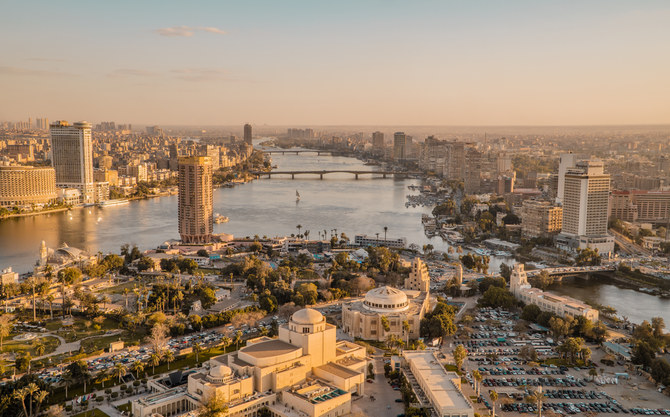
Panorama view of the Nile with Cairo Opera, hotels, and Cairo skyline in the background at sundown (Shutterstock)
Short Url
Updated 22 February 2023
Follow

Egypt to sell stakes in state-owned hotels once assessment process is complete: Minister

RIYADH: International companies are determining the value of Egypt’s state-owned hotels before the government sells stakes in these properties to strategic investors, according to the country’s public enterprise sector minister.

The sale of state assets gained new urgency after the war in Ukraine triggered heavy foreign investment outflows from Egyptian financial markets.

“A private company was established, with the holding companies of the tourism and hotels sector, along with the Egyptian General Company for Tourism and Hotels, having a large share in it. This move aims to transfer the government hotels to the newly established company,” Mahmoud Esmat said in an interview with Asharq.

He added: “The Sovereign Fund of Egypt is working on marketing the government hotels. It has also offered 20 percent of these assets to strategic investors, along with stakes in the stock market.”

Esmat said that the new company was established with a capital of 10 million Egyptian pounds ($326,700), explaining that “the capital will increase once the government hotels assessment process is done and the fair value is determined.” 

According to a report in Zawya, the state-run hotels that are up for sale are Cairo Marriott Hotel, Sofitel Legend Old Cataract in Aswan, Marriott Mena House, Sofitel Winter Palace Luxor, Steigenberger Cecil Alexandria, Mövenpick Aswan, and “Elephantine” Aswan.

This is a new step that confirms what Prime Minister Mostafa Madbouly announced in June 2022 that “a number of hotels will be merged in preparation to be listed on the stock exchange, in order to expand the governance of government institutions.”

The sale of these hotels forms part of Egypt’s effort to enhance the participation of the private sector to accelerate the pace of economic growth and attract foreign investments at a time when the country is suffering from a lack of hard currency.


Saudi Arabia, Japan trade rises 38% between 2016 and 2024, minister says

Updated 11 January 2026
Follow

Saudi Arabia, Japan trade rises 38% between 2016 and 2024, minister says

RIYADH: Trade between Saudi Arabia and Japan has increased by 38 percent between 2016 and 2024 to reach SR138 billion ($36 billion), the Kingdom’s investment minister revealed.

Speaking at the Saudi-Japanese Ministerial Investment Forum 2026, Khalid Al-Falih explained that this makes the Asian country the Kingdom’s third-largest trading partner, according to Asharq Bloomberg.

This falls in line with the fact that Saudi Arabia has been a very important country for Japan from the viewpoint of its energy security, having been a stable supplier of crude oil for many years.

It also aligns well with how Japan is fully committed to supporting Vision 2030 by sharing its knowledge and advanced technologies.

“This trade is dominated by the Kingdom's exports of energy products, specifically oil, gas, and their derivatives. We certainly look forward to the Saudi private sector increasing trade with Japan, particularly in high-tech Japanese products,” Al-Falih said.

He added: “As for investment, Japanese investment in the Kingdom is good and strong, but we look forward to raising the level of Japanese investments in the Kingdom. Today, the Kingdom offers promising opportunities for Japanese companies in several fields, including the traditional sector that links the two economies: energy.”

The minister went on to note that additional sectors that both countries can also collaborate in include green and blue hydrogen, investments in advanced industries, health, food security, innovation, entrepreneurship, among others.

During his speech, Al-Falih shed light on how the Kingdom’s pavilion at Expo 2025 in Osaka achieved remarkable success, with the exhibition receiving more than 3 million visitors, reflecting the Japanese public’s interest in Saudi Arabia.

“The pavilion also organized approximately 700 new business events, several each day, including 88 major investment events led by the Ministry of Investment. Today, as we prepare for the upcoming Expo 2030, we look forward to building upon Japan’s achievements,” he said.

The minister added: “During our visit to Japan, we agreed to establish a partnership to transfer the remarkable Japanese experience from Expo Osaka 2025 to Expo Riyadh 2030. I am certain that the Japanese pavilion at Expo Riyadh will rival the Saudi pavilion at Expo Osaka in terms of organization, innovation, and visitor turnout.”

Al-Falih also shed light on how Saudi-Japanese relations celebrated their 70th anniversary last year, and today marks the 71st year of these relations as well as how they have flourished over the decades, moving from one strategic level to an even higher one.