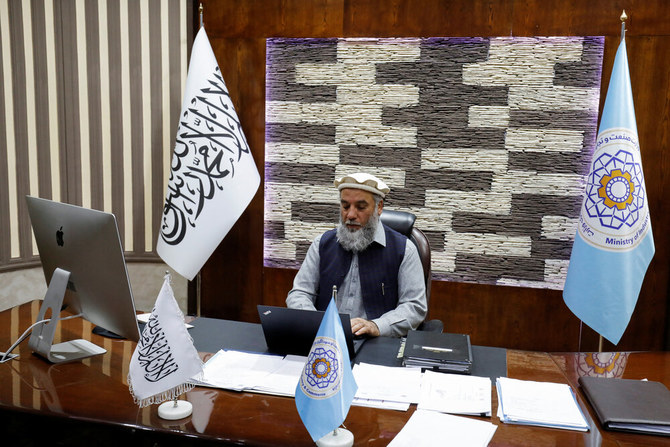
KABUL: Afghanistan’s Taliban-led administration has set up a consortium of companies, including some in Russia, Iran and Pakistan, to create a investment plan focusing on power, mining and infrastructure, the acting commerce minister said on Wednesday.
The consortium included 14 Afghan businessmen and his ministry had signed a memorandum of understanding with the foreign companies who would send delegates to Kabul to look into projects worth up to $1 billion, Nooruddin Azizi told Reuters.
Afghanistan’s economy has been severely hampered since the Taliban took over in 2021, sparking the international community to cut most development funding and enforce sanctions on the banking sector.
A series of attacks waged by Daesh against foreign targets has also worried some investors.
Azizi said the administration was focused on launching several longterm business plans including the consortium and special economic zones, and that it was working on ensuring security.
“Lots of discussions on security have taken place in cabinet meetings also, commissions have been established and ... the hiding places (of militants) have been destroyed,” he said.
“The Islamic Emirate will ensure security and will support the private sector in the security field,” he said, referring to the Taliban administration.
As well as mining and power projects, he said the consortium was eyeing the possibility of building a second tunnel through the Salang pass that connects Afghanistan’s north to the rest of the country, and a project to divert water from northern Panjshir province to the capital as well as re-building the main highway connecting Kabul to western Herat province.
The minister said the Taliban administration was planning to focus on building special economic zones it hoped would attract foreign investment.
His ministry has helped develop a plan to convert foreign bases into the zones, and a board was being set up with representatives of different ministries. He declined to elaborate while the details were finalized with other ministries and senior leadership.
Shipments of oil, gas and wheat under a major deal with Russia last year had begun arriving in Afghanistan by road and rail through Central Asia, he said, after the payments were made via banking channels despite sanctions that have limited many international payments.
He did not elaborate on which banks had facilitated the payment.


![]()

Taliban sets up investment consortium with firms from Russia, Iran
Short Url
https://arab.news/bf4kv
Taliban sets up investment consortium with firms from Russia, Iran
- Afghanistan's economy has been severely hampered since the Taliban took over in 2021
- Azizi said the administration was focused on launching several longterm business plans including the consortium and special economic zones


Latest updates


© 2026 SAUDI RESEARCH & PUBLISHING COMPANY, All Rights Reserved And subject to Terms of Use Agreement.