



DUBAI: Japan was looking to expand its links with Gulf Cooperation Council countries way beyond its importation of oil and gas, a top Japanese government official has said.
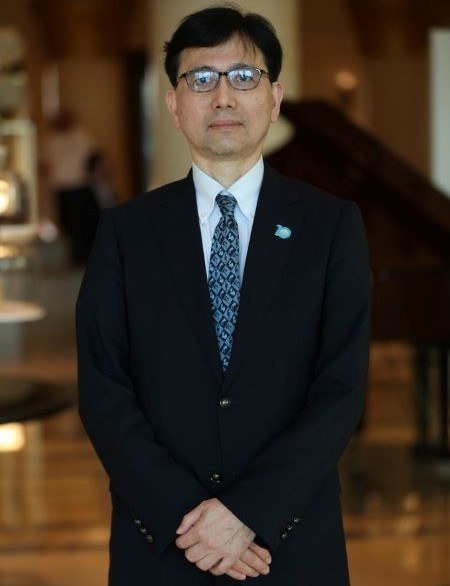
Speaking on the sidelines of the World Government Summit in Dubai, Japanese Cabinet Secretary for Public Affairs Noriyuki Shikata told Arab News that his country aimed to diversify into using other sources of energy.
Japan receives more than 90 percent of its oil from Gulf states, with Saudi Arabia supplying 40 percent and the UAE 35 percent. In addition, 17 percent of its gas comes from the GCC, with Qatar providing 12 percent, Oman 3 percent, and the UAE the remainder.
Shikata said: “We wish to broaden our ties with GCC countries beyond energy. Beyond importing oil and gas. So, in terms of Japanese energy policy, we need to make use of all energy sources, including nuclear power plants.
“My prime minister announced his intention to introduce the next generation of nuclear power plants.”
He noted the importance of renewable energy, adding that Japan was already in talks with Australia and Canada on hydrogen projects. “But for the future, as GCC countries trying to realize energy transition, including hydrogen, we will be very much interested in cooperation.”
On GCC relations, he said: “For Japan, the peace and stability of the Gulf countries is extremely important. In Saudi Arabia we have maintained very close and friendly ties, and also with the UAE.”
Shikata pointed out that Japan was also interested in scientific and technological cooperation and innovation with the region, and he congratulated Saudi astronauts Ali Alqarni and Rayyanah Barnawi on being selected to join the Ax-2 mission to the International Space Station.
“Japan looks forward to promoting further cooperation in the field of space between Japan and Saudi Arabia,” he added.
Japan has previously worked with the UAE, which last year sent a satellite into space in cooperation with the Japanese Aerospace Exploration Agency.
Meanwhile, Japan was quick to send aid, medics, and search and rescue teams following the recent devastating earthquakes in Turkiye and Syria.
Around 150 Japanese workers are currently helping with the international rescue operation and Tokyo has dispatched plane loads of medical equipment, medicines, tents, blankets, and other supplies to the areas hit by the quake.
Shikata said: “Japan has suffered from various natural disasters, particularly quakes, tsunami, and typhoons. So, we have very strong sympathy for those people who are suffering in Turkey and Syria.
“And so, we are committed to helping those affected in both countries in the maximum fashion.”
Japan, situated in an area of major seismic activity, was keen to share its expertise in mitigating the levels of death and destruction caused by such occurrences.
“Obviously we’re still in the aid, rescue, and recovery operation stage here. But at some point, Turkey will be looking at rebuilding,” he added.
He noted that the situation in Syria was more difficult but said the current priority was to ensure those affected had access to clean water and power.
“But in the medium to long term, there’s a need to come up with sustainable reconstruction. And this is something we have gone through.
“It could take several years for the region to be reconstructed. If they need our support for the creation of resilient buildings, which could stand strong quakes, we are ready to support the reconstruction process with our experts,” he added.
Separately, during the height of the coronavirus pandemic, Japan imposed strict rules on entry to the country, but most health and safety measures have now been eased.
Shikata said the Japanese government was still advising but not enforcing the wearing of masks on trains and busses, and in other busy public places.
There was also no longer a requirement for visitors to have a PCR test before traveling to Japan – although some restrictions remained in place for visitors from China.
As the only Asian country in the intergovernmental Group of Seven political forum, Shikata highlighted the importance of building relations with other nations in Asia.


