


KABUL: Major differences have emerged within the Taliban leadership in Afghanistan, experts said on Monday, after a senior official described the country’s situation as “intolerable” over the weekend.
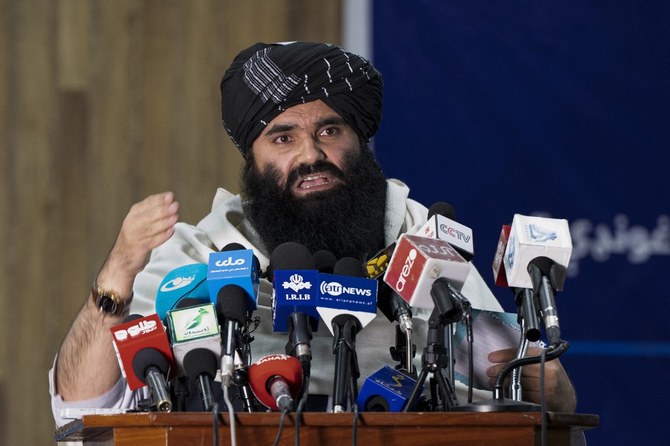
Acting Interior Minister Sirajuddin Haqqani is in the spotlight following a critical comment on the current situation in Afghanistan during a public event on Saturday.
“The current situation is intolerable. If the public situation becomes worse and unstable, it is our responsibility to bring them closer to us,” Haqqani said.
The statement comes as Afghanistan plunges deeper into a humanitarian and economic crisis following the Taliban takeover in 2021. It also follows increasingly restrictive edicts targeting women that are seen as further isolating the country from the international community.
The minister’s remarks prompted a response from Taliban spokesman Zabiullah Mujahid, who said that criticism of any leader or official should be said in private.
The latest developments, experts said, show how the Taliban are facing major differences within their leadership.
The Taliban are divided into two factions, said Hamza Momain Hakimi, a political science lecturer at the Salam University in Kabul.
One faction represents a minority but comprises powerful members, who hold important positions in Afghanistan and are “imposing their own narrow narrative from Islam,” Hakimi told Arab News.
The other faction represents a vast majority, he said, which refuses the minority opinion on many issues, including women’s role in Afghan society and policies related to their work and education.
“Such a statement from powerful people like Sirajuddin Haqqani shows clearly that there are factions within the Taliban,” Hakimi said. “There is a majority and there is a minority, but unfortunately, that minority is more powerful than the majority.”
Haqqani’s remarks also conveyed the concerns of the Afghan people, said Mohibullah Sharif, an Afghan political expert based in Kabul.
“Those are words and meanings that express what the Afghan people want,” Sharif told Arab News. “There is no doubt that there was a clear difference in the Islamic and political view of the leaders of the Taliban movement and currently among the leading personalities of the Islamic Emirate of Afghanistan.”
Experts say these emerging differences might pave way for an internal conflict.
“The Afghan people want these differences between the leading personalities to end easily and safely because the problems between them will lead to a serious conflict in the country and Afghanistan will return to the civil war that occurred in the 90s,” Sharif said.
Sayed Baheir Sadat, an Afghan expert based in Germany, said the division within the Taliban is a big problem for the group and could potentially increase.
“This could again signal the risk of an internal war between Afghans,” Sadat told Arab News.
“If the Taliban want to take over the government and the people, they should engage with internal and international standards, so that they may have the world’s support,” Sadat added. “Otherwise, it will collapse soon.”


