Crisis-hit Pakistan’s macro-economic indicators 

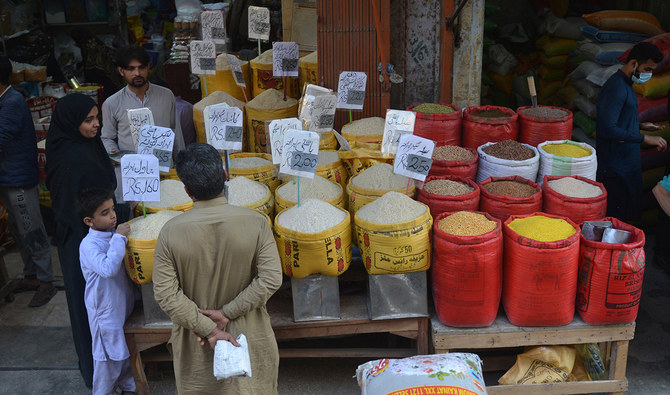
People buy pulses and grains at a wholesale market in Karachi on February 1, 2023. (Photo courtesy: AFP/FILE)
Short Url
Updated 10 February 2023
Follow

Crisis-hit Pakistan’s macro-economic indicators 

  • Pakistan’s foreign exchange reserves have fallen to the lowest level in 10 years 
  • Inflation, current account deficit, currency depreciation remain other top issues 

The International Monetary Fund has asked for more time for negotiations with Pakistan over a deal that would unlock much-needed funds from a $6.5 billion program. 

Below are four key economic indicators of the cash-strapped country. 

Forex reserves 

Pakistan’s foreign exchange reserves have fallen to the lowest level in 10 years and cover only three weeks’ worth of imports. In the week ending Jan. 27, the central bank’s foreign currency reserves shrank to $3.09 billion, down $592 million from previous week. 

Inflation 

Inflation has averaged at a record high 25.4 percent for the seven months of the current fiscal year that started last July compared to 10.3 percent in the same period in the previous fiscal year. The consumer price index rose 27.5 percent year-on-year in January, the highest in nearly half a century. 

Last month, the central bank raised its key interest rate by 100 basis points to 17 percent in a bid to rein in persistently high inflation, and said achieving price stability was key to attaining sustainable economic growth in the future. The bank has raised the key rate by a total 725 bps since January 2022. 

Current account deficit 

Pakistan’s current account deficit shrank to around $400 million in December 2022 from $1.9 billion a year earlier, as the government slashed imports in a bid to avert an external payments crisis. 

Pakistani rupee 

The rupee reached a record low of 276.58 to the dollar in the inter-bank market on Feb. 3. The rupee has dropped over 35 percent in the last 12 months. 


Pakistan nears $1.5 billion deal to supply weapons, jets to Sudan

Updated 09 January 2026
Follow

Pakistan nears $1.5 billion deal to supply weapons, jets to Sudan

  • Deal may include drones, air defense systems and Karakoram-8 aircraft, with possible JF-17 fighters
  • The sale is expected to bolster Sudan’s army in the ongoing civil war with the Rapid Support Forces

ISLAMABAD: Pakistan is in the final phases of striking a $1.5-billion deal to supply weapons and jets to Sudan, a former top air force official and three sources said, promising a major boost for Sudan’s army, battling the paramilitary Rapid Support Forces.

Their conflict has stoked the world’s worst humanitarian crisis for more than 2-1/2 years, drawing in myriad foreign interests, and threatening to fragment the strategic Red Sea country, a major gold producer.

The deal with Pakistan encompasses 10 Karakoram-8 light attack aircraft, more than 200 drones for scouting and kamikaze attacks, and advanced air defense systems, said two of the three sources with knowledge of the matter, who all sought anonymity.

It was a “done deal,” said Aamir Masood, a retired Pakistani air marshal who continues to be briefed on air force matters.

Besides the Karakoram-8 jets, it includes Super Mushshak training aircraft, and perhaps ‌some coveted JF-17 ‌fighters developed jointly with China and produced in Pakistan, he added, without giving figures ‌or ⁠a delivery ‌schedule.

Pakistan’s military and its defense ministry did not immediately respond to requests for comment.

A spokesman for Sudan’s army did not immediately respond to a message requesting comment.

Assistance from Pakistan, especially drones and jets, could help Sudan’s army regain the air supremacy it had toward the start of its war with the RSF, which has increasingly used drones to gain territory, eroding the army’s position.

PAKISTAN’S DEFENSE AMBITIONS

The deal is another feather in the cap for Pakistan’s growing defense sector, which has drawn growing interest and investment, particularly since its jets were deployed in a conflict with India last year.

Last month, Islamabad struck a weapons deal worth more than $4 billion with the Libyan National Army, officials said, for one of the South Asian nation’s largest arms sales, which includes JF-17 fighter jets and training aircraft.

Pakistan has also held talks with Bangladesh on a defense deal that could includes the Super Mushshak training jets and JF-17s, as ties improve ties with Dhaka.

The government sees Pakistan’s burgeoning industry as a catalyst to secure long-term economic stability.

Pakistan is now in a $7-billion IMF program, following a short-term ‌deal to avert a sovereign default in 2023. It won IMF support after Saudi Arabia and other Gulf allies provided financial and deposit rollovers.