
RIYADH: What is a creative economy? The term has become a buzzword in today’s world — one that places culture and imagination at the crux of economic and technological expansion.
British author John Howkins first coined the term in 2001 to describe the economic systems where value is reflective of imaginative qualities rather than the traditional resources of labor, land, and capital.
Howkins applied the term to cultural goods, arts, research and development, toys, and games. Observers such as Howkins believe that creativity is an intrinsic characteristic of 21st century economies — similar to how manufacturing defined economies of the 19th and 20th centuries.
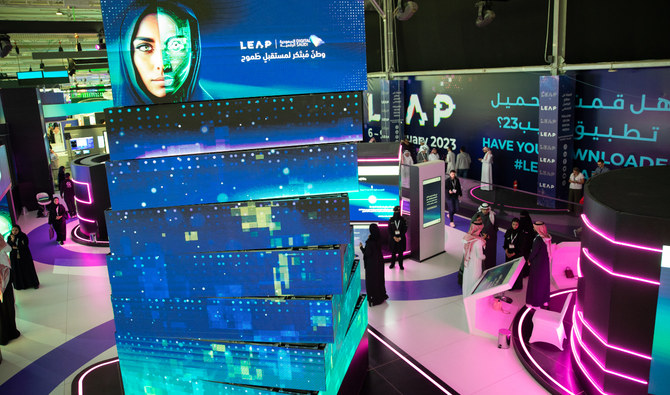
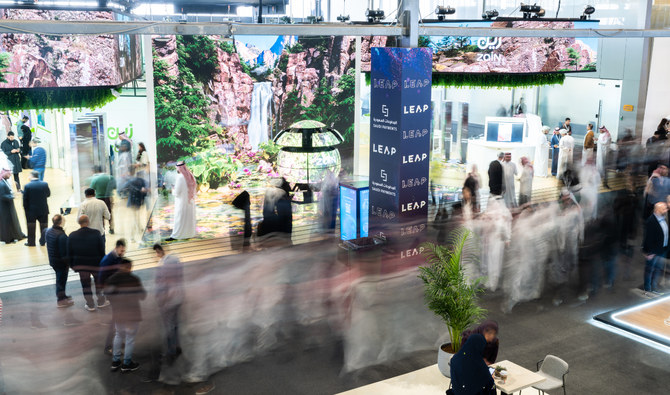
The rising importance of the creative economy can be witnessed at this year’s LEAP conference, where a dedicated segment has been devised focusing on the intersection between creativity, the economy and technology.
The conference is home to science and technology as much as it is to arts and entertainment — demonstrating how technological advances in immersive and digital entertainment are influencing the sectors of art, fashion, architecture, and design influencing the ways human beings live and work.
Panel sessions regarding the “Arts at the Intersection of Culture and Digital,” “Preserving Arts and Culture with AI,” “Building Engaged Communities in the Age of Metaverse,” and “Content Creation and Creation Economy,” among others, look at the crucial role that creativity plays in expanding technology, AI, and the economy.
“As an artist, I find AI to be a tool that enables me to think more about the future and expand my artistic practice,” MaryLiz Bender, artist, technologist and creative director and co-founder of Cosmic Perspective, said during a panel on “The Future of Art — the Evolution of Humanity.”
She added: “I want to think about the future and where we will be in 10, 20, 30, 50, and even one hundred years from now, and that is where AI has helped me.
“We are at a point now where our interaction and collaboration with AI models is enhancing our creative output as artists,” said Bender.
Creative economy is also a term pivotal to Saudi Vision 2030 — one of the defining pillars of the country’s reform plan and social transformation agenda, launched by Crown Prince Mohammed Bin Salman in 2016 to wean the Gulf nation off a reliance on oil and gas and develop a future-focused economy — one that is forward-thinking, creative and among the most advanced technologically in the world.
Creativity in all industries, states Vision 2030, is vital to the establishment of the agenda’s three primary objectives: “To build a vibrant society, a thriving economy and an ambitious nation.”
Technology, as several sessions demonstrated on the first day of LEAP, is becoming a fundamental part of preserving culture and heritage and advancing artistic processes.
In a session on “Preserving Arts & Culture,” Rami Jawhar, program manager for Google Arts & Culture, explored the importance of cultural preservation using technologies like AI.
In places burdened by conflict, destitution and where languages and traditional cultures are threatened with extinction, Jawhar showed how through technology Google is striving to preserve cultural heritage — even if it is through the intangible realm of the metaverse.
Through diverse technologies, the memory of past cultures and traditions can be maintained and preserved — a practice vital as the human race powers into the so-called fourth industrial revolution.