

Royal Commission for AlUla reconstructs face of 2,000-year-old Nabataean woman

1 / 4
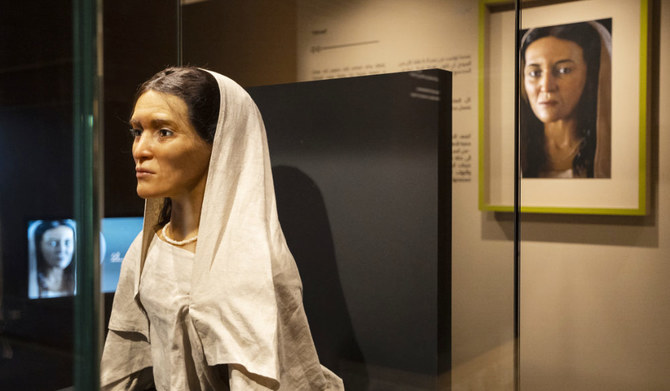
A number of experts on Nabataean civilization issued a biography of Hinat, equipped with pictures of her clothes and jewelry as a background to her facial reconstruction. (Supplied)
2 / 4
A number of experts on Nabataean civilization issued a biography of Hinat, equipped with pictures of her clothes and jewelry as a background to her facial reconstruction. (Supplied)
3 / 4
A number of experts on Nabataean civilization issued a biography of Hinat, equipped with pictures of her clothes and jewelry as a background to her facial reconstruction. (Supplied)
4 / 4
A number of experts on Nabataean civilization issued a biography of Hinat, equipped with pictures of her clothes and jewelry as a background to her facial reconstruction. (Supplied)
Short Url
Updated 07 February 2023
Follow

Royal Commission for AlUla reconstructs face of 2,000-year-old Nabataean woman

  • Leila Chapman, an expert in narrative experiences at the RCU, said that observing Hinat will provide visitors with an immersive historical experience through insights into the history of the Nabataeans and their civilization

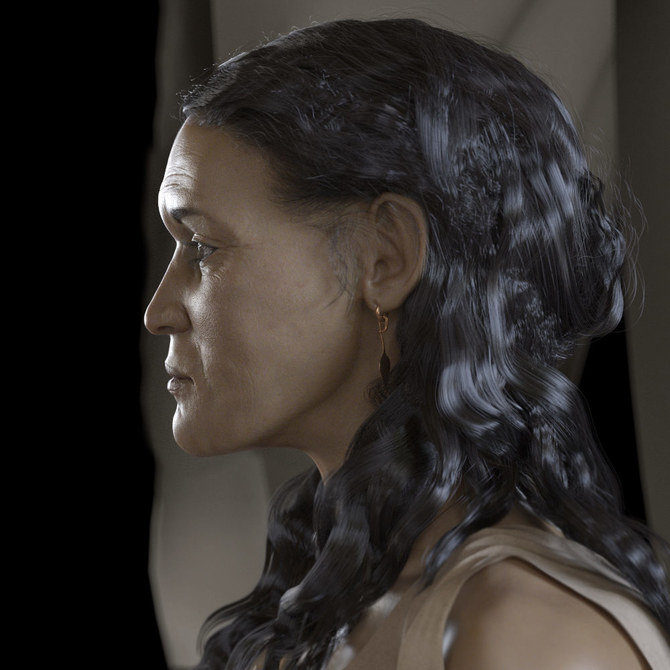
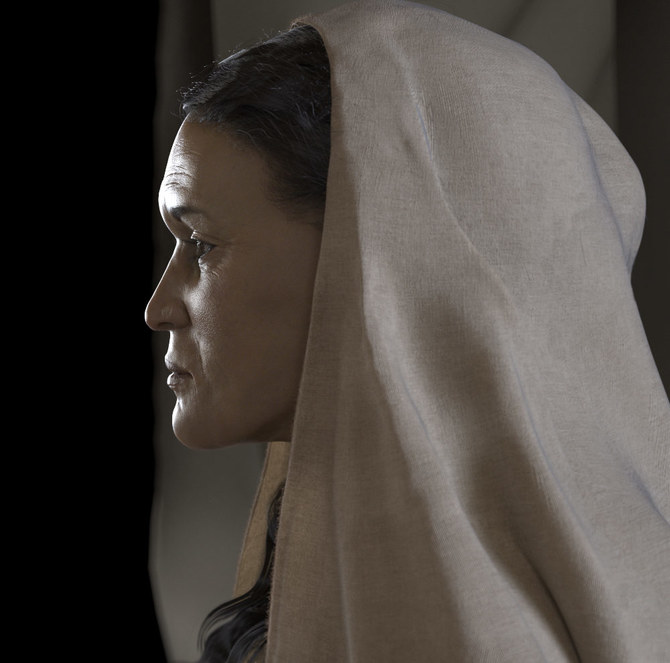
JEDDAH: The facial structure of a 2,000-year-old Nabataean woman from the AlUla region has been reconstructed by experts from the Royal Commission for AlUla.

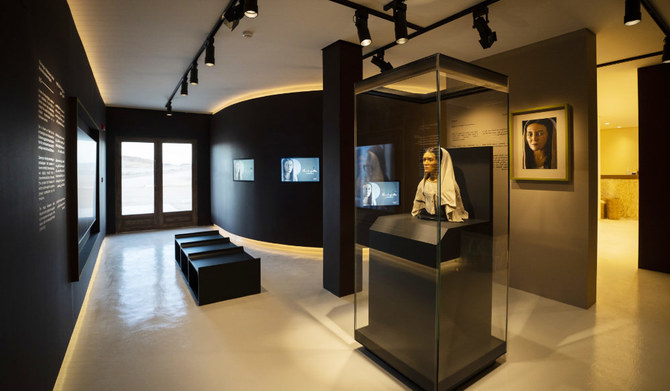
They used the skeleton of the woman, dubbed “Hinat,” who authorities believed died in the first century B.C. The reconstruction will be displayed for the public in the visitor’s center at the Hegra historical site in AlUla from Feb. 6.

The skeleton was discovered inside a tomb in the UNESCO World Heritage site in 2008.

Human remains, skin and hair, along with textiles, leather and other substances were also discovered, as was an inscription that said that the tomb belonged to “Hinat, the daughter of Wahbu.”

Studies confirmed the importance of Hinat’s position in the Nabataean community, as she had possessed sufficient wealth to obtain her own tomb in Hegra.

A number of experts on Nabataean civilization issued a biography of Hinat, equipped with pictures of her clothes and jewelry as a background to her facial reconstruction.

They were joined by a production team with experience in anthropology, reconstruction and physical model-making.

The reconstruction aims to give visitors the opportunity to learn about the ancient history of the region.

Helen McGauran, an expert in organizing heritage exhibitions, said: “The process of restoring Hinat’s facial features combined both scientific accuracy and contemporary artistic development to expand our understanding about the Nabataean civilization, which still offers many secrets and stories, and sheds light on the history of AlUla.”

Leila Chapman, an expert in narrative experiences at the RCU, said that observing Hinat will provide visitors with an immersive historical experience through insights into the history of the Nabataeans and their civilization.

Laila Neamah, co-director of the Hegra project, oversaw the selection of appropriate models for the reconstruction.

The RCU seeks to preserve the heritage of the region, as well as attract visitors and residents.

The commission’s “Journey Through Time” plan involves the launch of the “Kingdom’s Institute” in the Dadan area.

The design of the structure will be inspired by the Dadan civilization.


Iran welcomes any process to prevent war, president tells Saudi crown prince in phone call

Saudi Crown Prince Mohammed ‌bin ‌Salman and Iranian President Masoud Pezeshkian. (File/SPA/AFP)
Updated 5 sec ago
Follow

Iran welcomes any process to prevent war, president tells Saudi crown prince in phone call

DUBAI: Iranian President ​Masoud Pezeshkian told Saudi Crown Prince Mohammed ‌bin ‌Salman ‌in ⁠a ​phone ‌call that Tehran always welcomes any ⁠process, ‌within the ‍framework ‍of international ‍law, that prevents war, ​Iranian media reported on Tuesday. 
Pezeshkian also told Prince Mohammed that the “unity and cohesion” of Islamic countries can guarantee “lasting security, stability and peace in the region.”

The president added that US threats against the Islamic republic would only result in instability.
“The threats and psychological operations of the Americans are aimed at disrupting the security of the region and will achieve nothing other than instability for them,” Pezeshkian told Prince Mohammed, according to his office,