Royal Commission for AlUla signs train design deal with French firm SYSTRA 

1 / 3
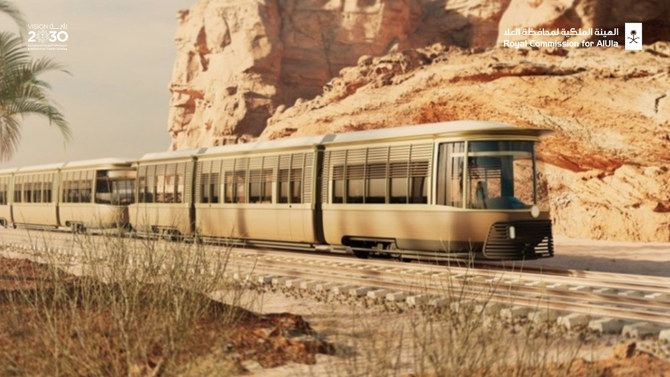
The tram project is aimed at enhancing the sustainability of AlUla transportation. (SPA)
2 / 3
The first phase of the design is set to be complete in 2023. (Supplied)
3 / 3
AlUla tram to be launched for a better environment. (Supplied)
Short Url
Updated 03 July 2022
Follow

Royal Commission for AlUla signs train design deal with French firm SYSTRA 

  • New transport system will enhance access to major tourist attractions

JEDDAH: The Royal Commission for AlUla (RCU) signed a tram design agreement with the leading French transportation company SYSTRA on July 2 to advance the AlUla tram project, which will connect the governorate to a number of stations, tracks, routes, landmarks and historical heritage sites.

The tram project aims to enhance the sustainability of AlUla transportation by reducing road congestion and noise levels. It also aims to make effective use of sustainable electric energy and a link between centers, neighborhoods, heritage sites and tourist sites.


The tram project is aimed at enhancing the sustainability of AlUla transportation. (SPA)

Amr Al-Madani, CEO of RCU, said in a TV interview: “AlUla has proven that it is at the center of everyone’s attention, and planning in AlUla affects financial, environmental, and energy sustainability as well.

“Thus, the tram will be part of the solution, not only because it will rely on electric power but also because it will reduce the need to use vehicles that are used to reach sites in the desert, which do not provide a pleasant transportation experience and are environmentally harmful.”

The tram track extends for 50 km, starting from AlUla International Airport in the south to Hegra City in the north. Tram carts feature designs inspired by the natural and historical heritage of AlUla, securing the governorate’s vision of transforming the city into the largest living museum in the world and a global tourism destination.
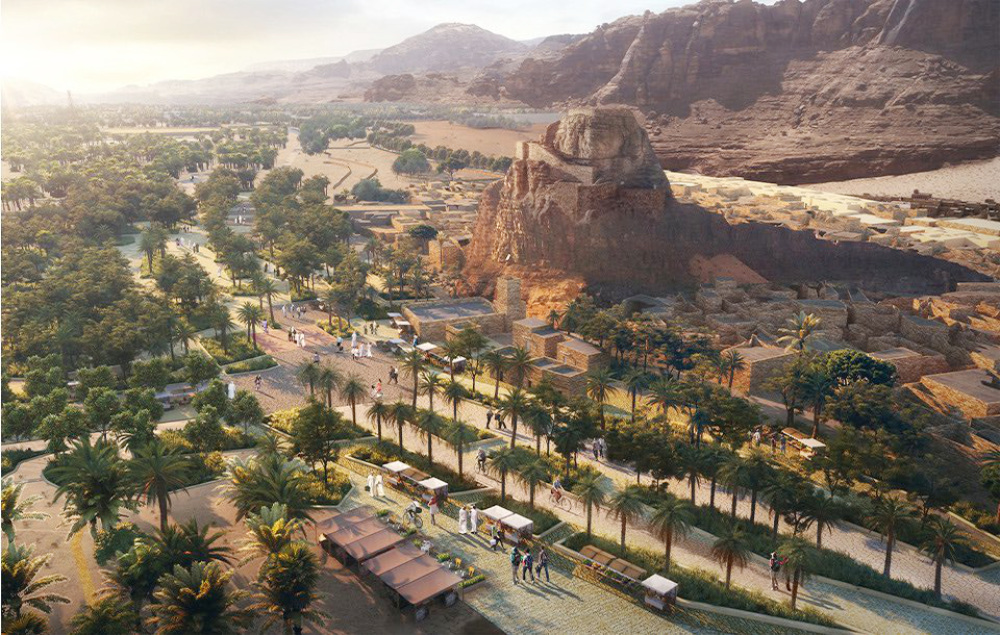
AlUla is known for its stunning natural and desert landmarks such as Hegra, the old town, Al-Diwan, Ikmah, and the Lion Tombs of Dadan. The tram will augment the tourist experience that celebrates the beauty of the natural environment.

The tram project has been divided into several tracks, such as the northern “Red” track, which connects the most prominent landmark areas and archaeological sites. It allows easy movement between the various main sites specified in “The Journey Through Time” scheme.

The first phases of the tram design are expected to be completed by 2023. The second phase will extend to the south of the governorate with an additional 33 km of track that will reach the airport, consolidating AlUla’s position as a prominent transportation hub.

The French Ambassador to Saudi Arabia Ludovic Pouille posted a message on his official Twitter account commenting on the news: “Congratulations for the Commission and for SYSTRA.”

The RCU tweeted: “AlUla was the meeting point for convoys throughout history, where its routes connecting the trips were drawn... Today, we are establishing a new stage by signing the contract of #Ula_tram, design in a step that enhances achieving the comprehensive development of the governorate.”


First EU–Saudi roundtable on critical raw materials reflects shared policy commitment

Updated 57 min 54 sec ago
Follow

First EU–Saudi roundtable on critical raw materials reflects shared policy commitment

RIYADH: The EU–Saudi Arabia Business and Investment Dialogue on Advancing Critical Raw Materials Value Chains, held in Riyadh as part of the Future Minerals Forum, brought together senior policymakers, industry leaders, and investors to advance strategic cooperation across critical raw materials value chains.

Organized under a Team Europe approach by the EU–GCC Cooperation on Green Transition Project, in coordination with the EU Delegation to Saudi Arabia, the European Chamber of Commerce in the Kingdom and in close cooperation with FMF, the dialogue provided a high-level platform to explore European actions under the EU Critical Raw Materials Act and ResourceEU alongside the Kingdom’s aspirations for minerals, industrial, and investment priorities.

This is in line with Saudi Vision 2030 and broader regional ambitions across the GCC, MENA, and Africa.

ResourceEU is the EU’s new strategic action plan, launched in late 2025, to secure a reliable supply of critical raw materials like lithium, rare earths, and cobalt, reducing dependency on single suppliers, such as China, by boosting domestic extraction, processing, recycling, stockpiling, and strategic partnerships with resource-rich nations.

The first ever EU–Saudi roundtable on critical raw materials was opened by the bloc’s Ambassador to the Kingdom, Christophe Farnaud, together with Saudi Deputy Minister for Mining Development Turki Al-Babtain, turning policy alignment into concrete cooperation.

Farnaud underlined the central role of international cooperation in the implementation of the EU’s critical raw materials policy framework.

“As the European Union advances the implementation of its Critical Raw Materials policy, international cooperation is indispensable to building secure, diversified, and sustainable value chains. Saudi Arabia is a key partner in this effort. This dialogue reflects our shared commitment to translate policy alignment into concrete business and investment cooperation that supports the green and digital transitions,” said the ambassador.

Discussions focused on strengthening resilient, diversified, and responsible CRM supply chains that are essential to the green and digital transitions.

Participants explored concrete opportunities for EU–Saudi cooperation across the full value chain, including exploration, mining, and processing and refining, as well as recycling, downstream manufacturing, and the mobilization of private investment and sustainable finance, underpinned by high environmental, social, and governance standards.

From the Saudi side, the dialogue was framed as a key contribution to the Kingdom’s industrial transformation and long-term economic diversification agenda under Vision 2030, with a strong focus on responsible resource development and global market integration.

“Developing globally competitive mineral hubs and sustainable value chains is a central pillar of Saudi Vision 2030 and the Kingdom’s industrial transformation. Our engagement with the European Union through this dialogue to strengthen upstream and downstream integration, attract high-quality investment, and advance responsible mining and processing. Enhanced cooperation with the EU, capitalizing on the demand dynamics of the EU Critical Raw Materials Act, will be key to delivering long-term value for both sides,” said Al-Babtain.

Valere Moutarlier, deputy director-general for European industry decarbonization, and directorate-general for the internal market, industry, entrepreneurship and SMEs at European Commission, said the EU Critical Raw Materials Act and ResourceEU provided a clear framework to strengthen Europe’s resilience while deepening its cooperation with international partners.

“Cooperation with Saudi Arabia is essential to advancing secure, sustainable, and diversified critical raw materials value chains. Dialogues such as this play a key role in translating policy ambitions into concrete industrial and investment cooperation,” she added.