
KARACHI: The Pakistan government’s measures to raise petroleum prices and devalue the national currency ahead of the arrival of the International Monetary Fund (IMF) mission today, Tuesday, are expected to push the inflation rate to an all-time high of over 30 percent, particularly with electricity and gas tariff hikes around the corner, economists and experts said.
An IMF mission is scheduled to visit Islamabad from January 31 to February 9, 2023, for discussions on the 9th review of a $7 billion loan program signed in 2019. The mission will examine Pakistan’s policies to restore domestic and external sustainability, including strengthening the country’s fiscal position with durable measures while supporting those affected by devastating floods last year.
The IMF mission also plans to revitalize the power sector and reverse the accumulation of circular debt, reestablish proper functioning of the foreign exchange market and clear the forex shortage, according to the IMF representative in Pakistan, Esther Perez Ruiz.
Economists and analysts said Pakistan had taken concrete steps to secure the IMF loan.
“Pakistan has removed [the] cap on the currency exchange rate and has also increased the prices of petroleum products as per the demand of [the] IMF,” Dr. Vaqar Ahmed, Joint Executive Director at Sustainable Development Policy Institute (SDPI), told Arab News.
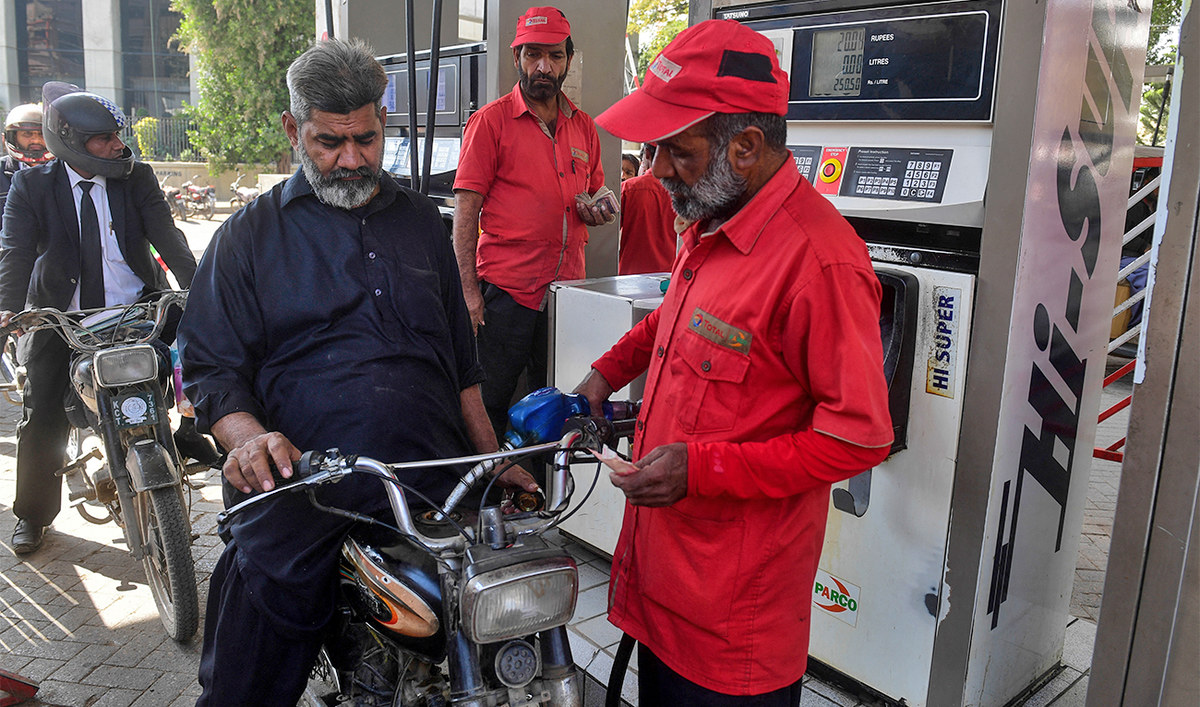
This picture taken on January 30, 2023, shows resident Saleem Qureshi (C) filling petrol in his motorcycle at a gasoline station in Pakistan's port city of Karachi. (AFP)
Most analysts agreed the next step would be to increase the tariff on electricity and gas, and another price hike of petroleum prices was also on the cards in February. The combined impact of the measures would be inflationary pressure, they said.
“Inflation for the next two months is forecasted to be substantially higher with the petroleum price hike. We expect that the inflation in the next quarter will be above 25 percent, not below this level,” Ahmed said.
Tahir Abbas, Head of Research at Arif Habib Limited, agreed, saying the impact of the current and upcoming measures to win IMF approval for the 9th review would be more than 30 percent in inflationary terms:
“We expect that the inflation rate of February 2023 will be around 33 percent due to the fuel rate increment and currency depreciation.”
Inflation was recorded at 24.5 percent on a year-on-year basis in December 2022, as compared to 12.3 percent in December 2021.
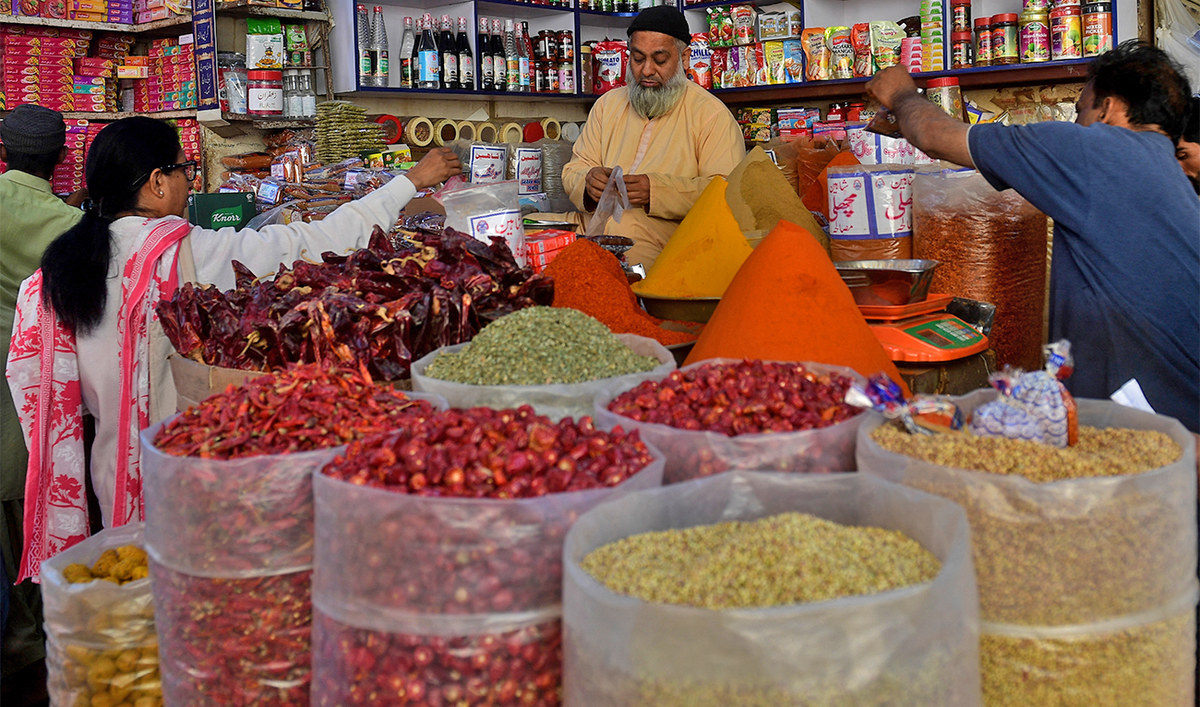
This picture taken on January 30, 2023, shows residents buying groceries at a market in Pakistan's port city of Karachi. (AFP)
Meanwhile, the national currency of Pakistan has depreciated by 14.37 percent or Rs38.74 against the United State dollar during the last three trading sessions. The currency closed at Rs269.63 on Monday and has so far depreciated by 16.02 percent since January 2023.
Pakistan’s foreign exchange reserves have dropped to just $3.7 billion, not even enough to cover import payments for a single month. Pakistan on average has imported goods valued at $5 billion per month during the last six months.
Pakistan expects the disbursement of $1.1 billion from the IMF after the 9th review and inflows from other multilateral donors and friendly countries after a successful review of the fund program.
Ahmed said further measures would be required to take the IMF into confidence, including imposing Rs300 billion worth of taxes through a presidential ordinance.
However, he said the government would try to negotiate with the fund to lower this number: “Pakistan will try to negotiate a reduced magnitude of taxes and energy tariffs.”
A successful IMF visit is critical for Pakistan but Pakistani analysts said the government was also facing a lot of internal pressures against the IMF proposals. On Sunday Pakistan jacked up petroleum prices by Rs35 per liter, which will increase freight charges in the country.
“There is no other option but to raise the freight charges in conditions that have forced us to drive around 50 percent of our fleet off the roads,” Muhammad Yousuf Khan, Chairman, Pakistan Transport Association, told Arab News. “We will increase freight charges by around 33 percent from Rs6,000 to around Rs8,000 per ton.”
Transporters said without shifting the monetary burden of fuel price hikes onto end consumers, a viable business model would not be possible.
“Under the current economic situation, we are not in a position to stage protests or go on strikes because high inflation has already taken a major share of our profits,” Israr Ahmed Shinwari, spokesman of the All Pakistan Oil Tankers Owners Association, told Arab News.