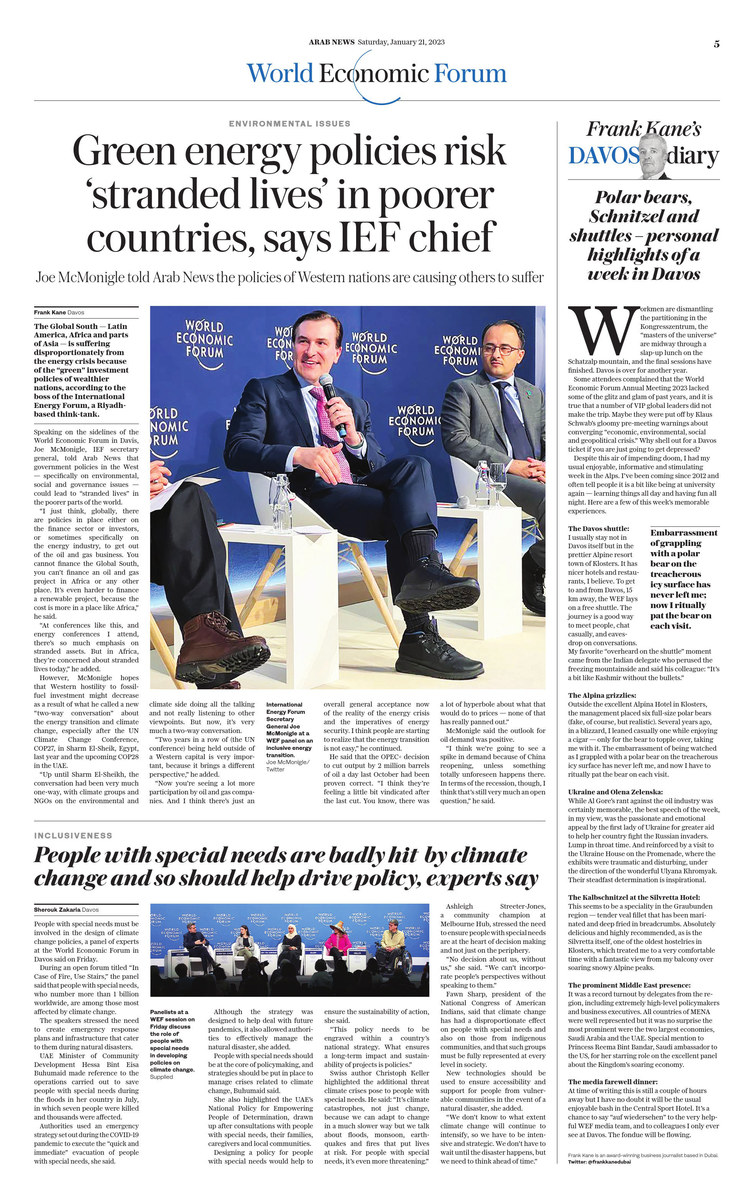

DAVOS: The Global South — Latin America, Africa and parts of Asia — is suffering disproportionately from the energy crisis because of the “green” investment policies of wealthier nations, according to the boss of the International Energy Forum, a Riyadh-based think-tank.
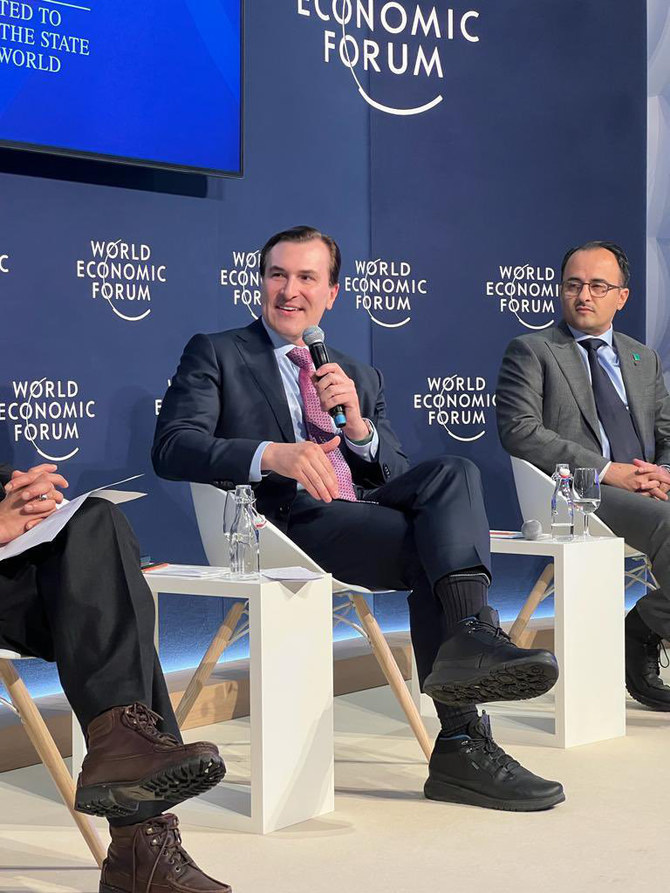
Speaking on the sidelines of the World Economic Forum in Davos, Joe McMonigle, IEF secretary general, told Arab News that government policies in the West — specifically on environmental, social and governance issues — could lead to “stranded lives” in the poorer parts of the world.
“I just think, globally, there are policies in place either on the finance sector or investors, or sometimes specifically on the energy industry, to get out of the oil and gas business. You cannot finance the Global South, you can’t finance an oil and gas project in Africa or any other place. It’s even harder to finance a renewable project, because the cost is more in a place like Africa,” he said.
“At conferences like this, and energy conferences I attend, there’s so much emphasis on stranded assets. But in Africa, they’re concerned about stranded lives today,” he added.
However, McMonigle hopes that Western hostility to fossil-fuel investment might decrease as a result of what he called a new “two-way conversation” about the energy transition and climate change, especially after the Sharm El-Sheik UN Climate Change Conference, COP27, last year and the upcoming COP28 in the UAE.
“Up until Sharm El-Sheikh, the conversation had been very much one-way, with climate groups and NGOs on the environmental and climate side doing all the talking and not really listening to other viewpoints. But now, it’s very much a two-way conversation.
“Two years in a row of (the UN conference) being held outside of a Western capital is very important, because it brings a different perspective,” he added.
“Now you’re seeing a lot more participation by oil and gas companies. And I think there’s just an overall general acceptance now of the reality of the energy crisis and the imperatives of energy security. I think people are starting to realize that the energy transition is not easy,” he said.
The OPEC+ decision to cut 2 million barrels of oil per day last October had been proven correct, he said. “I think they’re feeling a little bit vindicated after the last cut. You know, there was a lot of hyperbole about what that would do to prices — none of that has really panned out.”
McMonigle said the outlook for oil demand was positive. “I think we’re going to see a spike in demand because of China reopening, unless something totally unforeseen happens there. In terms of the recession, though, I think that’s still very much an open question.”