

Saudi Aramco increases access to North America’s largest oil refinery as it launches new US subsidiary

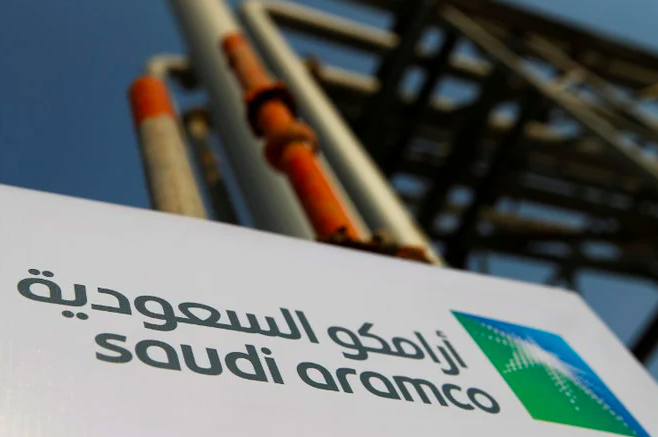
The deal is the latest between Aramco and a US firm (Shutterstock)
Short Url
Updated 18 January 2023
Follow

Saudi Aramco increases access to North America’s largest oil refinery as it launches new US subsidiary

RIYADH: Saudi Aramco’s global trading arm has bought US firm Motiva Trading as it seeks to expand its footprint across North and South America.

As well as acquiring 100 per cent of the firm, Aramco Trading Co. has also launched a Texas-based subsidiary – Aramco Trading Americas.

The new entity will be the sole supplier and ‘offtaker' of Motiva Enterprises, the owner of North America’s largest oil refinery with a crude capacity of 630,000 barrels a day of consumer and commercial grade fuels and base oils.

“The acquisition of Motiva Trading and the establishment of Aramco Trading Americas are a giant step towards executing our ambitious global growth strategy, which aims to expand our geographical reach and scale of operations, while further strengthening our product flexibility and optionality,” said President and CEO of ATC Mohammed K. Al-Mulhim.

Furthermore, by allowing customers access to a sturdy hydrocarbon system, this is projected to bring about strength in the global value chain in the future, according to the statement.

The deal is the latest between Aramco and a US firm, with the Saudi company signing an agreement valued at $250 million in September 2022 with Beyond Limits, a California-based artificial intelligence technology company, to build a global AI corridor.

The corridor would create an ecosystem in the Kingdom by commercializing complex AI solutions, training Saudi talent and supporting Saudi startups.

Ties between Saudi Aramco and the US go deep, with the energy company employing thousands of staff at research and technology centers in Houston, Detroit and Boston, as well as at its corporate headquarters in New York.

 It owns and operates the Motiva refinery and petrochemicals facility on the coast of the Gulf of Mexico, the biggest such plant in North America.

Speaking after the announcement, Aramco CEO Amin Nasser told Bloomberg he is seeing increased demand for fuel from China and is discussing investments in petrochemicals with Chinese companies.

Demand for jet fuel is now around 1 million barrels per day, which is below pre-pandemic levels but is improving, he added.


Saudi Arabia’s cultural sector is a new economic engine between Riyadh and Paris, says ambassador

Updated 25 January 2026
Follow

Saudi Arabia’s cultural sector is a new economic engine between Riyadh and Paris, says ambassador

RIYADH: Culture has become a fundamental pillar in bilateral relations between France and Saudi Arabia, according to the French Ambassador to the Kingdom, Patrick Maisonnave.

Maisonnave noted its connection to the entertainment and tourism sectors, which makes it a new engine for economic cooperation between Riyadh and Paris.

He told Al-Eqtisadiah during the opening ceremony of La Fabrique in the Jax district of Diriyah that cultural cooperation with Saudi Arabia is an important element for its attractiveness in the coming decades.

La Fabrique is a space dedicated to artistic creativity and cultural exchange, launched as part of a partnership between the Riyadh Art program and the French Institute in Riyadh. 

Running from Jan. 22 until Feb 14, the initiative will provide an open workspace that allows artists to develop and work on their ideas within a collaborative framework.

Launching La Fabrique as a space dedicated to artistic creativity

The ambassador highlighted that the transformation journey in the Kingdom under Vision 2030 has contributed to the emergence of a new generation of young artists and creators, alongside a growing desire in Saudi society to connect with culture and to embrace what is happening globally. 

He affirmed that the relationship between the two countries is “profound, even cultural par excellence,” with interest from the Saudi side in French culture, matched by increasing interest from the French public and cultural institutions unfolding in the Kingdom.

Latest estimates indicate that the culture-based economy represents about 2.3 percent of France’s gross domestic product, equivalent to more than 90 billion euros ($106.4 billion) in annual revenues, according to government data. The sector directly employs more than 600,000 people, making it one of the largest job-creating sectors in the fields of creativity, publishing, cinema, and visual arts.

Saudi Arabia benefiting from French experience in the cultural field

Maisonnave explained that France possesses established cultural institutions, while Saudi Arabia is building a strong cultural sector, which opens the door for cooperation opportunities.

This comes as an extension of the signing of 10 major cultural agreements a year ago between French and Saudi institutions, aiming to enhance cooperation and transfer French expertise and knowledge to contribute to the development of the cultural system in the Kingdom.

He added that experiences like La Fabrique provide an opportunity to meet the new generation of Saudi creators, who have expressed interest in connecting with French institutions and artists in Paris and France.

La Fabrique encompasses a space for multiple contemporary artistic practices, including performance arts, digital and interactive arts, photography, music, and cinema, while providing the public with an opportunity to witness the stages of producing artistic works and interact with the creative process.