

Global recession likely in 2023 as inflation peaks: WEF chief economists

Multinational businesses are expected to lay off employees and optimize supply chains. (AFP/File)
Short Url
Updated 17 January 2023
Follow

Global recession likely in 2023 as inflation peaks: WEF chief economists

  • Majority expect the cost of living to somewhat ease by the year's end
  • WEF director Zahibi urged world leaders to look beyond today’s crises to invest in food, energy innovation

DAVOS: Two-thirds of chief economists at the World Economic Forum have predicted a global recession in 2023 with continued geopolitical tensions, and further monetary tightening in the US and Europe.

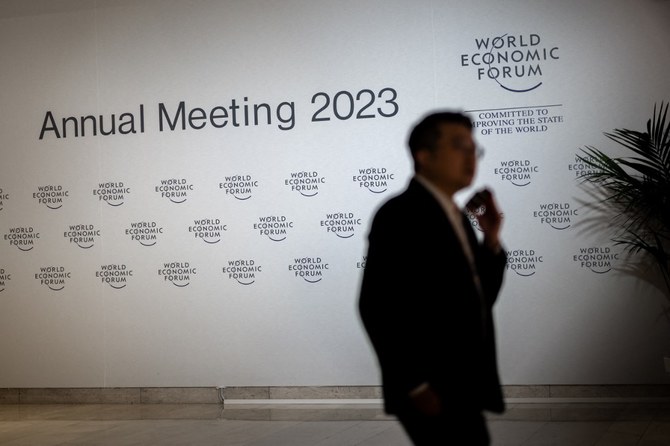
The conclusion came in key findings of the Chief Economists Outlook, launched on Monday on the first day of the forum’s Annual Meeting in Davos, Switzerland.

Of the majority predicting a recession, 18 percent said it was extremely likely, against a third of respondents who thought the opposite.

The outlook in September 2022 was slightly less gloomy, when 64 percent of respondents stated that a global recession was “somewhat likely” in 2023.

Saadia Zahidi, managing director at the WEF, said: “With two-thirds of chief economists expecting a worldwide recession in 2023, the global economy is in a precarious position.

“The current high inflation, low growth, high debt, and high fragmentation environment reduces incentives for the investments needed to get back to growth and raise living standards for the world’s most vulnerable.

“Leaders must look beyond today’s crises to invest in food and energy innovation, education and skills development, and in job-creating, high-potential markets of tomorrow. There is no time to lose,” she added.

When surveyed about China, half of the respondents said they expected strong growth while the remainder predicted the opposite. Recent efforts to loosen the country’s zero-COVID policy were aimed at yielding a boost to growth, but it remained to be seen how disruptive the policy shift would be, namely in relation to health impacts.

Inflation was expected to vary significantly across regions, with 5 percent of the chief economists predicting high inflation in China, while 57 percent believed the surge would happen in Europe.

After a year of sharp and coordinated central bank tightening, the chief economists said the monetary policy stance would likely remain constant in most of the world this year.

A majority, however, expected further monetary tightening in Europe and the US – 59 percent and 55 percent, respectively. They highlighted that 2023 was likely to involve a difficult balancing act for policymakers between tightening too much or too little.

Business activity was also forecast to receive numerous blows in 2023. Nine out of 10 respondents expected both weak demand and high borrowing costs to weigh on firms, with more than 60 percent also pointing to higher input costs.

The chief economists expected the challenges to lead multinational businesses to cut costs, with 86 percent predicting that firms would reduce operational expenses, 78 percent expecting layoffs, and 77 percent seeing optimized supply chains this year.

The chief economists expected the global landscape to remain challenging for businesses – 100 percent of respondents said global geopolitical trends would continue redrawing the map of world economic activity along new geopolitical fissures and fault lines.

Such a wider economic shift would likely reverberate through trade, investment, labor, and technology flows, creating innumerable challenges as well as opportunities for business.

One positive signal was that supply chain disruptions were not expected to cause a significant drag on business activity in 2023.

While the forum’s Global Risks Report 2023 recently found the cost-of-living crisis to be among the world’s most urgent risks, the chief economists saw the crisis potentially nearing its peak, with 68 percent expecting it to have become less severe by the end of 2023.

A similar trend was evident in relation to the energy crisis, with 64 percent of respondents expecting some improvement by the year's end.

In addition, survey respondents highlighted several potential sources of optimism at the start of 2023, including the strength of household finances, growing signs of easing inflationary pressures, and continued labor-market resilience.


Gulf-EU value chain integration signals shift toward long-term economic partnership: GCC secretary general

Updated 03 February 2026
Follow

Gulf-EU value chain integration signals shift toward long-term economic partnership: GCC secretary general

RIYADH: Value chains between the Gulf and Europe are poised to become deeper and more resilient as economic ties shift beyond traditional trade toward long-term industrial and investment integration, according to the secretary general of the Gulf Cooperation Council.

Speaking on the sidelines of the World Governments Summit 2026 in Dubai, Jasem Al-Budaiwi said Gulf-European economic relations are shifting from simple commodity trade toward the joint development of sustainable value chains, reflecting a more strategic and lasting partnership.

His remarks were made during a dialogue session titled “The next investment and trade race,” held with Luigi Di Maio, the EU’s special representative for external affairs.

Al-Budaiwi said relations between the GCC and the EU are among the bloc’s most established partnerships, built on decades of institutional collaboration that began with the signing of the 1988 cooperation agreement.

He noted that the deal laid a solid foundation for political and economic dialogue and opened broad avenues for collaboration in trade, investment, and energy, as well as development and education.

The secretary general added that the partnership has undergone a qualitative shift in recent years, particularly following the adoption of the joint action program for the 2022–2027 period and the convening of the Gulf–European summit in Brussels.

Subsequent ministerial meetings, he said, have focused on implementing agreed outcomes, enhancing trade and investment cooperation, improving market access, and supporting supply chains and sustainable development.

According to Al-Budaiwi, merchandise trade between the two sides has reached around $197 billion, positioning the EU as one of the GCC’s most important trading partners.

He also pointed to the continued growth of European foreign direct investment into Gulf countries, which he said reflects the depth of economic interdependence and rising confidence in the Gulf business environment.

Looking ahead, Al-Budaiwi emphasized that the economic transformation across GCC states, driven by ambitious national visions, is creating broad opportunities for expanded cooperation with Europe. 

He highlighted clean energy, green hydrogen, and digital transformation, as well as artificial intelligence, smart infrastructure, and cybersecurity, as priority areas for future partnership.

He added that the success of Gulf-European cooperation should not be measured solely by trade volumes or investment flows, but by its ability to evolve into an integrated model based on trust, risk-sharing, and the joint creation of economic value, contributing to stability and growth in the global economy.

GCC–EU plans to build shared value chains look well-timed as trade policy volatility rises.

In recent weeks, Washington’s renewed push over Greenland has been tied to tariff threats against European countries, prompting the EU to keep a €93 billion ($109.7 billion) retaliation package on standby. 

At the same time, tighter US sanctions on Iran are increasing compliance risks for energy and shipping-related finance. Meanwhile, the World Trade Organization and UNCTAD warn that higher tariffs and ongoing uncertainty could weaken trade and investment across both regions in 2026.
