

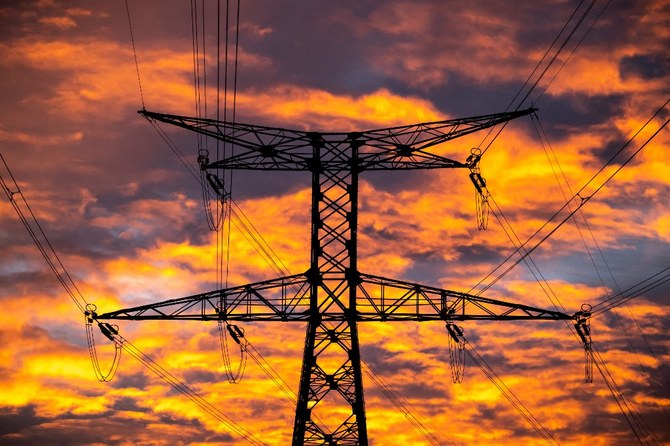
WEF urges major overhaul of energy systems for equitable, long-term supply

WEF's Securing the Energy Transition has proposed 10 immediate actions. (AFP/File)
Short Url
Updated 12 January 2023
Follow

WEF urges major overhaul of energy systems for equitable, long-term supply

  • Crisis worsening with fossil-fuel use, says body’s new report
  • Global policy coordination, investment urgently needed

GENEVA: A comprehensive reappraisal of the world’s energy systems is urgently needed to find solutions that simultaneously stabilizes supply while moving to a just, low-carbon future, the World Economic Forum urged in a new report released on Thursday.

The report, “Securing the Energy Transition,” proposes an all-inclusive framework that provides a strategic blueprint to make security and resilience the backbone of a transitioning energy system.

Short-term backward steps, such as increasing production of electricity from coal or broad-based consumption subsidies, risk compounding the current energy crisis and derailing the transition, said the WEF in a statement.

“The energy crisis has brought energy security to the forefront of political and corporate agendas and prompted the need to develop responses that are adapted to how the energy system has evolved and to where it needs to transition,” said Roberto Bocca, head of Shaping the Future of Energy, Materials and Infrastructure at the WEF.

“What is now a global crisis is a real opportunity to steer a more direct course towards a secure, sustainable and affordable energy future for everyone. This requires radical collaboration and a pragmatic approach to confront the complexities of the energy transition with immediate actions.”

Energy systems in transition face opportunities and risks from changing markets as well as from increasingly decentralized, digitalized, decarbonized and distributed supply.

The report proposes a comprehensive framework for a secure energy system to guide countries and leaders to plan strategic actions, policies and regulations.

“The energy crisis impacts us all and the world cannot afford short-term fixes … which could increase future risks to both the climate and energy equity. The good news is that the crisis offers an opportunity for interventions that balance energy security with an effective low-carbon transition,” said Espen Mehlum, head of the Energy, Material and Infrastructure Program at the WEF.

The WEF report also recommended 10 immediate actions categorized under four key themes — supply reinforcements, demand management, fiscal measures and investments, and co-ordination and long-term strategy.

While governments are primarily responsible for ensuring their countries’ energy security, addressing this crisis in a sustainable manner will require exceptional levels of engagement and collaboration between states, companies, international organizations and individual consumers, the report said.


Global trade isn’t deglobalizing — it’s reshuffling, Harvard economist says

Updated 09 February 2026
Follow

Global trade isn’t deglobalizing — it’s reshuffling, Harvard economist says

ALULA: Global trade is not retreating into deglobalization despite geopolitical shocks, but is instead undergoing a structural reshuffling led by US-China tensions, according to Harvard University economist Pol Antras. 

Presenting research at the AlUla Emerging Market Economies Conference, Antras said there is no evidence that countries are systematically turning inward. Instead, trade flows are being redirected across markets, creating winners and losers depending on export structure and exposure to Chinese competition. 

This comes as debate intensifies over whether supply-chain disruptions, industrial policy and rising trade barriers signal the end of globalization after decades of expansion. 

Speaking to Arab News on the sidelines of the event, Antras said: “I think the right way to view it is more a reorganization, where things are moving from some countries to others rather than a general trend where countries are becoming more inward looking, in a sense of producers selling more of their stuff domestically than internationally, or consumers buying more domestic products than foreign products.”  

He said a change of that scale has not yet happened, which is important to recognize when navigating the reshuffling — a shift his research shows is driven by Chinese producers redirecting sales away from the US toward other economies. 

He added that countries are affected differently, but highlighted that the Kingdom’s position is relatively positive, stating: “In the case of Saudi Arabia, for instance, its export structure, what it exports, is very different than what China exports, so in that sense it’s better positioned so suffer less negative consequences of recent events.” 

He went on to say that economies likely to be more negatively impacted than the Kingdom would be those with more producers in sectors exposed to Chinese competition. He added that while many countries may feel inclined to follow the United States’ footsteps by implementing their own tariffs, he would advise against such a move.  

Instead, he pointed to supporting producers facing the shock as a better way to protect and prepare economies, describing it as a key step toward building resilience — a view Professor Antras underscored as fundamental. 

Elaborating on the Kingdom’s position amid rising tensions and structural reorganization, he said Saudi Arabia holds a relative advantage in its economic framework. 

“Saudi Arabia should not be too worried about facing increased competitive pressures in selling its exports to other markets, by its nature. On the other hand, there is a benefit of the current situation, which is when Chinese producers find it hard to sell in US market, they naturally pivot to other markets.” 

He said that pivot could benefit importing economies, including Saudi Arabia, by lowering Chinese export prices. The shift could increase the Kingdom’s import volumes from China while easing cost pressures for domestic producers.