

Qatar inflation surges 5.93% following World Cup hosting

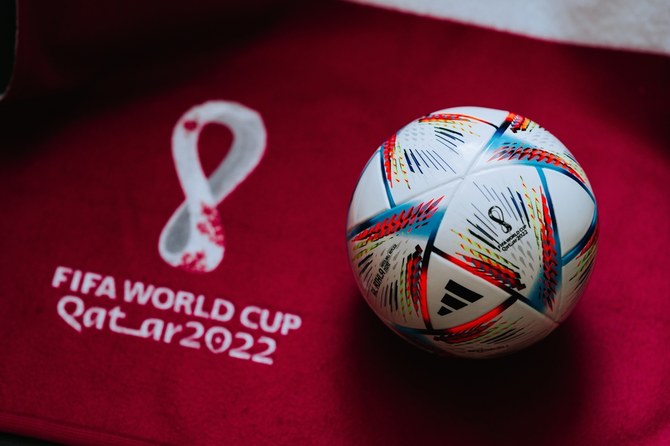
A report published ahead of the FIFA World Cup anticipated the “inflationary pressures” of the event (Shutterstock)
Short Url
Updated 16 January 2023
Follow

Qatar inflation surges 5.93% following World Cup hosting

RIYADH: Qatar’s inflation surged 5.93 percent year-on-year in December 2022 largely as a result of a rise in the prices of recreation and culture, according to data from the Planning and Statistics Authority.  

The Consumer Price Index, a comprehensive measure for inflation, reached 108.20 points, showing the highest annual jump since September 2022.  

The PSA data released on Monday indicated there was an annual price increase in seven categories, the largest being a 25.36 percent surge in prices of recreation and culture.  

Housing, water, electricity and other fuel came next with a 11.90 percent rise, restaurants and hotels by 10.08 percent, and food and beverages by 1.62 percent. 

The three other groups – education, transport, and furniture and household equipment – all witnessed a CPI increase of less than 1 percent year-on-year in December.  

The figures mean that Qatar has recorded the highest CPI among the region’s nations, and a Fitch ratings report published ahead of the FIFA World Cup being held in the nation anticipated the “inflationary pressures” of the event.

However, the level is below global levels, which averaged at 8.3 percent in 2022, with advanced economies standing at 6.6 percent and emerging markets and developing economies at 9.5 percent, according to the International Monetary Fund.  

Qatar’s annual inflation dropped in four groups, whereas one category remained still throughout the year.  

  • Communication: fell by 3.37 percent  
  • Health: fell by 2.31 percent  
  • Clothing and footwear: fell by 0.38 percent 
  • Miscellaneous goods and services: fell by 0.08 percent 
  • Tobacco: no change  

The country’s December CPI rate also showed a month-on-month increase of 1.24 percent, according to the PSA data.  

With regards to the monthly changes in CPI, Qatar saw an increase in six groups, a drop in two groups, while four groups remained unchanged. 

Recreation and Culture saw the largest month-on-month increase in prices recording a 7.33 percent rise in December 2022.  

Prices of restaurants and hotels increased by 1.84 percent, transport increased by 1.22 percent, and miscellaneous goods and services by 0.51 percent, showed the PSA release.  

In addition, Qatar recorded a rise in prices of food and beverages by 0.43 percent, furniture and household equipment by 0.10 percent in December of last year.  

On the other hand, communication price levels saw the largest drop of 2.03 percent, while clothing and footwear only fell by 0.42 percent month on month.  

Tobacco, health, education, and housing, water, electricity and other fuel remained the same as the previous month’s price level 

Qatar’s CPI excluding the group housing, water, electricity and other fuel stood at 110.88 points in December of last year.  

This inflation recorded an increase of 1.53 percent when compared to November 2022, and an increase of 4.61 percent when compared to the previous year. 


First EU–Saudi roundtable on critical raw materials reflects shared policy commitment

Updated 16 January 2026
Follow

First EU–Saudi roundtable on critical raw materials reflects shared policy commitment

RIYADH: The EU–Saudi Arabia Business and Investment Dialogue on Advancing Critical Raw Materials Value Chains, held in Riyadh as part of the Future Minerals Forum, brought together senior policymakers, industry leaders, and investors to advance strategic cooperation across critical raw materials value chains.

Organized under a Team Europe approach by the EU–GCC Cooperation on Green Transition Project, in coordination with the EU Delegation to Saudi Arabia, the European Chamber of Commerce in the Kingdom and in close cooperation with FMF, the dialogue provided a high-level platform to explore European actions under the EU Critical Raw Materials Act and ResourceEU alongside the Kingdom’s aspirations for minerals, industrial, and investment priorities.

This is in line with Saudi Vision 2030 and broader regional ambitions across the GCC, MENA, and Africa.

ResourceEU is the EU’s new strategic action plan, launched in late 2025, to secure a reliable supply of critical raw materials like lithium, rare earths, and cobalt, reducing dependency on single suppliers, such as China, by boosting domestic extraction, processing, recycling, stockpiling, and strategic partnerships with resource-rich nations.

The first ever EU–Saudi roundtable on critical raw materials was opened by the bloc’s Ambassador to the Kingdom, Christophe Farnaud, together with Saudi Deputy Minister for Mining Development Turki Al-Babtain, turning policy alignment into concrete cooperation.

Farnaud underlined the central role of international cooperation in the implementation of the EU’s critical raw materials policy framework.

“As the European Union advances the implementation of its Critical Raw Materials policy, international cooperation is indispensable to building secure, diversified, and sustainable value chains. Saudi Arabia is a key partner in this effort. This dialogue reflects our shared commitment to translate policy alignment into concrete business and investment cooperation that supports the green and digital transitions,” said the ambassador.

Discussions focused on strengthening resilient, diversified, and responsible CRM supply chains that are essential to the green and digital transitions.

Participants explored concrete opportunities for EU–Saudi cooperation across the full value chain, including exploration, mining, and processing and refining, as well as recycling, downstream manufacturing, and the mobilization of private investment and sustainable finance, underpinned by high environmental, social, and governance standards.

From the Saudi side, the dialogue was framed as a key contribution to the Kingdom’s industrial transformation and long-term economic diversification agenda under Vision 2030, with a strong focus on responsible resource development and global market integration.

“Developing globally competitive mineral hubs and sustainable value chains is a central pillar of Saudi Vision 2030 and the Kingdom’s industrial transformation. Our engagement with the European Union through this dialogue to strengthen upstream and downstream integration, attract high-quality investment, and advance responsible mining and processing. Enhanced cooperation with the EU, capitalizing on the demand dynamics of the EU Critical Raw Materials Act, will be key to delivering long-term value for both sides,” said Al-Babtain.

Valere Moutarlier, deputy director-general for European industry decarbonization, and directorate-general for the internal market, industry, entrepreneurship and SMEs at European Commission, said the EU Critical Raw Materials Act and ResourceEU provided a clear framework to strengthen Europe’s resilience while deepening its cooperation with international partners.

“Cooperation with Saudi Arabia is essential to advancing secure, sustainable, and diversified critical raw materials value chains. Dialogues such as this play a key role in translating policy ambitions into concrete industrial and investment cooperation,” she added.