- The service was suspended after a police constable was killed in a clashes with protesters agitating for their rights
- Amnesty International expressed concern over the situation while asking Pakistan to lift a ban on public gatherings
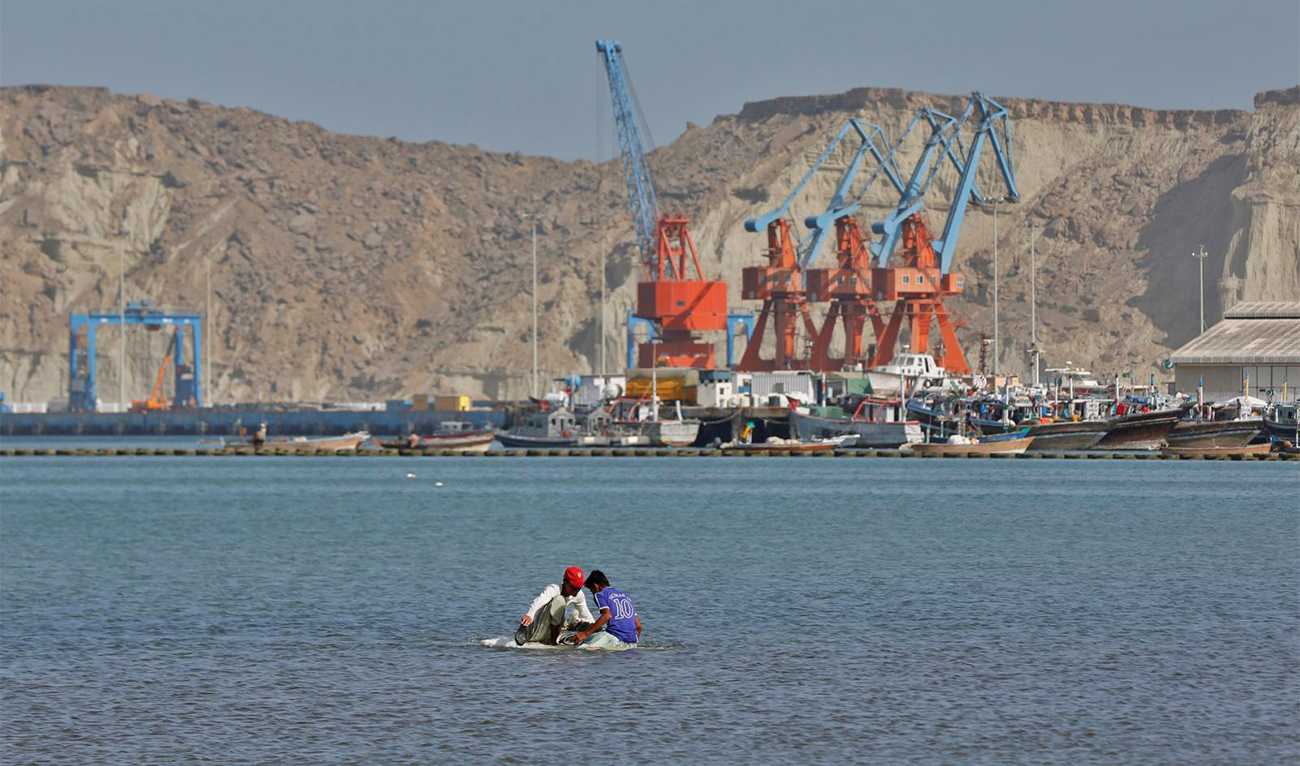
QUETTA: Authorities in Pakistan’s southwestern Balochistan province on Thursday restored mobile Internet service in Gwadar port city after shutting it down for 10 days in the wake of clashes between a group of protesters and police personnel in December, said a senior official.
Gwadar is at the heart of a $60 billion China-Pakistan Economic Corridor (CPEC) where workers from Beijing have been involved in the development of the port on the Arabian Sea. The residents of the city, however, maintain the Chinese investment in the region has done little to improve their lives. Many of them have complained about water scarcity and lack of employment opportunities while demanding an end to illegal trawling and removal of unnecessary security checkpoints from the area.
Protests against the lack of basic facilities first started in November 2021 under the banner of “Give Gwadar its Rights” but dissipated after the government negotiated with demonstrators and promised to meet their demands. Around two months ago, these protests broke out again and led to the killing of a police constable last month, making the provincial authorities in Balochistan prohibit large gatherings by imposing Section 144 of the Code of Criminal Procedure.
“The Government of Balochistan has restored the 3G and 4G mobile services in Gwadar after the city returned to normalcy and the law and order situation was brought under complete control,” the secretary information of the province, Hamza Shafqat, told Arab News.
He reiterated the government would fully address the demands of the people of Gwadar, adding that some of them had already been met.
The restoration of the Internet service has been announced only a few days after Amnesty International expressed concern over its shutdown while also urging Pakistani officials to lift ban on public gatherings in Gwadar.
The rights organization said in a statement it feared that “the Internet ban and emergency law will serve as a springboard for further crackdown on people’s fundamental freedoms, including freedom of expression, peaceful assembly, right to personal security and freedom from arbitrary detention.”
“Despite the attacks on police, which led to the death of a constable, the government has shown complete restraint and handled the situation with tolerance since Gwadar has tremendous significance with the future of Balochistan and Pakistan,” Shafqat said.
He noted that port activities and other businesses in the coastal town were running smoothly.
However, the top leader of the protest movement who galvanized people and led demonstrations in Gwadar said in a recent post on Twitter the authorities had still not discussed illegal trawling in the area.
“There are still 200 trawlers on Ormara coast,” he said while addressing the provincial authorities. “When will action be taken against them? Or the use of force is only for peaceful demonstrators.”
Fahad Ishaq, a local resident of Gwadar who manages a tourism company, said his business had suffered due to the recent clashes.
“Blocking Internet or mobile service is not the solution,” he told Arab News. “The students and people living in other cities of Pakistan cannot contact their families in Gwadar which sometimes results in immense difficulties.”
Ishaq said the government should find alternative solutions to address social unrest, instead of imposing a total communication blackout.