

Where We Are Going Today: Joe’s Bakery

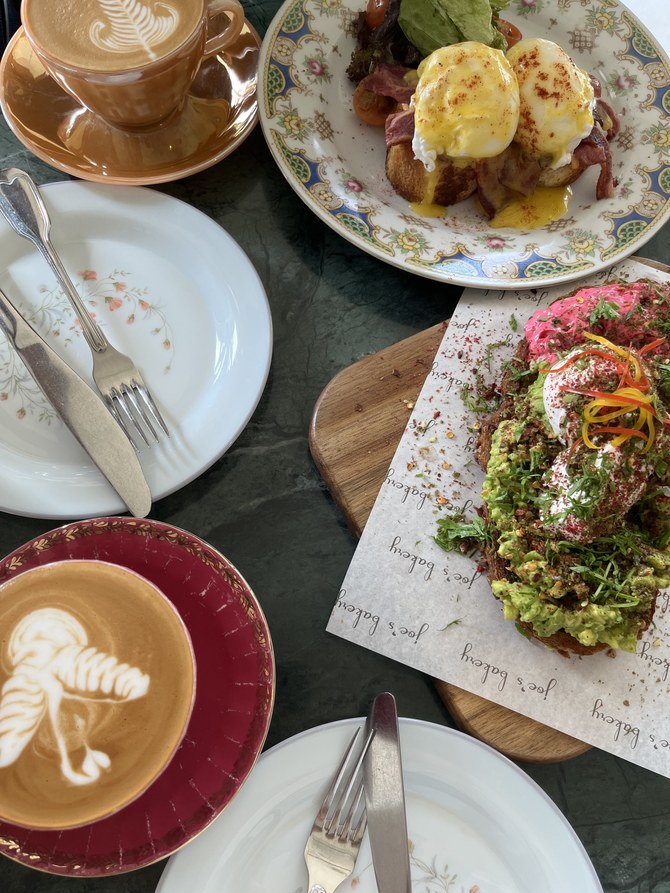
The tables are a tad too small for the large plates, but each platter is aesthetically pleasing. AN photo by Jasmine Bager
Short Url
Updated 29 December 2022
Follow

Where We Are Going Today: Joe’s Bakery

Joe’s Bakery in Alkhobar is the hot brunch destination of the moment. With its cool, off-white exterior and lush plants at the entrance, this place gives off immediate welcoming vibes — even before you open the door.

A smartphone is a must to dine here. Once you get settled in, you need to swipe the code to read the menu, which has become standard in Saudi restaurants of late.

The difference is, at Joe’s Bakery, you place your entire order directly on your phone. You fill in your table number at the end and can add any comments or allergies directly there, too.

At first, it can feel a bit tedious to scroll and select each item individually, but once the order comes exactly as you wanted it, you’ll thank the staff.

There’s no need to talk over the soft jazz playing in the background or interrupt the waiter to ask for water at room temperature. You can choose extra hot milk — and, specifically, what kind of milk you want — for your cappuccino, for example,  and a medium-poached egg for your avocado toast, as I did.

The tables are a tad too small for the large plates, but each platter is aesthetically pleasing and the friendly staff know how to fit everything in like Tetris blocks.

You can pay directly on the page. If you are in a group or prefer to tap your credit card directly on the machine at the end, you can do that too.

Joe’s Bakery has two floors, and the top one is stunning — if you manage to get up the rickety steps. Halfway up is a full-length mirror so you can take a great selfie with the light hitting from all the right angles.

Owned by Alkhobar-based entrepreneur Nouf Al-Sultan, Joe’s Bakery is a gorgeous spot to spend the morning at. There are bakery items displayed at the front so you can grab something on your way out.

Be sure to book via the restaurant reservation app @requeue. We dropped in without booking a spot, but a crowd had just left and we were lucky to snag a table right away.

For six days a week, the bakery is open from 8:30 a.m. to 4:30 p.m. It is closed on Mondays.

Visit them @joes.bakery.sa for details on their menu items and to book a table.


Musaned confirms mandatory salary transfers for domestic workers via official channels

Updated 9 sec ago
Follow

Musaned confirms mandatory salary transfers for domestic workers via official channels

  • Move aims to protect wage-related rights, enhance transparency

RIYADH: All employers in Saudi Arabia have been informed they must transfer domestic workers’ salaries through official channels, starting from Jan. 1, 2026.

The move, confirmed through Musaned platform’s X account, aims to protect wage-related rights, enhance transparency and simplify employer-worker relationships.

The electronic payment service provided through Musaned will use approved digital wallets and participating banks to ensure reliability, security and consistency in wage transfers.

Lawyer Majed Garoub told Arab News that the new regulation would help tackle persistent issues in employer-worker relationships, especially disputes over unpaid wages.

He said: “This regulation will significantly help resolve many problems that arise when domestic workers leave the country without proper verification of receiving their full rights.”

Garoub explained that informal salary payments were common in the past, often made without proper documentation or signatures.

This, he added, made it challenging for Saudi employers to prove they had paid all wages if workers later filed claims after returning to their home countries.

The new regulation, which has been rolled out in stages, began with domestic workers newly arriving in the Kingdom on July 1, 2024.

It was then extended to employers with four or more domestic workers in January 2025, followed by those employing three or more by July 2025.

The latest stage, which took effect on Oct. 1, applies to employers with two or more domestic workers. This phased approach has ensured a smooth adoption of the system for all employers.

Garoub said the regulation would bring broader legal and security benefits. He explained that informal salary payments had, at times, enabled illegal practices.

He added: “Workers might have falsely claimed unpaid wages or engaged in activities outside their employment.”

Such funds, he added, could even have contributed to crimes like money laundering or the financing of terrorism.

He said: “By mandating official payment channels, this regulation protects the Saudi economy, national security, and international financial systems.”

The Musaned platform offers significant advantages for both employers and workers. Employers gain a reliable salary verification mechanism that simplifies end-of-contract and travel-related procedures, while workers benefit from consistent, secure and timely payments.

The system also allows domestic workers to transfer their earnings to family members abroad through trusted channels.

For those who prefer cash withdrawals, a Mada card will be issued for secure and convenient access to salaries.

According to Musaned, salary transfers for workers covered under the Wage Protection System must be made through authorized channels.

This regulatory change marks a significant step forward in protecting the rights of domestic workers, ensuring transparency in employer-employee relationships, and bolstering the Kingdom’s economic and security interests.