PARIS: At least 100 Iranians arrested in more than 100 days of nationwide protests face charges punishable by death, Oslo-based group Iran Human Rights (IHR) said Tuesday.
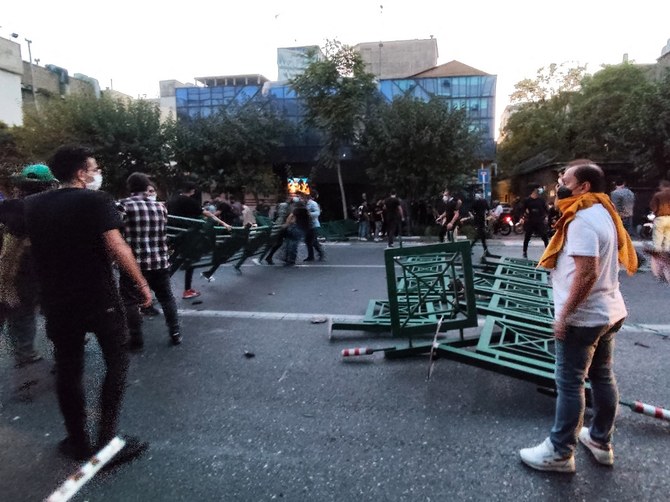
Protests have gripped Iran since the September 16 death in custody of Iranian-Kurdish Mahsa Amini, 22, after her arrest in Tehran for an alleged breach of the country’s strict dress code for women.
Earlier this month, Iran executed two men in connection with the protests, an escalation of the authorities’ crackdown that activists say is meant to instill public fear.
In a report Tuesday, IHR identified 100 detainees who face potential capital punishment, including at least 11 already sentenced to death.
Five detainees on the IHR list are women.
The report said many of them have limited access to legal representation.
“By issuing death sentences and executing some of them, they (the authorities) want to make people go home,” said IHR director Mahmood Amiry-Moghaddam.
“It has some effect,” he told AFP, but “what we’ve observed in general is more anger against the authorities.”
“Their strategy of spreading fear through executions has failed.”
In an updated death toll issued Tuesday, IHR said 476 protesters have been killed so far.
Iran’s top security body in early December gave a toll of more than 200 people killed, including security officers.
At least 14,000 people have been arrested since the nationwide unrest began, the United Nations said last month.
Majidreza Rahnavard, 23, was hanged in public from a crane on December 12 after being sentenced by a court in Mashhad for killing two members of the security forces with a knife.
Four days earlier, Mohsen Shekari, also 23, had been executed for wounding a member of the security forces.
The judiciary has said that nine others have been handed death sentences over the protests, of whom two have been allowed retrials.
The father of death row inmate Mohammad Ghodablou has issued a plea on social media calling for his son’s release, saying “he made a big mistake.”
“Mohammad has so far had no criminal record,” the father said in a video circulated this week, claiming he suffers from a mental disorder.
Ghodablou, 22, was charged in Tehran with “corruption on earth” for “attacking police with a car, which resulted in the death of one officer and the injury of five others.”
The judiciary’s Mizan Online news website reported Monday that Ghodablou had undergone psychiatric evaluation that concluded he “was aware of the nature of his crime.”
US-based Human Rights Activists News Agency (HRANA) noted in a report issued Monday a rise of 88 percent in executions in 2022 compared to last year and an eight-percent rise in death sentences, the vast majority of them for murder or drug offenses.
According to London-based rights group Amnesty International, Iran is second only to China in its use of the death penalty, with at least 314 people executed in 2021.


![]()

Dozens of Iran protesters risk death penalty: Rights group
Short Url
https://arab.news/2kr67
Dozens of Iran protesters risk death penalty: Rights group
- In a report Tuesday, IHR identified 100 detainees who face potential capital punishment
- The report said many of them have limited access to legal representation


Latest updates


Recommended


© 2026 SAUDI RESEARCH & PUBLISHING COMPANY, All Rights Reserved And subject to Terms of Use Agreement.