

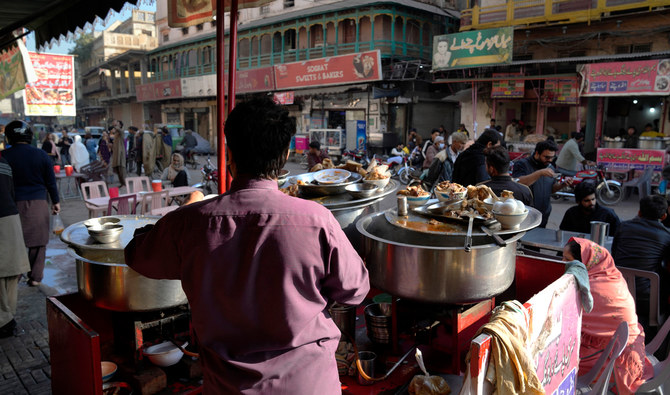

LAHORE: No menu. No delivery. No walk-ins. Advance orders only. Explanations and instructions while you eat.
Welcome to Baking Virsa, a hole-in-the-wall in the eastern Pakistani city of Lahore described as the country’s most expensive restaurant for what it serves — household favorites like flatbreads and kebabs.
It attracts diners from across Pakistan and beyond, curious about the limited offerings, the larger-than-life owner, and the rigid, no-frills dining experience that sets it apart from other restaurants in the area.
The windowless space opens out onto Railway Road in Gawalmandi, a neighborhood crammed with people, vehicles, animals, and food stalls. Restaurants belch out smells of baking bread, frying fish, grilling meats, and opinionated spicing into the early hours of the morning, when preparations begin for breakfast.
Lahore is a culinary powerhouse in Pakistan and, for years, Gawalmandi was famous for having a pedestrian area with restaurants and cafes.
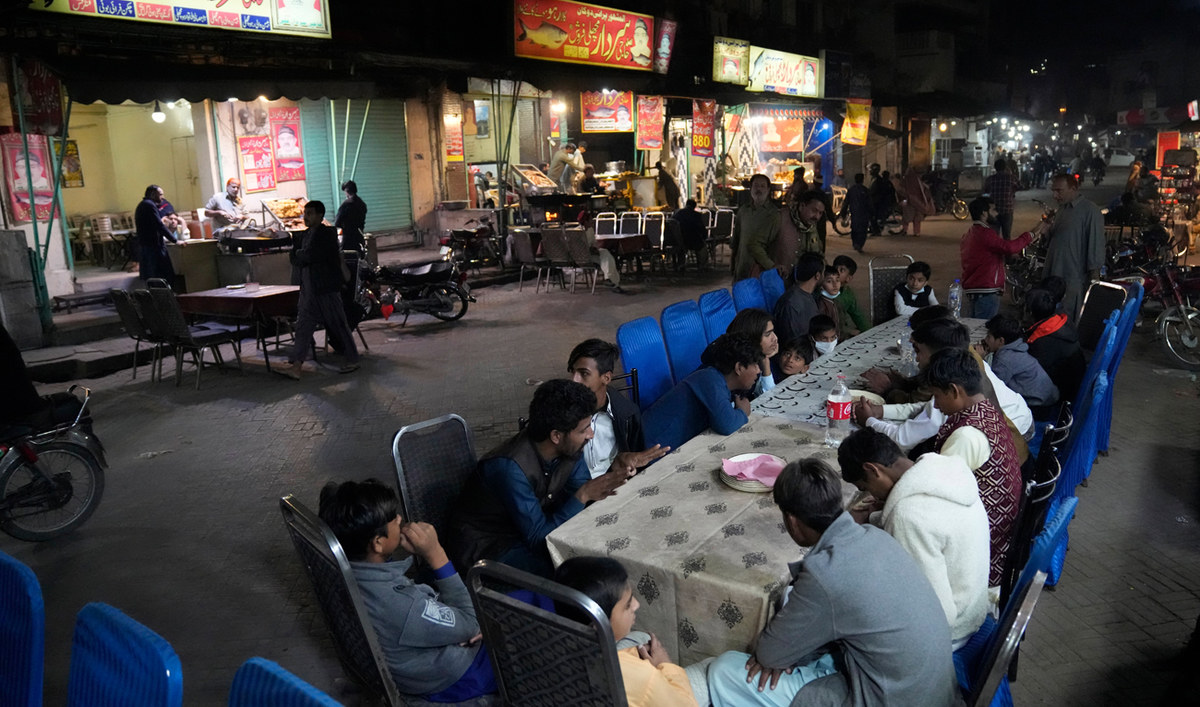
People wait to be served dinner in the famous food street of Gawalmandi, an old area of Lahore, Pakistan, Sunday, Dec. 11, 2022. (Photo courtesy: AP)
Many of Gawalmandi’s original communities migrated from Kashmir and eastern Punjab province before partition in 1947, when India and Pakistan were carved from the former British Empire as independent nations. The mix of Hindus, Sikhs and Muslims enriched Gawalmandi’s commerce, culture and cuisine.
Some upscale parts of Lahore used to see Gawalmandi as “virtually a no-go area,” said Kamran Lashari, the director-general of the Lahore Walled City Authority. But a makeover more than 20 years ago helped pull in the crowds and turn it into a magnet for diners.
“We had street performers. President Pervez Musharraf sat in the street with people all around him. The prince of Jordan also visited. Indian newspapers reported on Gawalmandi,” Lashari said.
Restaurants in the neighborhood tend to be cheap and cheerful places.
And then there is Baking Virsa, where dinner for two can quickly come to $60 without drinks because drinks, even water, are not served. By comparison, a basket of naan at the five-star Serena Hotel in the capital, Islamabad, sells for a dollar and a plate of kebabs is $8. In Gawalmandi, one naan usually costs as little as 10 cents.
There are five items in Baking Virsa’s repertoire: chicken, chops, two types of naan, and kebabs. Owner Bilal Sufi also does a roaring trade in bakarkhani, buttery, savory, crispy pastry discs best enjoyed with a cup of pink Kashmiri chai. Everything is available for takeaway but must be ordered days in advance, even when dining in.
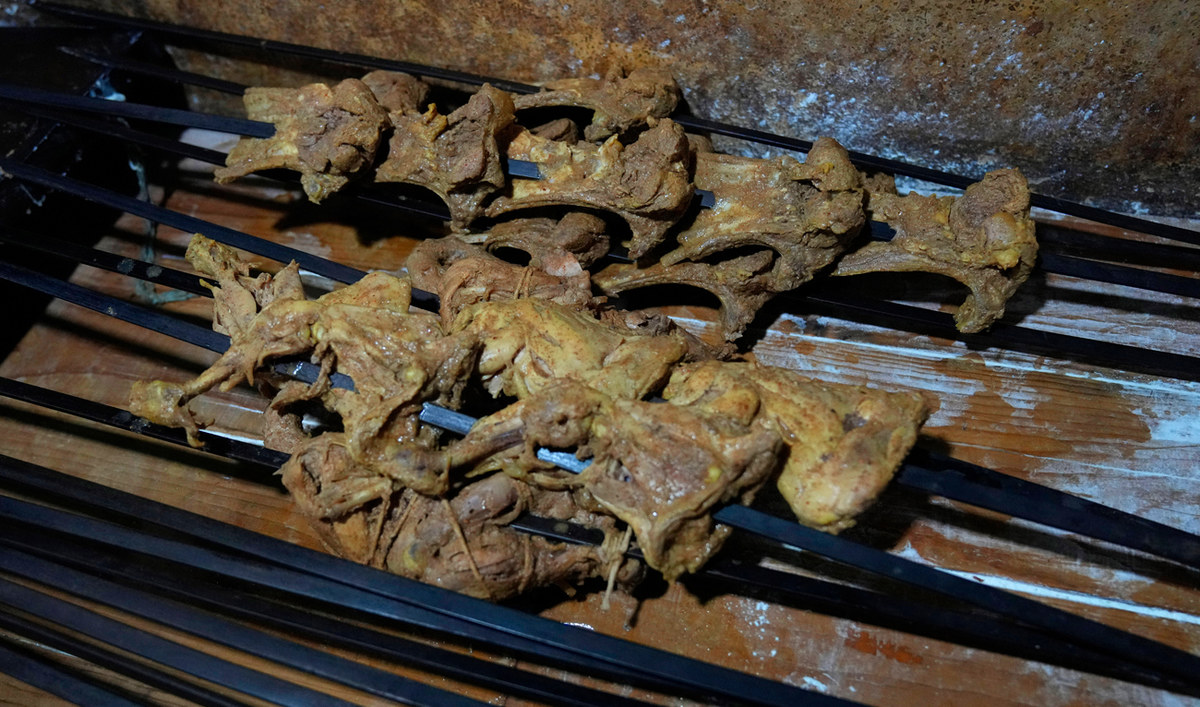
Marinated chicken chops are prepared for customers at a Baking Virsa eatery in Lahore, Pakistan, Saturday, Dec. 3, 2022. (Photo courtesy: AP)
It is not a restaurant but a tandoor, a large oven made of clay, the 34-year-old Sufi tells people. It has been in the same location for 75 years, serving the same items for decades.
Sufi says he is only doing what his father and grandfather have done, detailing his marinade ingredients, cooking methods, meat provenance and animal husbandry. His sheep are fed a diet of saffron milk, dates and unripe bananas.
He also tells people how to eat their food. “Pick it up with your hands! Take a big bite! Eat like a beast!” he urges them.
There is no salad, no yogurt, and no chutney, he tells a potential customer on the phone. “And if you ask for these you won’t get them.”
Sufi has run Baking Virsa for more than three years, taking over from his father Sufi Masood Saeed, who ran it before him and his grandfather Sufi Ahmed Saeed before that.
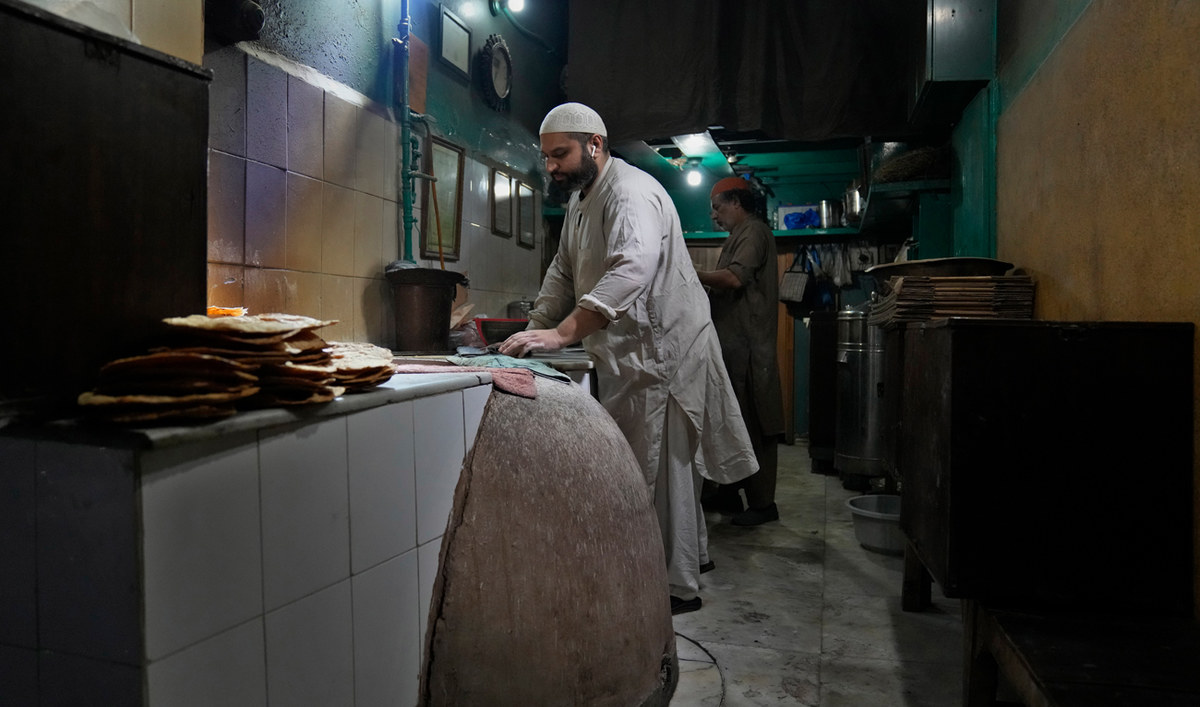
Bilal Sufi, owner of Baking Virsa eatery, prepares kebabs in Lahore, Pakistan, Saturday, Dec. 3, 2022. (Photo courtesy: AP)
“In Pakistan, people think the spicier the better,” said the third-generation tandoor owner. “Everywhere in Pakistan you’ll have sauce or salad. If you have those on your taste buds, will you taste the yogurt or the meat?”
The meal arrives in a sequence.
First, Sufi presents a whole chicken, for $30, followed by mutton chops at $12.50, then a kebab, which costs $8. Sufi says one kebab is enough for two people. A female diner asks for a plain naan with her chicken but is told she can’t have it until she gets her kebab.
Her companion asks for a second kebab but is declined.
“All our kebabs are committed,” Sufi tells him solemnly.
Another diner wants the mutton-stuffed naan but is told she can’t have it as it wasn’t part of the telephone order made three nights earlier.
Dinner comes on plastic plates atop plastic stools to a soundtrack of tooting rickshaws and other street life. Neighbors complain that the SUVs and sleek cars with Islamabad license plates block their doorways. Nobody moves their vehicles.
Sufi is unapologetic about everything. If he doesn’t get the quality of meat he wants, he won’t serve it. He’ll cancel the order and return the money to customers.
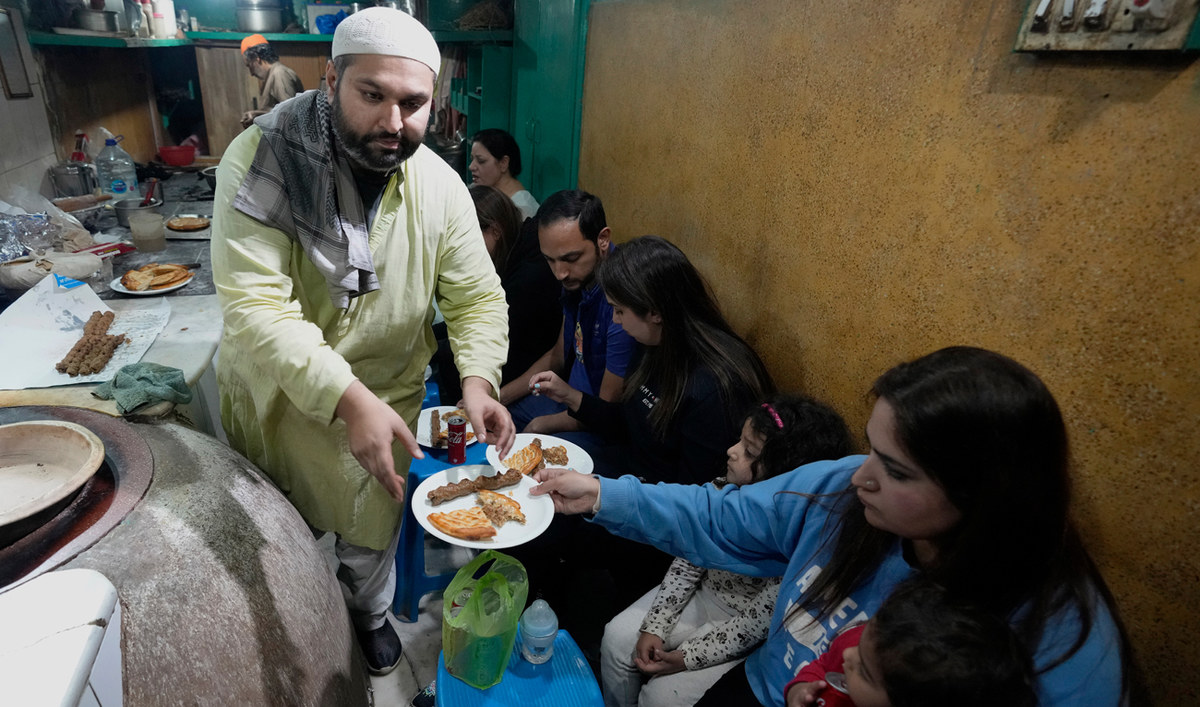
People wait to be served dinner in the famous food street of Gawalmandi, an old area of Lahore, Pakistan, Sunday, Dec. 11, 2022. (Photo courtesy: AP)
If there aren’t enough orders, he won’t open on that particular day.
“It isn’t necessary to open every day,” he says. “We need to fulfil a minimum quantity for the recipes, that’s 10-12 people.”
He insists on his customers knowing what they eat, where it comes from, how it’s made — and “why it tastes so different.”
Baking Virsa, like the properties surrounding it, has no gas or running water. There is little to no street lighting on Railway Road. Any illumination comes from traffic, homes, and businesses. Away from the lip-smacking aroma of food, there is the occasional whiff of sewage.
Lashari, the city official, laments the “decay and disorder” that blights Gawalmandi and other traditional neighborhoods like it. He says they have a lot of commercial, residential and tourism potential but need an urban regeneration program.
Sufi, unperturbed by his very basic surroundings, has no intention of changing anything.
“Baking Virsa is a legacy,” he says. “I’m doing this out of love and affection for my father.”


