WASHINGTON: The Biden administration on Thursday accused Meta Platforms Inc. of trying to buy its way to dominance in the metaverse, kicking off a high-profile trial to try to prevent the Facebook parent from buying virtual reality app developer Within Inc.
The FTC sued in July to stop the deal, saying Meta’s acquisition of Within would “tend to create a monopoly” in the market for virtual reality (VR) fitness apps. It has asked the judge to order a preliminary injunction that would halt the proposed transaction.
In an opening statement, FTC lawyer Abby Dennis said the Within acquisition was part of Meta’s bid to acquire new and more diverse virtual reality users, including customers of Within’s popular subscription-based virtual reality workout app Supernatural.
That would complement Meta’s existing virtual reality users, who tend to skew young and male, and be more focused on gaming, Dennis added.
“Meta could have chosen to use all its vast resources and capabilities to build its own dedicated VR fitness app, and it was planning on doing that before it acquired Within,” Dennis said, pointing to a plan from early 2021.
The plan, Operation Twinkie, involved expanding a rhythm game app called Beat Saber that the company acquired in 2019 into the fitness space via a proposed partnership with digital fitness company Peloton, Dennis said.
She cited an email from Chief Executive Mark Zuckerberg saying he was “bullish” on fitness and calling the proposed partnership with Peloton “awesome.”
Lawyers for Meta and Within argued that the FTC did a poor job of defining the relevant market and said the companies compete with a range of fitness content, not just VR-dedicated fitness apps.
Meta’s lawyers also disputed that plans for a Meta-owned VR fitness app had proceeded beyond low-level “brainstorming” and argued that the FTC underestimated the competition in the market it had defined, citing the potential for fellow tech giants Apple Inc, Alphabet Inc’s Google and Bytedance to join the fray.
Rade Stojsavljevic, who manages Meta’s in-house VR app developer studios, testified that he had proposed the tie-up between Beat Saber and Peloton but did not develop a formal plan and never discussed the idea with either party.
Internal documents from early 2021 that were displayed in court showed Stojsavljevic proposing acquisitions of VR developers before they could be “cannibalized” by competitors and discussing pressure from Zuckerberg to “get aggressive” in response to reports of a prospective Apple headset.
The trial, scheduled through Dec. 20, will serve as a test of the FTC’s bid to head off what it sees as a repeat of the company acquiring small upcoming would-be rivals and effectively buying its way to dominance, this time in the nascent virtual and augmented reality markets.
The FTC is separately trying to force Meta to unwind two previous acquisitions, Instagram and WhatsApp, in a lawsuit filed in 2020. Both were in relatively new markets at the time the companies were purchased.
PRESSURE TO PRODUCE HIT APPS
A government victory could crimp Meta’s ability to maneuver in an area of emerging technology — virtual and augmented reality — that Zuckerberg has identified as the “next generation of computing.”
If blocked from making acquisitions in the space, Meta would face greater pressure to produce its own hit apps and would give up the gains — in terms of revenue, talent, data and control — associated with bringing innovative developers in-house.
Within developed Supernatural, which it advertises as a “complete fitness service” with “expert coaches,” “beautiful destinations” and “workouts choreographed to the best music available.”
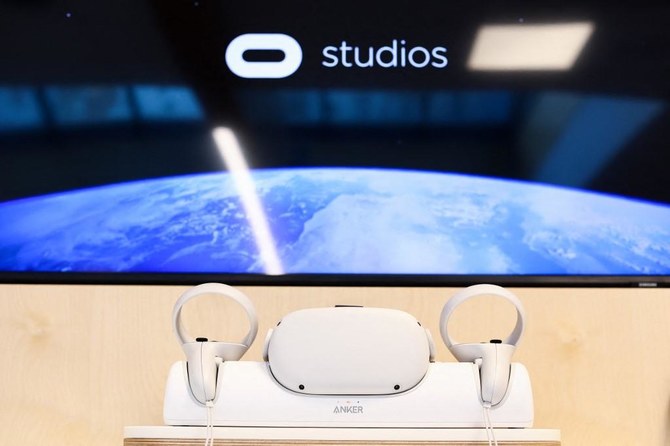
It is available only on Meta’s Quest devices, which are headsets offering immersive digital visuals and audio that market research firm IDC estimates capture 90 percent of global shipments in the virtual reality hardware market.
The majority of the more than 400 apps available in the Quest app store are produced by external developers. Meta owns the most popular virtual reality app in the Quest app store, Beat Saber, the app it was considering expanding with the Peloton partnership.
The social media company agreed to buy Within in October 2021, a day after changing its name from Facebook to Meta, signalling its ambition to build an immersive virtual environment known as the metaverse.
Zuckerberg will be a witness in the trial. Other potential witnesses are Within CEO Chris Milk and Meta Chief Technology Officer Andrew Bosworth, who runs the company’s metaverse-oriented Reality Labs unit.
The trial is at the US District Court for the Northern District of California.


![]()

Meta battles US antitrust agency over future of virtual reality
Short Url
https://arab.news/zbs6r
Meta battles US antitrust agency over future of virtual reality
- FTC sued Meta in July to stop the tech giant's acquisition of virtual reality app developer Within
- Government victory could crimp Meta’s ability to maneuver in an area of emerging technology

Latest updates


© 2026 SAUDI RESEARCH & PUBLISHING COMPANY, All Rights Reserved And subject to Terms of Use Agreement.