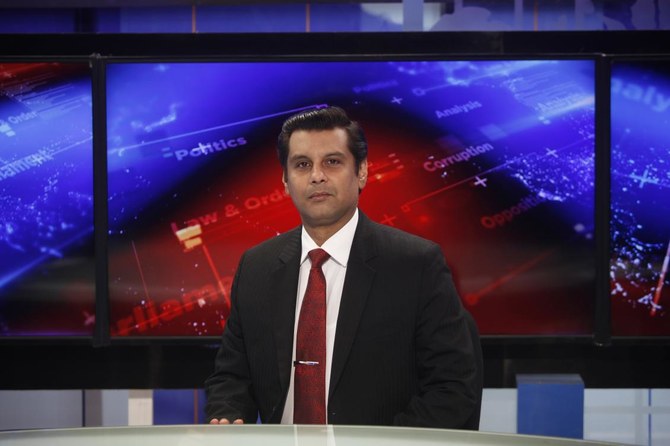
ISLAMABAD: A team set up by the Pakistani government to probe the killing of a well-known Pakistani journalist in Nairobi said it found several contradictions in the version given by Kenyan authorities, and believes it was a case of pre-meditated murder.
TV journalist Arshad Sharif, who had fled Pakistan citing threats to his life, was shot dead in Nairobi in October. Kenyan officials said it was a case of mistaken identity and police hunting car thieves opened fire on his vehicle as it drove through a roadblock without stopping.
A two-member fact-finding team from Pakistan that traveled to Kenya and conducted a number of interviews, examined and reconstructed the crime scene and examined the deceased’s phones and computers, said in a 600-page report that Sharif’s killing was a pre-planned murder.
“Both the members of the (fact-finding team) have a considered understanding that it is a case of planned targeted assassination with transnational characters rather than a case of mistaken identity,” said the report, copies of which were submitted to Pakistan’s Supreme Court.
“It is more probable that the firing was done, after taking proper aim, at a stationary vehicle,” it said.
Kenyan authorities declined comment on the specifics of the report.
“The investigation into the matter is still ongoing, so there is not much I can tell,” said Resila Onyango, spokesperson for the Kenya National Police Service.
A multi-agency team is conducting the investigation, he said, adding that the team will apprise authorities when they are done with the probe.
The chairperson of the Kenyan police watchdog Independent Police Oversight Authority, Anne Makori, also said investigations were still ongoing.
Pakistan’s Interior Minister Rana Sanaullah had said before the release of the report that Sharif’s body had bruises and torture marks, suggested it was a targeted killing.
The fact-finding team highlighted one wound in particular on Sharif’s back, saying it appeared to have been inflicted from relatively close range.
The report noted there was no corresponding penetration mark of a bullet on the seat on which Sharif was sitting when the shooting purportedly took place, calling it a “ballistic impossibility.”
“The injury had to have been caused either before the journalist got into the vehicle, or the shot was fired from a relatively close range, possibly from inside the vehicle, and almost certainly not a moving vehicle,” the report said.
Sharif had fled from Pakistan citing threats to his life after the government registered several treason cases against him.
One of the treason cases stemmed from reporting Sharif did that led to an accusation he had spread a call from an official in a previous government, led by former cricket star Imran Khan, for members of the armed forces to mutiny.
Both Sharif and the official in the previous government denied inciting mutiny.
Former prime minister Khan said Sharif had been murdered for his journalistic work. He and his successor Prime Minister Shehbaz Sharif, not related to the journalist, had called for a judicial investigation.
The fact-finding team’s report also pointed out apparent contradictions in the autopsy reports in Kenya and Pakistan.
The post-mortem report in Pakistan identified 12 injuries on Sharif’s body whereas the Kenyan report identified just two injuries pertaining to gunshot wounds.
The fact-finding team report said doctors believed the injures may be the result of torture or a struggle, but it could not be established until verified by the doctor who conducted the post mortem in Kenya.

Pakistani journalist’s killing in Kenya a pre-meditated murder – report
Short Url
https://arab.news/yc7un
Pakistani journalist’s killing in Kenya a pre-meditated murder – report
- TV journalist Arshad Sharif earlier fled Pakistan citing threats to his life
- Team of Pakistani probers believe it was a case of pre-meditated murder
Netflix walks away from Warner Bros deal, clearing the path for Paramount
NEW YORK: Netflix is walking away from its offer to buy Warner Bros. Discovery’s studio and streaming business, in a stunning move that effectively puts Paramount in a position to take over its storied Hollywood rival.
On Thursday, Warner’s board announced that Skydance-owned Paramount’s latest offer to buy the entire company for $31 per share was superior to the agreement it had previously struck with Netflix. Warner gave Netflix four business days to come up with a counteroffer — but Netflix instead responded less than two hours later, declining to raise its proposal. It said the new price it would have to pay made the deal “no longer financially attractive.”
“We believe we would have been strong stewards of Warner Bros.′ iconic brands,” Netflix’s co-CEOs Ted Sarandos and Greg Peters said in a joint statement. “But this transaction was always a ‘nice to have’ at the right price, not a ‘must have’ at any price.”
A Paramount buyout of Warner Bros. Discovery would reshape Hollywood and the wider media landscape. And unlike Netflix — which was only eyeing Warner’s studio and streaming business — Paramount wants the entire company. That means HBO Max, cult-favorite titles like “Harry Potter” and even CNN could soon find themselves under the same roof as Paramount’s CBS, “Top Gun” and the Paramount+ streaming service.
The prospect of such a combination, which will still need the green light from both Warner shareholders and regulators, poses both antitrust concerns and questions of political influence.
Netflix’s decision to walk away on Thursday marks the latest development in a monthslong, messy corporate battle over Warner’s future. Sarandos and Peters thanked Warner’s leadership despite the final outcome.
Warner had repeatedly backed the deal it struck with Netflix since December right up until Thursday evening, when its board continued to recommend Netflix even while calling Paramount’s bid valued at about $111 billion including debt “superior.” Netflix had previously put a $27.75 per share offer on the table for Warner’s studio and streaming business, totaling nearly $83 billion including debt.
In a statement Thursday night, CEO David Zaslav said Netflix executives had been “extraordinary partners” and that he wished them “well in the future.”
After months of a heated back and forth amid Paramount’s hostile campaign to take over Warner without the board’s blessing, Warner also changed its tune about the remaining prospective buyer.
Warner’s board hasn’t officially adopted Paramount’s merger agreement yet, but once it does, Zaslav said it “will create tremendous value.” He added that the company was “excited about the potential of a combined Paramount Skydance and Warner Bros. Discovery.”
Paramount did not immediately respond to requests for further comment. But CEO David Ellison earlier applauded Warner’s board affirming “the superior value of our offer.”
A Paramount-Warner combo would combine two of Hollywood’s five legacy studios that remain today, in addition to their theatrical channels. Beyond “Harry Potter,” Warner movies like “Superman,” “Barbie,” and “One Battle After Another” — as well as hit TV series like “The White Lotus” and “Succession” — would join Paramount’s content library.
Paramount’s lineup of titles include “Top Gun,” “Titanic” and “The Godfather.” And beyond CBS, it owns networks like MTV and Nickelodeon, as well as the Paramount+ streaming service.
A merger between the two companies would put CNN under the same roof as CBS, which has already seen significant editorial shifts under new Skydance ownership. Paramount took steps to appeal to more conservative viewers in its news operations, notably with the installation of Free Press founder Bari Weiss as editor-in-chief of CBS News. And if the company’s takeover bid of Warner is successful, critics warn similar shifts could happen CNN, a network that has long attracted ire from Trump.
“Any concerns about Netflix owning Warner Bros. are only heightened by the prospect of Paramount owning all of WBD. But it might not even matter,” Mike Proulx, vice president and research director at Forrester, a market research company, said in an email. “Politics are playing an outsized role in this deal, and they’ve been on Paramount’s side from the get‑go.”
President Donald Trump has a close relationship with the billionaire Oracle founder Larry Ellison, the father of Paramount’s CEO David Ellison who is heavily backing Paramount’s bid to buy Warner. And Paramount’s aggressive push to acquire Warner arrived just months after Skydance closed its own buyout of Paramount in a contentious merger approved just weeks after the company agreed to pay the president $16 million to settle a lawsuit over editing at Paramount’s “60 Minutes” program on CBS.
Still, Trump has continued to publicly lash out at Paramount over editorial decisions at CBS’ “60 Minutes.” And while the president previously made unprecedented suggestions about his involvement in seeing a Warner deal through, he’s since walked back those statements and maintained that regulatory approval will be up to the Justice Department.
Still, top Democratic lawmakers have sounded the alarm about the Republican president’s ties to companies like Paramount and potential consequences of growing corporate power.
“A handful of Trump-aligned billionaires are trying to seize control of what you watch and charge you whatever price they want,” Democratic Sen. Elizabeth Warren, a longtime antitrust hawk, said in a statement Thursday night. She also called a potential Paramount-Warner combo an “antitrust disaster.”
Executives at Paramount have argued that merging with Warner will allow it to compete with bigger rivals particularly in the streaming space, and bring larger content libraries for its customers. But Warren and other critics say such a merger threatens higher prices, and that a Warner takeover would only further consolidate power in an industry already run by just a few major players. Some trade groups also warn that could mean job losses and less diversity in filmmaking.
When Netflix was still in the running, one of its key arguments against a Warner-Paramount tie-up was that it would combine two very similar companies: two legacy studios, two theatrical channels and two major news networks. The streaming giant said that posed a higher risk for job losses and other competition concerns.
In contrast, executives from both Netflix and Warner argued at a Senate antitrust hearing earlier this month that Netflix doesn’t have the same studios and film distribution that Warner does. That was “one of the reasons that the Netflix offer appeals to us so much,” Bruce Campbell, Warner’s chief revenue and strategy officer, told senators on Feb. 3 — noting that the company believed Netflix would not only keep Warner’s operations intact, but “invest in continued production.”
How regulators will respond to a Warner-Paramount deal remains to be seen. The US Department of Justice has already initiated reviews, and other countries are expected to do so, too.
Warner shareholders will have to be convinced, too. Beyond a higher price, Paramount has also tried to entice them by pledging to move up a previously-promised “ticking fee.” The company initially said it would pay 25 cents per share for every quarter the deal drags on past the end of the year. Now it’s agreed to pay that amount if the deal doesn’t go through by the end of September. It also agreed to a regulatory termination fee of $7 billion.
But Paramount is taking on billions of dollars in debt to finance its offer — something critics have warned could only increase to the likelihood of potential job losses and other restructuring down the road. Foreign sovereign wealth funds have also provided equity for the offer, drawing added scrutiny.
On Thursday, Warner’s board announced that Skydance-owned Paramount’s latest offer to buy the entire company for $31 per share was superior to the agreement it had previously struck with Netflix. Warner gave Netflix four business days to come up with a counteroffer — but Netflix instead responded less than two hours later, declining to raise its proposal. It said the new price it would have to pay made the deal “no longer financially attractive.”
“We believe we would have been strong stewards of Warner Bros.′ iconic brands,” Netflix’s co-CEOs Ted Sarandos and Greg Peters said in a joint statement. “But this transaction was always a ‘nice to have’ at the right price, not a ‘must have’ at any price.”
A Paramount buyout of Warner Bros. Discovery would reshape Hollywood and the wider media landscape. And unlike Netflix — which was only eyeing Warner’s studio and streaming business — Paramount wants the entire company. That means HBO Max, cult-favorite titles like “Harry Potter” and even CNN could soon find themselves under the same roof as Paramount’s CBS, “Top Gun” and the Paramount+ streaming service.
The prospect of such a combination, which will still need the green light from both Warner shareholders and regulators, poses both antitrust concerns and questions of political influence.
Netflix’s decision to walk away on Thursday marks the latest development in a monthslong, messy corporate battle over Warner’s future. Sarandos and Peters thanked Warner’s leadership despite the final outcome.
Warner had repeatedly backed the deal it struck with Netflix since December right up until Thursday evening, when its board continued to recommend Netflix even while calling Paramount’s bid valued at about $111 billion including debt “superior.” Netflix had previously put a $27.75 per share offer on the table for Warner’s studio and streaming business, totaling nearly $83 billion including debt.
In a statement Thursday night, CEO David Zaslav said Netflix executives had been “extraordinary partners” and that he wished them “well in the future.”
After months of a heated back and forth amid Paramount’s hostile campaign to take over Warner without the board’s blessing, Warner also changed its tune about the remaining prospective buyer.
Warner’s board hasn’t officially adopted Paramount’s merger agreement yet, but once it does, Zaslav said it “will create tremendous value.” He added that the company was “excited about the potential of a combined Paramount Skydance and Warner Bros. Discovery.”
Paramount did not immediately respond to requests for further comment. But CEO David Ellison earlier applauded Warner’s board affirming “the superior value of our offer.”
A Paramount-Warner combo would combine two of Hollywood’s five legacy studios that remain today, in addition to their theatrical channels. Beyond “Harry Potter,” Warner movies like “Superman,” “Barbie,” and “One Battle After Another” — as well as hit TV series like “The White Lotus” and “Succession” — would join Paramount’s content library.
Paramount’s lineup of titles include “Top Gun,” “Titanic” and “The Godfather.” And beyond CBS, it owns networks like MTV and Nickelodeon, as well as the Paramount+ streaming service.
A merger between the two companies would put CNN under the same roof as CBS, which has already seen significant editorial shifts under new Skydance ownership. Paramount took steps to appeal to more conservative viewers in its news operations, notably with the installation of Free Press founder Bari Weiss as editor-in-chief of CBS News. And if the company’s takeover bid of Warner is successful, critics warn similar shifts could happen CNN, a network that has long attracted ire from Trump.
“Any concerns about Netflix owning Warner Bros. are only heightened by the prospect of Paramount owning all of WBD. But it might not even matter,” Mike Proulx, vice president and research director at Forrester, a market research company, said in an email. “Politics are playing an outsized role in this deal, and they’ve been on Paramount’s side from the get‑go.”
President Donald Trump has a close relationship with the billionaire Oracle founder Larry Ellison, the father of Paramount’s CEO David Ellison who is heavily backing Paramount’s bid to buy Warner. And Paramount’s aggressive push to acquire Warner arrived just months after Skydance closed its own buyout of Paramount in a contentious merger approved just weeks after the company agreed to pay the president $16 million to settle a lawsuit over editing at Paramount’s “60 Minutes” program on CBS.
Still, Trump has continued to publicly lash out at Paramount over editorial decisions at CBS’ “60 Minutes.” And while the president previously made unprecedented suggestions about his involvement in seeing a Warner deal through, he’s since walked back those statements and maintained that regulatory approval will be up to the Justice Department.
Still, top Democratic lawmakers have sounded the alarm about the Republican president’s ties to companies like Paramount and potential consequences of growing corporate power.
“A handful of Trump-aligned billionaires are trying to seize control of what you watch and charge you whatever price they want,” Democratic Sen. Elizabeth Warren, a longtime antitrust hawk, said in a statement Thursday night. She also called a potential Paramount-Warner combo an “antitrust disaster.”
Executives at Paramount have argued that merging with Warner will allow it to compete with bigger rivals particularly in the streaming space, and bring larger content libraries for its customers. But Warren and other critics say such a merger threatens higher prices, and that a Warner takeover would only further consolidate power in an industry already run by just a few major players. Some trade groups also warn that could mean job losses and less diversity in filmmaking.
When Netflix was still in the running, one of its key arguments against a Warner-Paramount tie-up was that it would combine two very similar companies: two legacy studios, two theatrical channels and two major news networks. The streaming giant said that posed a higher risk for job losses and other competition concerns.
In contrast, executives from both Netflix and Warner argued at a Senate antitrust hearing earlier this month that Netflix doesn’t have the same studios and film distribution that Warner does. That was “one of the reasons that the Netflix offer appeals to us so much,” Bruce Campbell, Warner’s chief revenue and strategy officer, told senators on Feb. 3 — noting that the company believed Netflix would not only keep Warner’s operations intact, but “invest in continued production.”
How regulators will respond to a Warner-Paramount deal remains to be seen. The US Department of Justice has already initiated reviews, and other countries are expected to do so, too.
Warner shareholders will have to be convinced, too. Beyond a higher price, Paramount has also tried to entice them by pledging to move up a previously-promised “ticking fee.” The company initially said it would pay 25 cents per share for every quarter the deal drags on past the end of the year. Now it’s agreed to pay that amount if the deal doesn’t go through by the end of September. It also agreed to a regulatory termination fee of $7 billion.
But Paramount is taking on billions of dollars in debt to finance its offer — something critics have warned could only increase to the likelihood of potential job losses and other restructuring down the road. Foreign sovereign wealth funds have also provided equity for the offer, drawing added scrutiny.
© 2026 SAUDI RESEARCH & PUBLISHING COMPANY, All Rights Reserved And subject to Terms of Use Agreement.


