


TEHRAN: Iranian security forces opened fire on protests after Friday prayers in the restive southeastern province of Sistan-Baluchistan, leaving dozens of people dead or wounded, activists said.
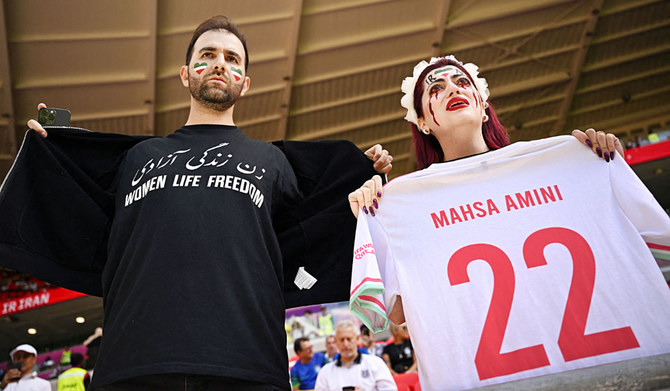
Iran has intensified a crackdown on protests sparked by the Sept. 16 death in custody of Mahsa Amini, a 22-year-old Iranian woman of Kurdish origin.
Campaigners had called for nationwide demonstrations this week in solidarity with Kurdistan, which along with Sistan-Baluchistan has borne the brunt of Iran’s deadly protest crackdown.
“Kurdistan, Kurdistan, we will support you,” protesters were heard chanting on Friday in a video from the Sistan-Baluchistan capital Zahedan, one of the few Sunni-majority cities in Iran.
“Kurds and Baluchs are brothers, thirsting for the leader’s blood,” they sang in other unverified footage posted on social media, in reference to Iran’s supreme leader Ali Khamenei.
Activists said later that the security forces had opened fire on protesters in the city.
“Dozens have been killed or injured,” the London-based Baloch Activists Campaign said on its Telegram channel. AFP was unable to confirm the toll.
BAC shared a video showing a group of men carrying a man who appears to be wounded out of what it said was Zahedan’s Makki mosque.
Demonstrators also took to the streets of the Sistan-Baluchistan cities of Iranshahr, Khash and Saravan, said BAC and the 1500tasvir monitor.
Oslo-based group Iran Human Rights said the Islamic Revolutionary Guard Corps had used military equipment, including heavy machine guns, to suppress the people.
The Revolutionary Guards have built up their presence in restive Kurdish regions.
The Kurdish-populated provinces of western and northwestern Iran have been hubs of protest since the death of Amini after her arrest in Tehran for an alleged breach of the country’s strict dress code for women. On Tuesday, IHR said the Iranian security forces had killed at least 416 people, including 51 children and 27 women, since the protests broke out.
Its toll included at least 126 people killed in Sistan-Baluchistan and 48 people slain in Kurdistan province.
More than 90 were killed during a mass shooting in Zahedan on Sept. 30. Friday’s protests came a day after the UN Human Rights Council voted to create a high-level investigation into Iran’s bloody crackdown.
Iran condemned the move, saying it is “useless and represents a violation of the country’s national sovereignty.”
A prominent Baluch cleric, Molavi Abdolhamid, used his Friday prayers to call for an end to the repression of protests through arrests and killings.
“The people’s protest has shown that the policies of the last 43 years have reached a dead end,” his website quoted him as saying.
More Revolutionary Guards armored units and special forces were heading to the west and northwest border regions, home to the Kurdish minority, several state news agencies reported, after earlier reinforcements were announced on Sunday.
The Tasnim news agency showed a photograph of smiling Revolutionary Guards commanders standing on a military vehicle and saluting a long line of troops.
Iran has accused Western countries of orchestrating the unrest and accused protesters in ethnic minority regions of working on behalf of separatist groups.
Molavi Abdolhamid also used his sermon to denounce the reported abuse of detainees.
“Things are said about the mistreatment of women in the media that are heavy and I can’t bring myself to say,” he said, apparently referring to reports of alleged rapes of detained women.
The UN Human Rights Council, which on Thursday voted to start investigating Iran’s crackdown, has demanded the authorities halt the violence.


