

SABIC and Aramco plan to start crude-to-petrochemicals project in Ras Al-Khair 

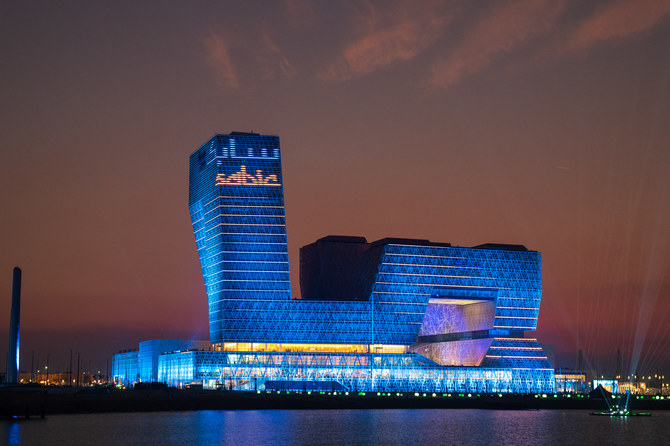
With a capacity of 400,000 barrels of crude per day, Saudi Arabia’s first-of-its-kind project is set to come up in Ras Al-Khair. (Supplied)
Short Url
Updated 25 November 2022
Follow

SABIC and Aramco plan to start crude-to-petrochemicals project in Ras Al-Khair 

RIYADH: Saudi Basic Industries Corp., or SABIC, is planning to start a joint project with Saudi Aramco to convert crude into petrochemicals, the Kingdom's Energy Minister Prince Abdulaziz bin Salman revealed. 

With a capacity of 400,000 barrels of crude per day, Saudi Arabia’s first-of-its-kind project is set to come up in Ras Al-Khair, he added. 

The minister made the announcement during an event to open a SABIC building in Al Jubail. The Prince also added that Saudi Arabia plans to open a new port in the industrial city of Ras Al-Khair to export petrochemicals. 

During his speech, the minister stressed that oil receives strong demand from the petrochemical sector globally, adding that this growth will accelerate by 60 percent until 2040. 

Highlighting that Saudi Arabia is the fourth largest global producer of petrochemicals, he pointed out that the Kingdom possesses all the required components for the further development of this sector in the future.  

The energy minister revealed that the integrated strategy for the petrochemical sector in the Kingdom is in its final stages. It includes building an important chain from basic petrochemicals to specialized petrochemicals. The system aims to convert about 4 million barrels of crude and liquids into petrochemicals for local projects. 

Together with SABIC, Aramco has been working to commercialize crude to chemicals technologies as part of the strategy to position itself as a preeminent player in the global petrochemicals industry. 

In its C2C technologies, Aramco aims to remove or streamline several conventional industrial processes, resulting in chemicals that are less expensive to produce while at the same time reducing the carbon footprint associated with the use of our oil, according to its website. 

Typically processed in an oil refinery, crude oil is transformed into a variety of fractions such as naphtha, diesel, kerosene, gas oil, and high boiling residue for being used as feedstocks for conventional petrochemical production, but the process is costly.  

Aramco is working at tweaking the existing technologies and processes in an integrated refining complex to raise the chemical production level per barrel of oil from the regular 8 percent to 12 percent, up to 50 percent, according to its website. 

Both firms already entered into a similar partnership in 2018 to develop an integrated industrial complex to convert crude oil to chemicals in Yanbu, on the west coast of Saudi Arabia.  

The complex was projected to process 400,000 barrels per day of crude oil, producing around 9 million tons of chemicals and base oils annually, and it is expected to start operations in 2025. 


Bahrain to roll out fiscal reforms to bolster public finances

Updated 30 December 2025
Follow

Bahrain to roll out fiscal reforms to bolster public finances

RIYADH: Bahrain’s government has unveiled a comprehensive package of fiscal reforms aimed at curbing public expenditure, generating new revenue streams, and safeguarding essential subsidies for citizens.

According to a report by the Bahrain News Agency, the measures include increases in fuel prices, higher electricity and water tariffs for certain categories, and greater dividend contributions from state-owned enterprises.

The Cabinet emphasized that electricity and water prices will remain unchanged for the first and second tariff bands for citizens’ primary residences, including homes accommodating extended families.

These reforms are aligned with Bahrain’s Economic Vision 2030, which seeks to reinforce fiscal discipline, diversify revenue sources beyond crude oil, and ensure long-term fiscal sustainability.

“The Cabinet confirmed that electricity and water tariffs for the first and second tariff bands for citizens’ primary residences will remain unchanged, taking into account extended families residing in a single household,” BNA reported.

The Cabinet also agreed to defer any changes to the subsidy mechanisms for electricity and water used in citizens’ primary residences until further studies are completed. At the same time, it approved amendments to electricity and water consumption tariffs for other categories, with implementation scheduled to begin in January 2026.

Under the proposed reforms, a 10 percent corporate income tax will be levied on companies with revenues exceeding 1 million Bahraini dinars ($2.6 million) or annual net profits above 200,000 dinars.

The new corporate tax framework is expected to come into force in 2027, subject to the completion of necessary legislative and regulatory approvals.

In addition, Bahrain plans to increase natural gas prices for businesses and reduce administrative government spending by 20 percent as part of broader cost-cutting efforts.

The government also aims to improve the utilization of undeveloped investment land that already has infrastructure in place by introducing a monthly fee of 100 fils per square meter, with implementation anticipated in January 2027.

The Cabinet further tasked the ministers of labor, legal affairs, and health with reviewing fees related to worker permits and health care services.

According to the report, revised fees will be phased in gradually over a four-year period starting in January 2026, with domestic workers exempt from the changes.

Authorities stressed that the reforms are designed to streamline government procedures that support investment, attract foreign capital, and strengthen the role of the private sector in driving economic growth.