

SABIC Q3 earnings surprise analysts as it miss estimates

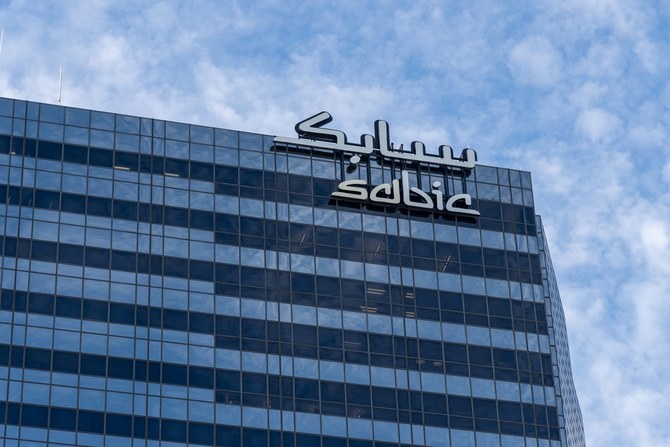
Its profits declined over 67 percent from SR5.6 billion in the same quarter a year earlier, despite a revenue jump of 7 percent to SR47 billion. (Shutterstock)
Short Url
Updated 30 October 2022
Follow

SABIC Q3 earnings surprise analysts as it miss estimates

RIYADH: Saudi chemical giant SABIC saw its profits fall to SR1.84 billion ($490 million) in the third quarter of 2022, surprising analysts as they didn’t expect earnings to decline at that level.

In response to the results, SABIC’s shares dropped 2 percent to reach SR88.00 by the end of Sunday.

The company’s profits declined over 67 percent from SR5.6 billion in the same quarter a year earlier, recording a bigger fall than analysts had earlier estimated, despite a revenue jump of 7 percent to SR47 billion.

“Today, SABIC shocked us with its third quarter of 2022 result. Even the most pessimistic did not expect these results” Saudi economist Ali Alhazmi told Arab News following the announcement.

He added: “I believe, there are many reasons for this kind of result, such as an increase in raw materials (cost), which played a major role in those results, due to the rise in oil, relative contraction in the Chinese economy due to Zero COVID policy, and also a decline in demand in the  European zone, due to war between Russia and Ukraine, and increase in the shipping cost.”

SABIC also underperformed when it comes to nine-months performance, reporting a 10 percent profit decline to SR16 billion.

The Riyadh-based company attributed the results to a decline in selling prices and sales volume, as well as lower results from joint ventures and associates.

Average sales prices increased by 15 percent and sales volumes rose by 11 percent for the first nine months of 2022, compared with the corresponding period of 2021.

The leading petrochemical producer also expects margins to be under pressure in the fourth quarter of 2022 after forecasting 2.5 percent to 2.8 percent growth in the Kingdom’s gross domestic product for 2022.

“With current global conditions, we continue to keep our operating costs under control and maintain our strong balance sheet,” said acting CEO Abdulrahman Al-Fageeh

SABIC's capital expenditure will fall by 20 percent by the end of this year due to a continued focus on capital discipline, according to Al-Fageeh.

He added: “We have announced the start of the construction of the world’s first demonstration plant for large-scale electrically heated steam cracker furnaces — a new technology with the potential to reduce the CO2 emissions of one of the most energy-intensive production processes in the chemical industry by as much as 90 percent. This shows our ongoing commitment to sustainability and innovation in everything that we do.” 

Speaking to Arab News ahead of the result announcement, analysts expected SABIC to record weak performance due to lower product prices and higher raw material costs but they didn’t estimate profit to fall as low as SR5.6 billion.

“I think SABIC will achieve almost SR6 billion in the third quarter of 2022, which is more than the third quarter of 2021 by 7.3 percent, due to a decrease in the selling prices of its products and an increase in the cost of raw material,” Alhazmi told Arab News prior to the results.

He added: “The company has been in continuous growth, whether in distributions, grants or profitability, and now in investments, and I believe the quality of management plays a great role.” 

Hesham AbouJamee, founder and CEO of Mekyal Financial Technologies, said the results were expected as the company's peers in the same industry also recorded a decline.

“Due to Saudi Kayan Petrochemical Co. and Yanbu National Petrochemical Co. results, it seems that Sabic will have very bad results this quarter,” he predicted.


Saudi Arabia approves over 1k chemical permits, awards 172 mining licenses

Updated 56 min 22 sec ago
Follow

Saudi Arabia approves over 1k chemical permits, awards 172 mining licenses

RIYADH: Saudi Arabia processed more than 1,000 chemical permit requests in November and awarded exploration rights for 172 mining sites in what the government described as its largest licensing round on record. 

The Ministry of Industry and Mineral Resources said it handled 1,095 chemical clearance requests during the month, including 1,041 approvals for non-restricted chemicals and 54 for restricted substances, covering 2,081 product classifications, the Saudi Press Agency reported. 

It forms part of ongoing efforts to accelerate the discovery and development of mineral resources valued at over SR9.4 trillion ($2.51 trillion), aligning with Vision 2030’s objective to position mining as the third pillar of the national industrial sector.   

Ministry spokesperson Jarrah Al-Jarrah explained that the chemical clearance service enables industrial investors to obtain import or export permits for chemicals used in manufacturing through the “Sanaei” digital platform.  

“He clarified that the service aims to ensure that chemical clearances for industrial facilities are granted through streamlined procedures and in a timely manner, thus serving investors and facilitating the entry of their materials through ports of entry,” the SPA report stated. 

Al-Jarrah explained that the service plays a critical role in enhancing industrial output by developing and automating permit procedures for production-related chemicals as part of the ministry’s digital services.  

In a separate development, the ministry announced that 24 domestic and international companies and consortiums won exploration licenses across 172 mining sites in Saudi Arabia, with 76 of those sites awarded through a multi-round public auction.   

These sites span three mineral belts in the Riyadh, Madinah, and Qassim regions, with committed exploration spending exceeding SR671 million during the first two years of project implementation.  

The ministry described this licensing round as the largest mining tender in the Kingdom’s history.   

The competition covered more than 24,000 sq. km across regions known for strategic minerals including gold, copper, silver, zinc, and nickel.   

Additionally, the ministry noted that 26 qualified companies participated through the electronic bidding platform, progressing through a transparent process that began with prequalification and culminated in competitive multi-round auctions.  

The ministry confirmed that these investments aim to develop untapped exploration zones and enhance the utilization of Saudi Arabia’s mineral wealth, strengthening global supply chains.   

It also announced plans to launch further exploration license tenders covering 13,000 sq. km across Madinah, Makkah, Riyadh, Qassim, and Hail, with additional opportunities to be revealed at the 5th Future Minerals Forum in Riyadh from Jan. 13 to 15.  

These efforts, the ministry stated, reflect a broader mining strategy focused on maximizing resource potential, attracting foreign investment, creating employment opportunities, and integrating value chains to establish Saudi Arabia as a global mining hub.