BAGHDAD: Baghdad said Wednesday it planned to redeploy federal guards along its border with Iran and Turkiye, after repeated bombardments from both neighboring countries against opposition groups in Iraq’s autonomous Kurdistan region.
The announcement appeared to respond in particular to Iran, which had publicly urged such a move.
Authorities have decided to “establish a plan to redeploy Iraqi border guards... along the border with Iran and Turkiye,” a statement said, issued after a government security meeting overseen by Prime Minister Mohammed Shia Al-Sudani.
The initiative will be “in coordination with the government of the Kurdistan region and the peshmerga ministry,” the statement added, referring to the Kurdish regional forces whose chief was also present at the meeting.
Iraqi Kurdistan’s borders are currently guarded by the peshmerga, who however work in the area under the direction of the federal defense ministry in Baghdad.
Iran has blamed outside powers and exiled Kurdish groups for stoking a wave of protests sparked by the September 16 death of Mahsa Amini, a 22-year-old Iranian Kurd who died after being arrested by Tehran’s morality police.
Iran’s Foreign Minister Hossein Amir-Abdollahian warned earlier Wednesday that Tehran would continue to act against “threats” from abroad.
Iran’s military operations inside Iraqi Kurdistan will continue until Baghdad’s national forces are stationed on the border and “we will no longer need to act to defend our territorial integrity,” he said.
Earlier this week, Iranian foreign ministry spokesman Nasser Kanani expressed hope Iraq’s government would deploy “border guards at the common border, so that Iran does not have to take other deterrent measures to repel threats.”
On Tuesday, a peshmerga delegation met with interior and defense ministry representatives in Baghdad.
They “decided on a strategy aimed at enhancing border security and on implementation procedures that will be followed in the near future,” a statement from the Kurdish authorities said.
On Wednesday, Lawk Ghafuri, head of foreign media relations in Kurdistan, also told AFP that the “Kurdistan regional government will be sending peshmerga forces as reinforcement at the border.”
Iraqi Kurdistan has since the 1980s hosted several Iranian-Kurdish opposition groups which have in the past waged an armed insurrection against Tehran.
In recent years their activities have declined, but the new wave of protests in Iran has again stoked tensions.
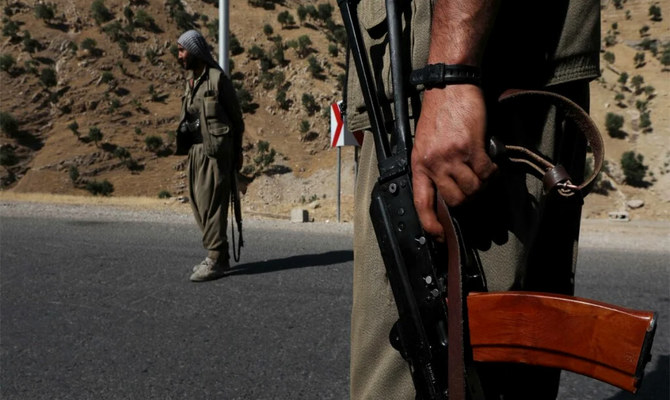
On Sunday, Ankara launched a campaign of air strikes targeting Kurdish forces across parts of Iraq and Syria as part of Operation Claw-Sword, following a deadly bombing in Istanbul on November 13 that it has blamed on the outlawed Kurdistan Workers’ Party (PKK).


![]()

Iraq to redeploy federal forces along border with Iran and Turkiye
Short Url
https://arab.news/53e92
Iraq to redeploy federal forces along border with Iran and Turkiye
- The announcement appeared to respond in particular to Iran, which had publicly urged such a move


Latest updates


© 2026 SAUDI RESEARCH & PUBLISHING COMPANY, All Rights Reserved And subject to Terms of Use Agreement.