

Saudi Green Initiative agriculture projects ‘to start in 3 years,’ says state properties authority

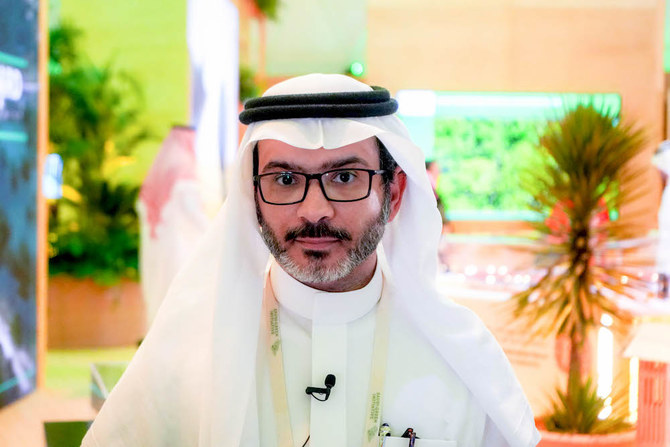
Nabeel Al-Hakbani, the State Properties General Authority’s chief strategy officer. (AN Photo)
Short Url
Updated 20 November 2022
Follow

Saudi Green Initiative agriculture projects ‘to start in 3 years,’ says state properties authority

  • State land body to implement sustainability plan
  • ‘Critical to reduce CO2 emissions, plant trees’

SHARM EL-SHEIKH, Egypt: The Kingdom’s State Properties General Authority has announced that it would start implementing the Saudi Green Initiative’s agricultural and environmental schemes within the next four years.

The SPGA, which is responsible for all public real estate in the Kingdom, has a strategic plan aimed at the sustainable use of all state land.

Nabeel Al-Hakbani, the authority’s chief strategy officer, told Arab News that he was “very, very optimistic” that all the projects would be fully operational “within just a few years.”


The SPGA took part in the second Saudi Green Initiative Forum that was held on the sidelines of the UN Climate Change Conference (COP27) in the Red Res resort town of Sharm El-Sheikh in Egypt. (Twitter/@SpgaKsa)

“We strongly believe that you will see tangible outputs, at least for the first milestone, which is to establish the legal framework for our initiatives,” he said.

“So a year from now, we think that we will finish 25 percent of our workload, we will launch the legal and legislative umbrella of our initiatives (and) within three to four years we will go with the full-scale implementation of our initiative, along with our strategic partner the Ministry of Environment, Water and Agriculture and its subsidiaries.”

The SPGA, an independent body that is linked to the prime minister, Crown Prince Mohammed bin Salman, is financed by a government fund under the Ministry of Finance and partners with the Public Investment Fund on several environmental and agricultural initiatives.


The SPGA has launched a sustainable strategic initiative to exploit and utilize the country’s agricultural real estate and land, as a contributor to achieving the SGI’s goals.(Twitter/@SpgaKsa)

Al-Hakbani said the SPGA also works with the National Center for Vegetation Cover Development and Combating Desertification and the private sector to reduce CO2 emissions, increase the number of trees planted by 2030, and cultivate land.

As part of the Saudi Green Initiative’s goals, announced by the crown prince last year, the Kingdom aims to plant 10 billion trees by 2030, while also reducing emissions by 278 million tons per annum and protecting over 30 percent of its terrestrial and marine areas.

The authority took part in the second SGI Forum that was held on the sidelines of the UN Climate Change Conference, or COP27, in the Red Sea resort town of Sharm El-Sheikh in Egypt this past week.

“We believe our initiative is a game changer, (especially) once you see the government itself incorporate it and enhance it, and also encourage individuals and the private sector to work hand in hand with us,” Al-Hakbani said.


Free trade negotiations between GCC, India mark new phase of partnership, says sec-gen

Updated 24 February 2026
Follow

Free trade negotiations between GCC, India mark new phase of partnership, says sec-gen

RIYADH: The Gulf Cooperation Council’s secretary-general affirmed that the negotiations for a free trade agreement between the GCC and India, and the signing of the joint statement, represents a new phase of strategic partnership.

Jasem Mohamed Al-Budaiwi said that this contributes to enhancing close cooperation and strengthening economic and trade ties, according to the Saudi Press Agency.

This came during the signing ceremony of the joint statement on launching the free trade agreement negotiations between the Al-Budaiwi and India’s Minister of Commerce and Industry, Piyush Goyal, which took place in New Delhi, on Tuesday.

During the signing ceremony, Al-Budaiwi said that the Terms of Reference, signed on Feb. 5, provide a comprehensive and clear framework for these negotiations. The two nations agreed to discuss enhancing cooperation in vital strategic areas, including trade in goods, customs procedures, and services.

Additionally, the framework covers Sanitary and Phytosanitary measures, intellectual property rights, cooperation on Micro, Small, and Medium Enterprises, along with other topics of mutual interest. This reflects the comprehensive nature of the agreement and its ability to keep pace with the future economy.

Al-Budaiwi expressed hope that these negotiations would lead to a comprehensive and ambitious free trade agreement that works to remove customs and non-customs barriers, enhance the flow of quality investments in both directions, and achieve further liberalization in trade and investment cooperation between the GCC and India for mutual benefit. 

This would provide a stimulating economic environment and an investment climate that opens broad horizons for the business sector, supports supply chains, and accelerates the pace of economic growth in line with the ambitious developmental visions of the GCC states. 

The top official affirmed the full readiness of the General Secretariat to host the first round of negotiations at its headquarters in Riyadh during the second half of this year.

The two sides held a meeting during which they reviewed the existing cooperation relations between the GCC and India and discussed ways to develop and elevate them to broader horizons, serving mutual interests and enhancing opportunities for strategic partnership between the two sides, particularly in the economic, investment, and trade fields.

They praised the role undertaken by the negotiating teams from both sides, appreciating the efforts contributing to reaching a comprehensive agreement that enhances economic integration and supports the smooth flow of trade between the two nations.