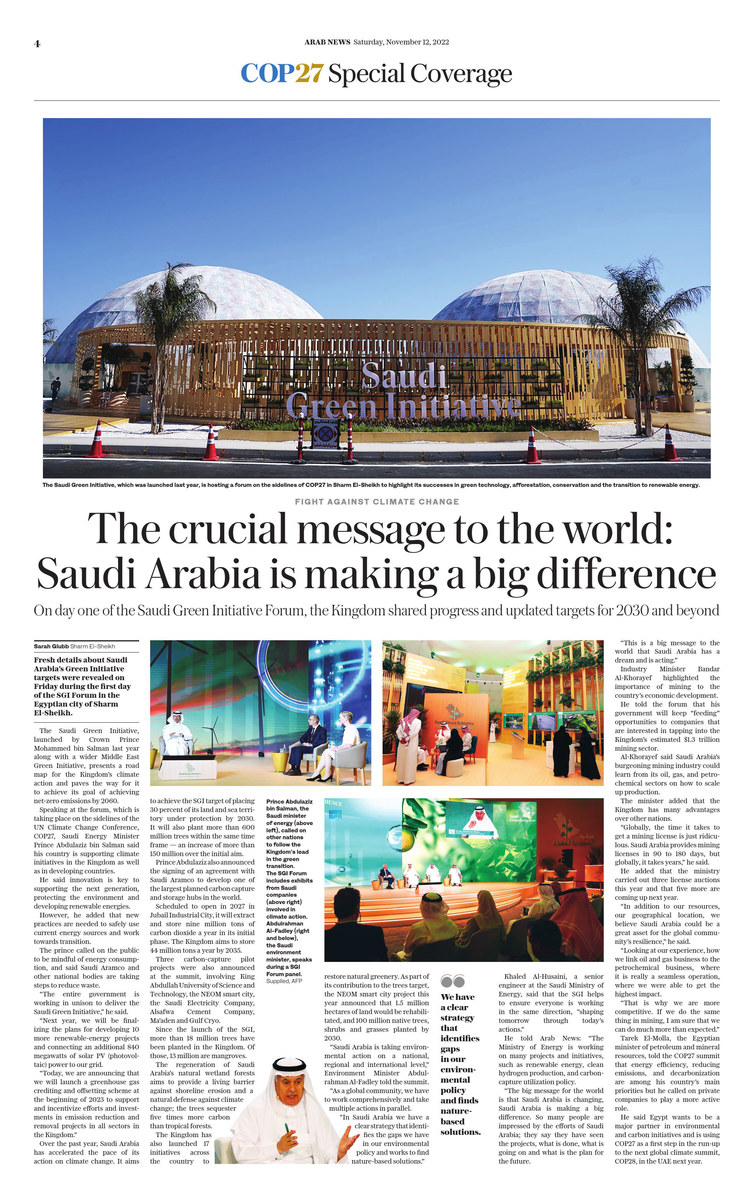
SHARM EL SHEIKH, Egypt: Fresh details about Saudi Arabia’s Green Initiative targets were revealed on Friday during the first day of the SGI Forum in the Egyptian city of Sharm El-Sheikh.
The Saudi Green Initiative, launched by Crown Prince Mohammed bin Salman last year along with a wider Middle East Green Initiative, presents a road map for the Kingdom’s climate action and paves the way for it to achieve its goal of achieving net-zero emissions by 2060.
Speaking at the forum, which is taking place on the sidelines of the UN Climate Change Conference, COP27, Saudi Energy Minister Prince Abdulaziz bin Salman said his country is supporting climate initiatives in the Kingdom as well as in developing countries.
He said innovation is key to supporting the next generation, protecting the environment and developing renewable energies.
However, he added that new practices are needed to safely use current energy sources and work towards transition.
The prince called on the public to be mindful of energy consumption, and said Saudi Aramco and other national bodies are taking steps to reduce waste.
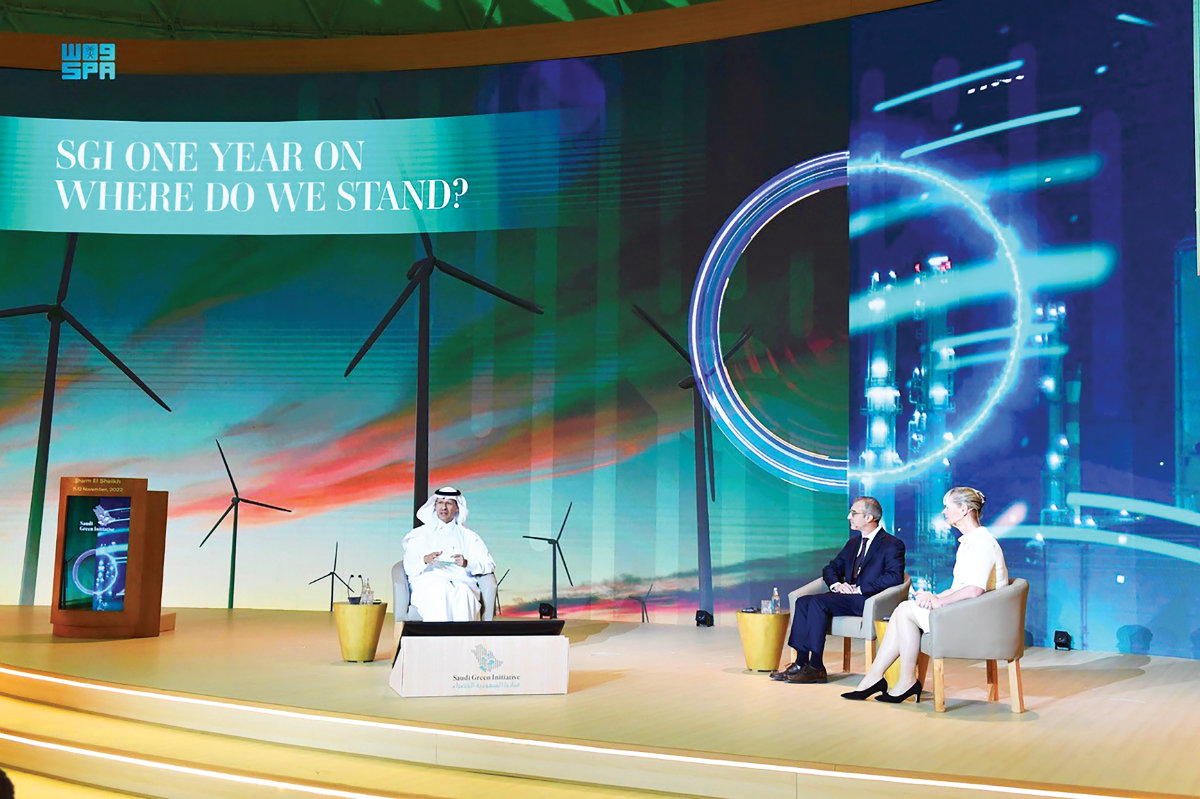
Prince Abdulaziz bin Salman, the Saudi minister of energy (left), called on other nations to follow the Kingdom’s lead in the green transition. (Supplied)
“The entire government is working in unison to deliver the Saudi Green Initiative,” he said.
“Next year, we will be finalizing the plans for developing 10 more renewable-energy projects and connecting an additional 840 megawatts of solar PV (photovoltaic) power to our grid.
“Today, we are announcing that we will launch a greenhouse gas crediting and offsetting scheme at the beginning of 2023 to support and incentivize efforts and investments in emission reduction and removal projects in all sectors in the Kingdom.”
Over the past year, Saudi Arabia has accelerated the pace of its action on climate change. It aims to achieve the SGI target of placing 30 percent of its land and sea territory under protection by 2030. It will also plant more than 600 million trees within the same time frame — an increase of more than 150 million over the initial aim.
Prince Abdulaziz also announced the signing of an agreement with Saudi Aramco to develop one of the largest planned carbon capture and storage hubs in the world.
Scheduled to open in 2027 in Jubail Industrial City, it will extract and store nine million tons of carbon dioxide a year in its initial phase. The Kingdom aims to store 44 million tons a year by 2035.
Three carbon-capture pilot projects were also announced at the summit, involving King Abdullah University of Science and Technology, the NEOM smart city, the Saudi Electricity Company, Alsafwa Cement Company, Ma’aden and Gulf Cryo.
Since the launch of the SGI, more than 18 million trees have been planted in the Kingdom. Of those, 13 million are mangroves.
The regeneration of Saudi Arabia’s natural wetland forests aims to provide a living barrier against shoreline erosion and a natural defense against climate change; the trees sequester five times more carbon than tropical forests.
The Kingdom has also launched 17 initiatives across the country to restore natural greenery. As part of its contribution to the trees target, the NEOM smart city project this year announced that 1.5 million hectares of land would be rehabilitated, and 100 million native trees, shrubs and grasses planted by 2030.
“Saudi Arabia is taking environmental action on a national, regional and international level,” Environment Minister Abdulrahman Al-Fadley told the summit.
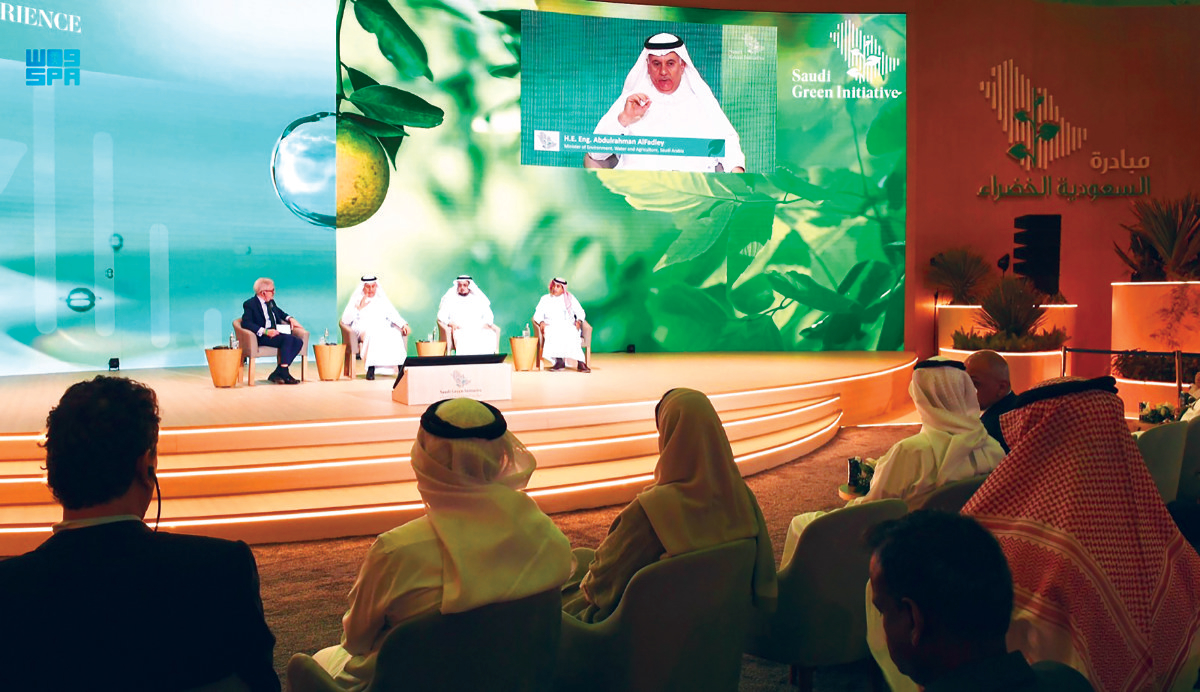
Saudi Environment Minister Abdulrahman Al-Fadley speaks during an SGI Forum panel. (AFP)
“As a global community, we have to work comprehensively and take multiple actions in parallel.
“In Saudi Arabia we have a clear strategy that identifies the gaps we have in our environmental policy and works to find nature-based solutions.”
Khaled Alhusaini, the senior engineer at the Saudi Ministry of Energy, said the Saudi Green Initiative paves the way for integrated work within the Kingdom’s different entities, ministries, organizations and companies working in the same strategic directions, “believing that shaping tomorrow through today’s actions.”
“The minister in the Ministry of Energy is working on many projects and initiatives, such as renewable energy, clean hydrogen production, and carbon capture utilization policy,” he told Arab News.
Regarding the youth, he stressed they play an important role and have employed several youths within the energy ministry, in the hope that they can deliver their strategic objectives and KPIs, and SGI aims to deliver on that.
“The big message for the world is that Saudi Arabia is changing, Saudi Arabia is making a big difference here within the Middle East region, so we are enjoying that (we can) deliver the message to that and to the people here,” he said.
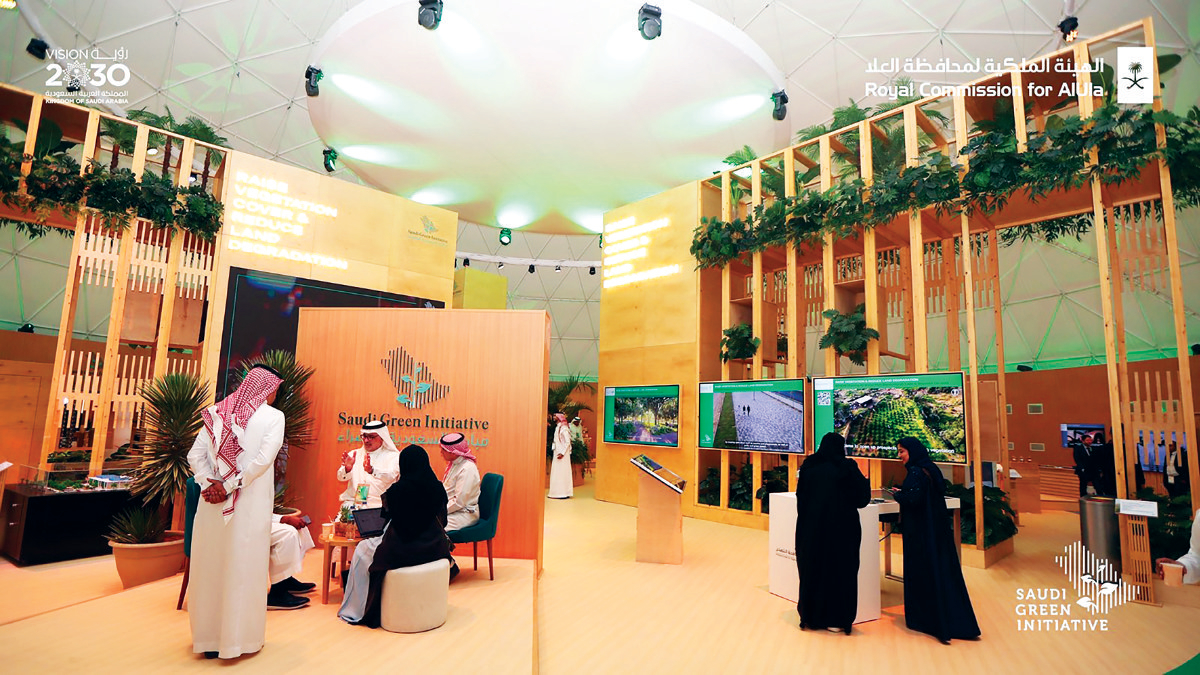
The SGI Forum included exhibits from Saudi companies involved in climate action. (Supplied)
“So many people are impressed by the efforts of Saudi Arabia, they say they have seen the projects, what is done, what is going on and what is the plan for the future,” he said. “This is a big message to the world that Saudi Arabia has a dream and acting for that’s achievable.”
Industry Minister Bandar Al-Khorayef highlighted the importance of mining to the country’s economic development. He told the forum that his government will keep “feeding” opportunities to companies that are interested in tapping into the Kingdom’s estimated $1.3 trillion mining sector.
Al-Khorayef said Saudi Arabia’s burgeoning mining industry could learn from its oil, gas, and petrochemical sectors on how to scale up production.
The minister added that the Kingdom has many advantages over other nations.
“Globally, the time it takes to get a mining license is just ridiculous. Saudi Arabia provides mining licenses in 90 to 180 days, but globally, it takes years,” he said.
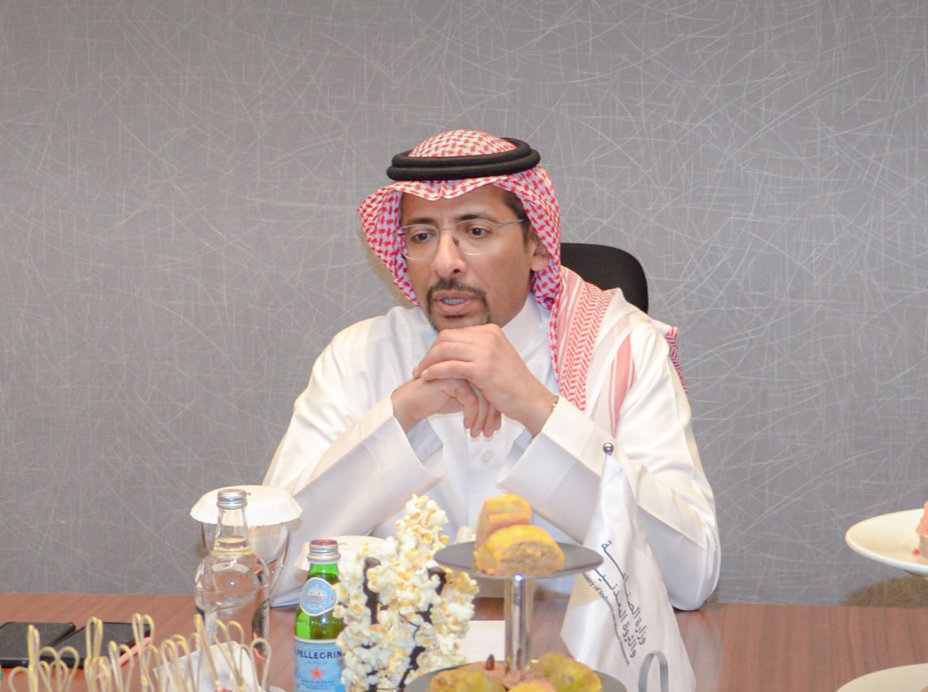
Industry Minister Bandar Al-Khorayef highlighted the importance of mining to the country’s economic development. (Twitter: @Gi_Saudi)
He added that the ministry carried out three license auctions this year and that five more are coming up next year.
“In addition to our resources, our geographical location, we believe Saudi Arabia could be a great asset for the global community’s resilience,” he said.
“Looking at our experience, how we link oil and gas business to the petrochemical business, where it is really a seamless operation, where we were able to get the highest impact.
“That is why we are more competitive. If we do the same thing in mining, I am sure that we can do much more than expected.”
Tarek El-Molla, the Egyptian minister of petroleum and mineral resources, told the COP27 summit that energy efficiency, reducing emissions, and decarbonization are among his country’s main priorities but he called on private companies to play a more active role.
He said Egypt wants to be a major partner in environmental and carbon initiatives and is using COP27 as a first step in the run-up to the next global climate summit, COP28, in the UAE next year.