

Oil Updates — Crude falls; Diamondback to buy Lario Permian; Biden asks Congress for $500m to modernize oil reserve

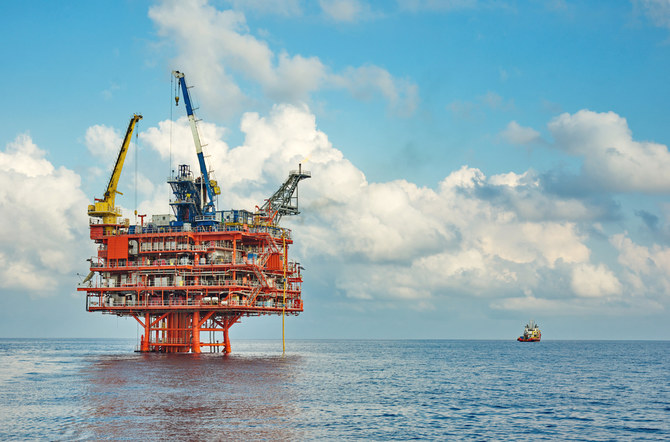
Brent crude futures fell by $1.04, or 1.1 percent, to $91.82 a barrel by 0430 GMT. (Shutterstock)
Short Url
Updated 17 November 2022
Follow

Oil Updates — Crude falls; Diamondback to buy Lario Permian; Biden asks Congress for $500m to modernize oil reserve

RIYADH: Oil prices extended declines on Thursday as concerns over geopolitical tensions eased, while rising numbers of COVID-19 cases in China added to demand worries for the world's largest crude importer. 

Brent crude futures fell by $1.04, or 1.1 percent, to $91.82 a barrel by 0430 GMT. US West Texas Intermediate crude futures slid $1.17, or 1.4 percent, to $84.42 a barrel. 

On Wednesday Brent dropped by 1.1 percent and WTI 1.5 percent after Russian oil shipments via the Druzhba pipeline to Hungary restarted. 

Oil producer Diamondback to buy Lario Permian for $1.5 billion 

Oil and gas producer Diamondback Energy said on Wednesday it has agreed to buy all leasehold interest and related assets of Lario Permian, a unit of Lario Oil & Gas Co., for around $1.5 billion in cash and stock. 

Lario Permian's assets consist of about 25,000 acres in the Northern Midland Basin in Texas, with estimated 2023 production of about 18 thousand barrels of oil per day. 

"When combined with our pending FireBird acquisition, we will grow our Midland Basin footprint by approximately 83,000 net acres, add 500 high quality drilling opportunities," Diamondback CEO Travis Stice said. 

The latest deal, expected to close on Jan. 31, 2023, comes a month after Diamondback said it would buy all leasehold interests and related assets from FireBird Energy for $1.6 billion in cash and stock. 

White House asks Congress for $500 million to modernize oil reserve 

The Biden administration has asked Congress for $500 million to modernize the US strategic petroleum reserve, a document outlining the request shows. 

If approved by Congress, the request, issued by the White House on Tuesday, provides the Department of Energy with funding to improve the four SPR sites along the Texas and Louisiana coasts. 

President Joe Biden announced the biggest withdrawal ever from the reserve earlier this year of 180 million barrels in an effort to push down oil prices that jumped after Russia's Feb. 24 invasion of Ukraine. The historic release of oil has pushed supplies in the SPR to the lowest level since March of 1984. 

The proposed funding "would allow the SPR to both maintain operational readiness levels and also alleviate anticipated shortfalls due to supply chain issues, the COVID-19 pandemic, and related schedule delays," the White House said in the request. 


Arab food and beverage sector draws $22bn in foreign investment over 2 decades: Dhaman 

Updated 28 December 2025
Follow

Arab food and beverage sector draws $22bn in foreign investment over 2 decades: Dhaman 

JEDDAH: Foreign investors committed about $22 billion to the Arab region’s food and beverage sector over the past two decades, backing 516 projects that generated roughly 93,000 jobs, according to a new sectoral report. 

In its third food and beverage industry study for 2025, the Arab Investment and Export Credit Guarantee Corp., known as Dhaman, said the bulk of investment flowed to a handful of markets. Egypt, Saudi Arabia, the UAE, Morocco and Qatar attracted 421 projects — about 82 percent of the total — with capital expenditure exceeding $17 billion, or nearly four-fifths of overall investment. 

Projects in those five countries accounted for around 71,000 jobs, representing 76 percent of total employment created by foreign direct investment in the sector over the 2003–2024 period, the report said, according to figures carried by the Kuwait News Agency. 

“The US has been the region's top food and beverage investor over the past 22 years with 74 projects or 14 projects of the total, and Capex of approximately $4 billion or 18 percent of the total, creating more than 14,000 jobs,” KUNA reported. 

Investment was also concentrated among a small group of multinational players. The sector’s top 10 foreign investors accounted for roughly 15 percent of projects, 32 percent of capital expenditure and 29 percent of newly created jobs.  

Swiss food group Nestlé led in project count with 14 initiatives, while Ukrainian agribusiness firm NIBULON topped capital spending and job creation, investing $2 billion and generating around 6,000 jobs. 

At the inter-Arab investment level, the report noted that 12 Arab countries invested in 108 projects, accounting for about 21 percent of total FDI projects in the sector over the past 22 years. These initiatives, carried out by 65 companies, involved $6.5 billion in capital expenditure, representing 30 percent of total FDI, and generated nearly 28,000 jobs. 

The UAE led inter-Arab investments, accounting for 45 percent of total projects and 58 percent of total capital expenditure, the report added, according to KUNA. 

The report also noted that the UAE, Saudi Arabia, Egypt, and Qatar topped the Arab ranking as the most attractive countries for investment in the sector in 2024, followed by Oman, Bahrain, Algeria, Morocco, and Kuwait. 

Looking ahead, Dhaman expects consumer demand to continue rising. Food and non-alcoholic beverage sales across 16 Arab countries are projected to increase 8.6 percent to more than $430 billion by the end of 2025, equivalent to 4.2 percent of global sales, before exceeding $560 billion by 2029. 

Sales are expected to remain highly concentrated geographically, with Egypt, Saudi Arabia, Algeria, the UAE and Iraq accounting for about 77 percent of the regional total. By product category, meat and poultry are forecast to lead with sales of about $106 billion, followed by cereals, pasta and baked goods at roughly $63 billion. 

Average annual per capita spending on food and non-alcoholic beverages in the region is projected to rise 7.2 percent to more than $1,845 by the end of 2025, approaching the global average, and to reach about $2,255 by 2029. Household spending on these products is expected to represent 25.8 percent of total expenditure in 13 Arab countries, above the global average of 24.2 percent. 

Arab external trade in food and beverages grew more than 15 percent in 2024 to $195 billion, with exports rising 18 percent to $56 billion and imports increasing 14 percent to $139 billion. Brazil was the largest foreign supplier to the region, exporting $16.5 billion worth of products, while Saudi Arabia ranked as the top Arab exporter at $6.6 billion.