

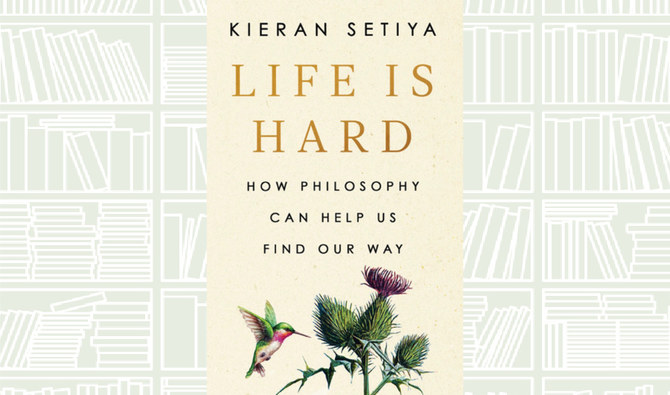
What We Are Reading Today: Life Is Hard by Kieran Setiya

Short Url
Updated 12 November 2022
Follow

What We Are Reading Today: Life Is Hard by Kieran Setiya

This was a beautifully written book that everyone should have on their shelf.

This book invites thought, compassion, reflection, and consideration, both for one’s own life and the lives of those around us.

In this profound and personal book, Kieran Setiya shows how philosophy can help us find our way.

Setiya skillfully gives readers the information and context they need as he goes so they do not have to have a background in philosophy to understand and enjoy this book.

The way he ties it all together is poetry and his humor adds levity to some deceptively deep and heavy topics. He shares his own experience with chronic pain and the consolation that comes from making sense of it.

Drawing on ancient and modern philosophy, as well as fiction, comedy, social science and personal essay, Life is Hard is a book for this moment — a work of solace and compassion.

“This book makes no attempt to sugar coat life,” said a review on Goodreads.com.

“Once we accept the fact that we and others will always have troubles life will become more bearable and enjoyable.”


What We Are Reading Today: ‘The Bell Jar’

Photo/Supplied
Updated 20 December 2025
Follow

What We Are Reading Today: ‘The Bell Jar’

  • The bell jar — clear, enclosing, and distorting the air she breathes — becomes the perfect image of Greenwood’s entrapment. Just as telling is the fig tree she imagines, with each fig representing a possible future: writer, traveler, mother, lover

Author: Sylvia Plath

Sylvia Plath’s “The Bell Jar” (1963) is a raw and luminous portrait of a young woman standing at the edge of adulthood, grappling with ambition, doubt, and the suffocating weight of expectation. 

Through the eyes of the novel’s troubled protagonist Esther Greenwood, Plath reveals the loneliness that can lie hidden beneath achievement and the unease brought on by future expectations.  

The novel opens in New York, where Greenwood’s magazine internship seems the gateway to success. Yet the city’s glamor soon feels hollow, and the confidence around her thin and brittle. 

Her sense of direction begins to fade, and the life laid out before her starts to feel both too small and impossibly distant.  

The bell jar — clear, enclosing, and distorting the air she breathes — becomes the perfect image of Greenwood’s entrapment. Just as telling is the fig tree she imagines, with each fig representing a possible future: writer, traveler, mother, lover. 

Torn between these possibilities, she hesitates until the figs shrivel and drop. This image, perhaps more than any other, reveals how fear of choice can quietly undo a person.   

Plath’s writing is sharp and deeply humane. She exposes the subtle pressures shaping women’s lives at that time without sentiment or complaint. 

The narrative’s erratic rhythm mirrors the character’s disoriented state of mind, where thought and memory blur at the edges. 

“The Bell Jar” speaks to anyone who has felt caught between possibility and paralysis, between who they are and who they are expected to be. 

Plath writes with precision and compassion, turning confusion into clarity and despair into something almost inspiring.