

Chez Ayah offers pawfect services for dogs in Riyadh

1 / 4
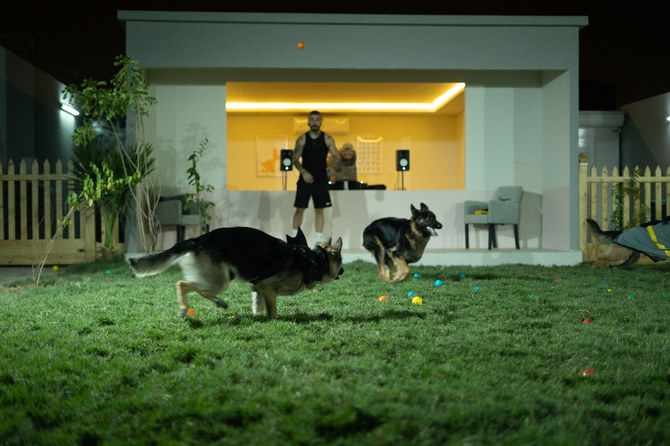
The daycare is designed to make dogs feel as if they never left home. (AN Photo: Nada Alturki)
2 / 4
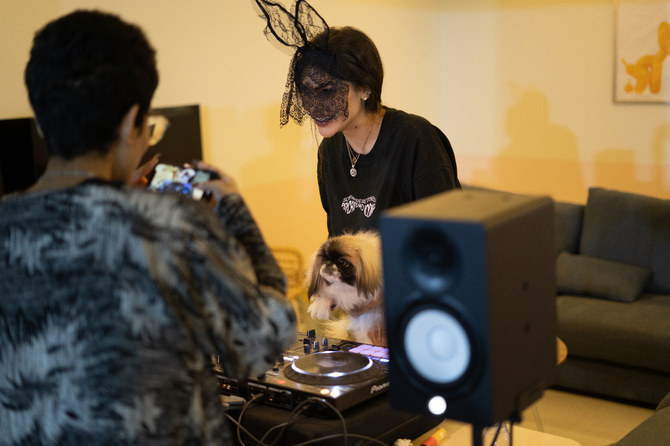
The daycare is designed to make dogs feel as if they never left home. (AN Photo: Nada Alturki)
3 / 4
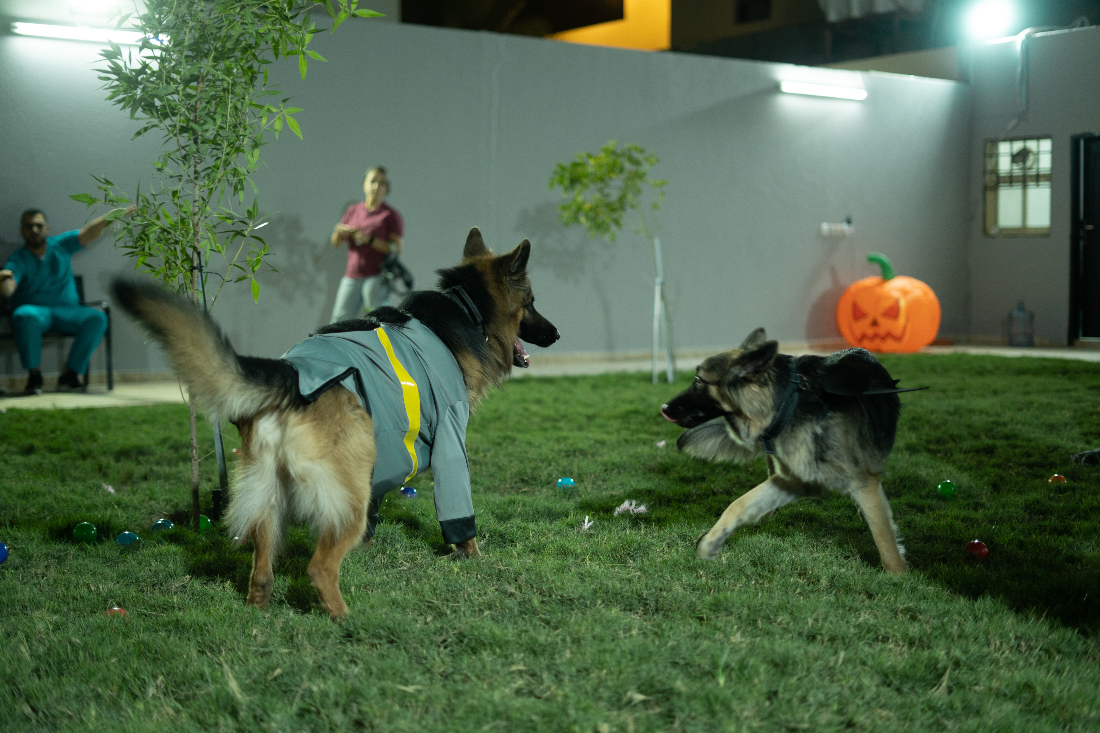
The daycare is designed to make dogs feel as if they never left home. (AN Photo: Nada Alturki)
4 / 4
The daycare is designed to make dogs feel as if they never left home. (AN Photo: Nada Alturki)
Short Url
Updated 09 November 2022
Follow

Chez Ayah offers pawfect services for dogs in Riyadh

  • Doctor on 24-hour call for emergencies
  • ‘Living room,’ garden spaces like a home

RIYADH: A local hotel in Riyadh is offering unique, specialized care services for dogs of all shapes and sizes.

Chez Ayah Pet Hotel and Daycare opened its doors on Friday with a “Halloween Pawty” to welcome humankind’s best friend.

The hotel is inspired by the owner, Ayah Al-Bokhari’s personal journey with finding an appropriate place to leave her dogs for a few days. She has two German Shepherds, a Golden Retriever and a Canaan.

Placing them at a local pet hotel, she asked the caretaker to see the space and receive photos of her dogs, but all requests were denied, which is the case in most places.

The only other option for dog owners is to leave them at a pet clinic, which poses a very high risk of them catching viruses or diseases from other animals.

This prompted Al-Bokhari to inquire about the business of pet care. She has completed diplomas in dog hotel management and canine behavior, and is in the process of achieving her licensing in pet nutrition.

And so Chez Ayah was born, completing seven months in its soft opening phase as a home business.

Contrary to most pet accommodation, which usually only offers cramped spaces and dry food for high prices, the daycare is designed to make dogs feel as if they never left home.


Walking into the space, the dogs are met with a living room accessed through a doggy door. Dogs may roam free, in and out, all day long from 7 a.m. until their bedtime at 10 p.m. — if they are utilizing the boutique hotel service.

“We don’t have a reception or offices, we have a living room. We call it that because once you bring a dog, they’ll be missing the house, the family, the owner, and we want to give them the feeling of home,” Al-Bokhari told Arab News.

During the day, the dogs run and play across a wide strip of grass along with their furry friends.

The space aims to create a community for dogs and owners. With over 35 dog guests at a time, the canines have become accustomed to each other, making friends, and building trust.

A part-time nutritionist is also on hand to offer proper care for all the guests, and is on call at all times in case of an emergency.

Dr. Abdullah Samir visits the dogs every Sunday, checking on their health and following up with the owners.

“Most of the places here in Saudi Arabia, in Riyadh specifically, are basically just cages. For dogs, this is the first place of this quality … Ayah is coming in hard in this field and I’m sure she’ll have a bright future with this business,” Samir told Arab News.

All dogs are welcomed into the home under the condition that they receive the full set of vaccinations for fleas, undergo deworming, and anti-external parasite treatment.
For many pet owners across the globe, these domestic animals hold a special place in their hearts.

“My dogs are my kids. They’re my family, my kids, they’re everything. They really feel happy when they see me, they feel sad when I’m sad. When I’m down, they lift me up,” Al-Bokhari said.

Dogs with separation anxiety are never left in cages, and at times, when necessary, sleep alongside Al-Bokhari to ease their nerves.

One of them being couple Aya and Mohammed’s dog Sam, a German Shepherd.

The couple also faced difficulties finding facilities for dogs during the early stages of raising Sam. When they finally stumbled across Chez Ayah, they knew they found the right home for their beloved pet.

“I was shocked with the way they take care of dogs and the facilities they offer — the yard, the doctor in case of emergencies, the playground, and a lot of friendly dogs,” Mohammad told Arab News.

“He’s much happier at Ayah’s than he is with us,” Aya jokingly added. “She is truly one of a kind throughout the Kingdom.”

The hotel also provides meal plans customized to the dog’s dietary needs and restrictions.
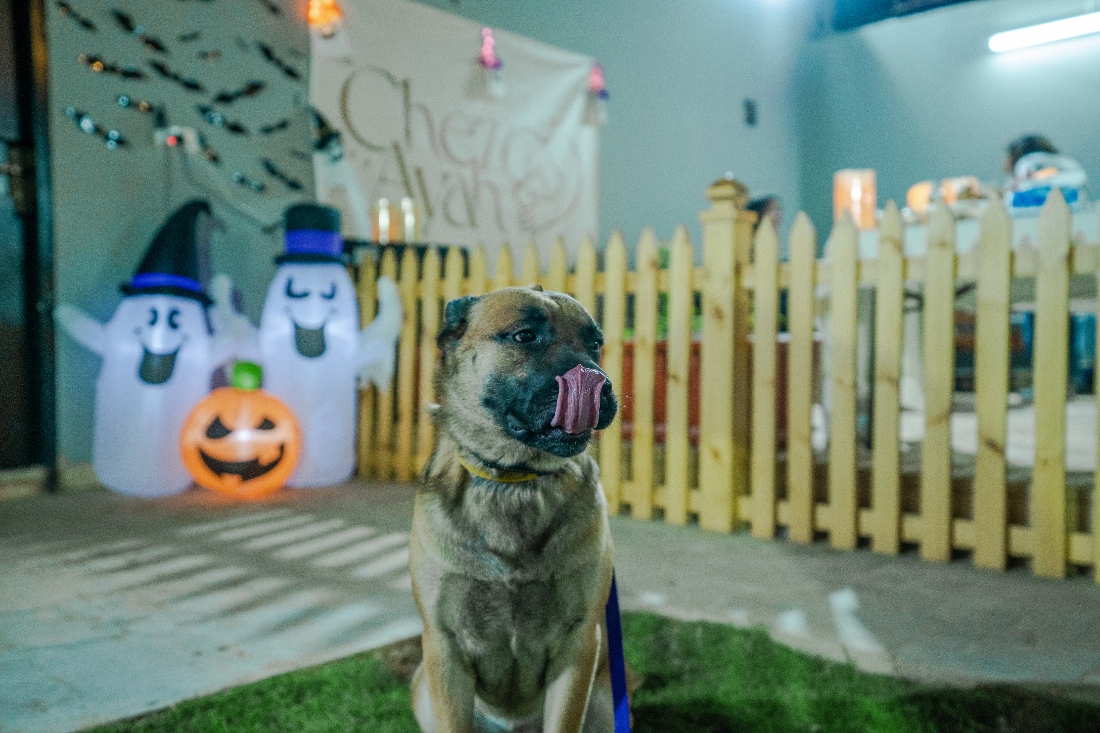
Sam was raised during the pandemic, which led to him developing separation anxiety, as is the case for many pets during that period.

At Chez Ayah, he adapted quickly and has now become much more confident and independent, the owners said.

In celebration of the grand opening, the business embraced the spooky season vibes by throwing a Halloween dog party, complete with treats, doggy costumes, a live set performance by DJ PiNK BUNNY, and goodie bags stuffed with a Kong chew toy and lamb ear snacks.


Saudi traditional meal anchors Al-Balad’s culinary scene

Ghalib Naji Al-Shadwy (center) with his son (right) and longtime customer Abu Samer Al-Sulami (left). (AN photo)
Updated 5 sec ago
Follow

Saudi traditional meal anchors Al-Balad’s culinary scene

  • Slow-cooked sheep’s head is drawing new generations and visitors to Jeddah’s historic district

JEDDAH: In the streets of Al-Balad, where centuries-old buildings frame one of Saudi Arabia’s most storied districts, culinary heritage continues to draw visitors as powerfully as architecture. 

Among the area’s enduring attractions is Al-Shadwy for Sheep Head Meat, a family-run restaurant that has served one of the Kingdom’s most traditional dishes since 1958, turning a once-necessity meal into a symbol of Saudi food culture and hospitality.

Tucked into Baba Makkah, Al-Balad’s historic core, Al-Shadwy began as a modest corner table before becoming a landmark destination for locals, food enthusiasts and tourists seeking an authentic taste of the past.

Eating sheep’s head has long been rooted in Arab culinary traditions, shaped by the principle of using the entire animal and avoiding waste. (AN photo)

Now run by the third generation of the Al-Shadwy family, the restaurant remains devoted to a single specialty; sheep’s head, slow-roasted over charcoal using a recipe unchanged for decades.

Eating sheep’s head has long been rooted in Arab culinary traditions, shaped by the principle of using the entire animal and avoiding waste. In Saudi Arabia, the dish evolved into communal meal associated with generosity, warmth and social gathering.

Sixty-five-year-old owner Ghalib Naji Al-Shadwy, who inherited the restaurant from his grandfather and father, remains a familiar presence at the restaurant, overseeing the service and greeting customers. 

FASTFACTS

• Al-Shadwy for Sheep Head Meat is a family-run restaurant in Al-Balad that has served one of the Kingdom’s most traditional dishes since 1958.

• It began as a modest corner table before becoming a landmark destination for locals, food enthusiasts and tourists seeking an authentic taste of the past.

He told Arab News that the dish has been central to Saudi culinary culture for generations.

“The sheep’s head has been a staple in Saudi Arabia and other GCC countries culinary culture for centuries,” he said. “Traditionally, it was a meal served during cold winter mornings to provide energy and warmth. In many regions of Saudi Arabia, the sheep head (is) always on the top of the main plate for guests, and families festive holidays gather in restaurants or at home to enjoy the sheep’s head, making it a social and festive occasion.”

In Saudi Arabia, the dish evolved into communal meal associated with generosity, warmth and social gathering. (AN photo)

Speaking about its significance in hospitality culture, he added: “Serving it to guests is considered an act of generosity and care.” Rich and filling, it is most commonly eaten as breakfast or an early morning meal.

Preparing sheep’s head is a slow, careful process. According to Al-Shadwy, the heads are cooked at low temperatures to soften the tendons and connective tissue, resulting in tender meat and deep flavor.

The preparation includes curing and slow cooking, a method that has remained largely unchanged at the restaurant for more than six decades. 

Being a family-owned restaurant here for so many years makes us a part of Jeddah’s history.

Ghalib Naji Al-Shadwy, Al-Shadwy for Sheep Head Meat owner

“I’ve cooked many sheep heads a while back and I still enjoy it,” he said. “Most of the customers actually prefer the head and the brain.”

Despite its small size and somewhat tucked-away location, the restaurant’s popularity is unmistakable. Long queues form outside each morning, often guiding first-time visitors to its door. A sign reading “Al-Shadwy Mandi” in Arabic marks the entrance, while the steady crowd confirms its reputation.

Over the years, the restaurant has attracted officials, celebrities and social media figures, with photographs of notable guests lining the walls. Al-Shadwy said the steady attention reflections Al-Balad’s growing appeal as a cultural and culinary destination.

He said that interest in sheep’s head is no longer limited to older generations. Younger Saudis, he said, are increasingly curious about traditional dishes, while tourists often see it as an adventurous experience. 

“For many visitors, trying sheep’s head is considered ‘extreme food’ or a challenging dish,” he said. “But it gives them a sense of adventure and a unique story to tell.”

Inside the lively restaurant one morning, longtime customer Abu Samer Al-Sulami, who has been dining there for 40 years, described it as a rare example of authentic Saudi cuisine.

“I am a regular customer here and always come early in the morning because when you eat the sheep’s head it really gives you energy for work,” he said. 

Demand is highest in the early hours, particularly on Fridays. Al-Shadwy said the restaurant often sells out by mid-morning, making early visits essential.

“The number of sheep heads our restaurant sells daily varies but it reaches around 200 heads,” he added.

As he works alongside his two sons, Al-Shadwy says preserving the family legacy is as important as serving the fish. 

“Being a family-owned restaurant here for so many years makes us a part of Jeddah’s history,” he said.