

AlUla festival gives ancient oases a new lease of life

Ancient Saudi Arabia’s Festival will link three oases together for the first time: Al-Ula, Khaybar, and Tayma. (Supplied)
Short Url
Updated 06 November 2022
Follow

AlUla festival gives ancient oases a new lease of life

  • Excursions will highlight the unique character of the ancient cities of Khaybar and Tayma through after-dark light shows

RIYADH: Visitors will gain a new perspective on the past when three of Saudi Arabia’s ancient oases are linked in a series of immersive experiences as part of a new festival launched by AlUla Moments.

The Ancient Kingdoms Festival, which starts on Nov. 11, will connect AlUla with the ancient cities of Khaybar and Tayma, forming a triad that spans millennia, presented to visitors through tailor-made excursions.

Excursions will highlight the unique character of each site through after-dark light shows and carriage rides at dawn, as well as hot-air balloon and helicopter flights over monumental prehistoric architecture, culinary pop-ups, historical re-enactments and guided trails.


Ancient Saudi Arabia’s Festival will link three oases together for the first time: Al-Ula, Khaybar, and Tayma. (Supplied)

Once a key location on the incense trade route used by Nabateans and their kings, Tayma is today an archaeological treasure trove, with discoveries continuing to reveal the legacy of successive civilizations, including the largest well in the Arabian Peninsula.

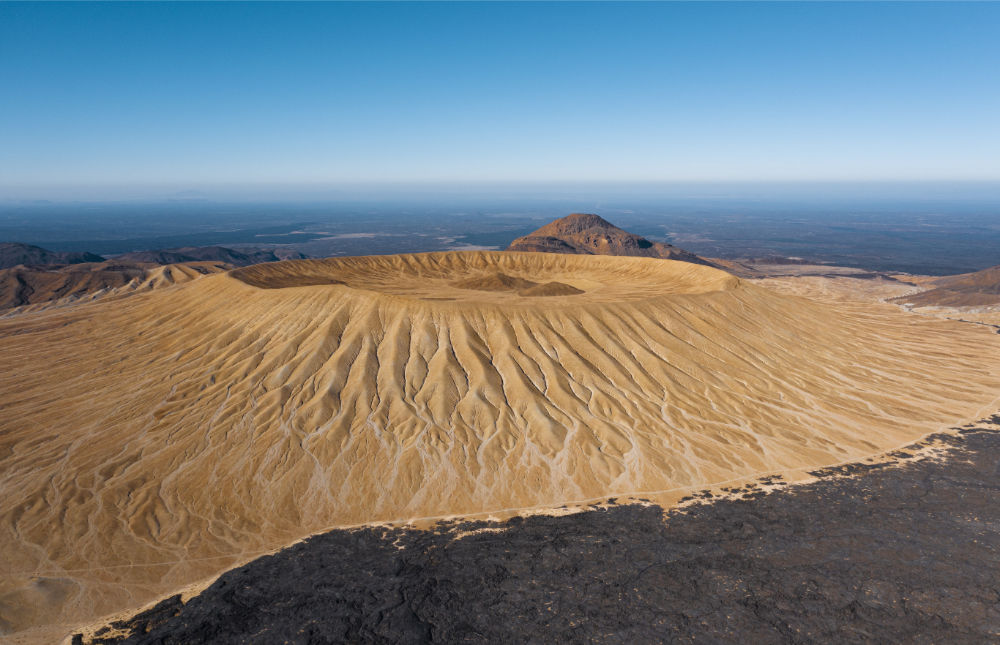
Khaybar was known as a market town and for its surrounding white and black volcanos, as well as the mysterious prehistoric stone structures in the shape of kites, keyholes and rectangles.

HIGHLIGHT

The Ancient Kingdoms Festival, which starts on Nov. 11, will connect AlUla with the ancient cities of Khaybar and Tayma, forming a triad that spans millennia, presented to visitors through tailor-made excursions.

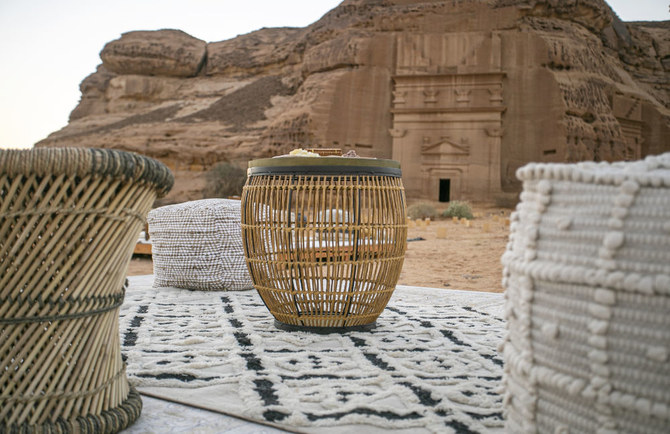
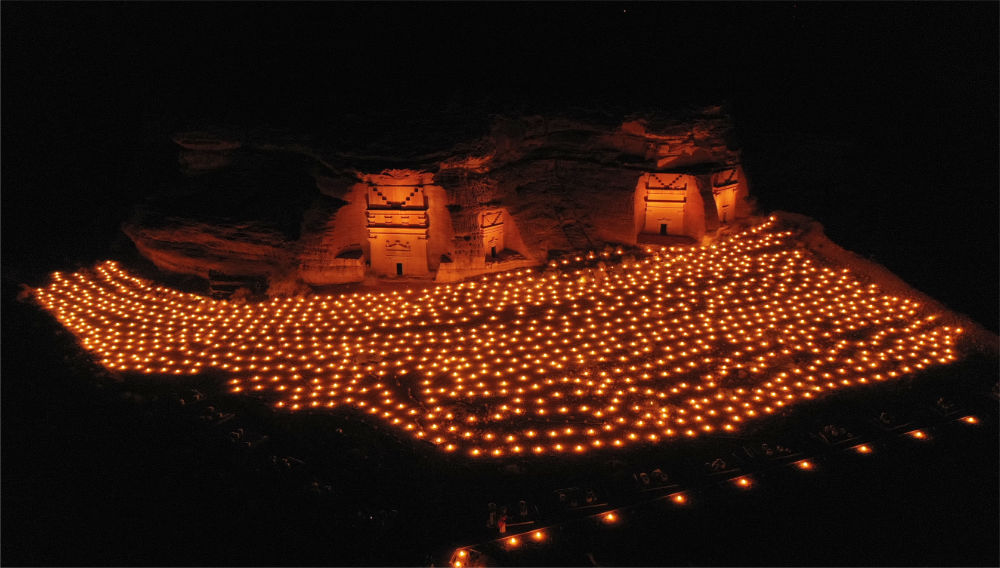
AlUla activities and experiences will include horse-carriage rides and after-dark tours of tombs and the UNESCO World Heritage site Hegra.

With the expert-led excavation season already underway at Dadan, the ancient city will offer young explorers a chance to join in as part of the “Apprentice Archaeologist” program designed to encourage future generations of heritage guardians.


Ancient Saudi Arabia’s Festival will link three oases together for the first time: Al-Ula, Khaybar, and Tayma. (Supplied)

AlUla will also offer a journey through Jabal Ikmah after dark, along candle-lit pathways that illuminate the remnants of ancient civilizations and their religious rituals recorded on the rock face of the whispering canyon. The site will also offer family-friendly workshops at the Ancient Inscriptions Academy.

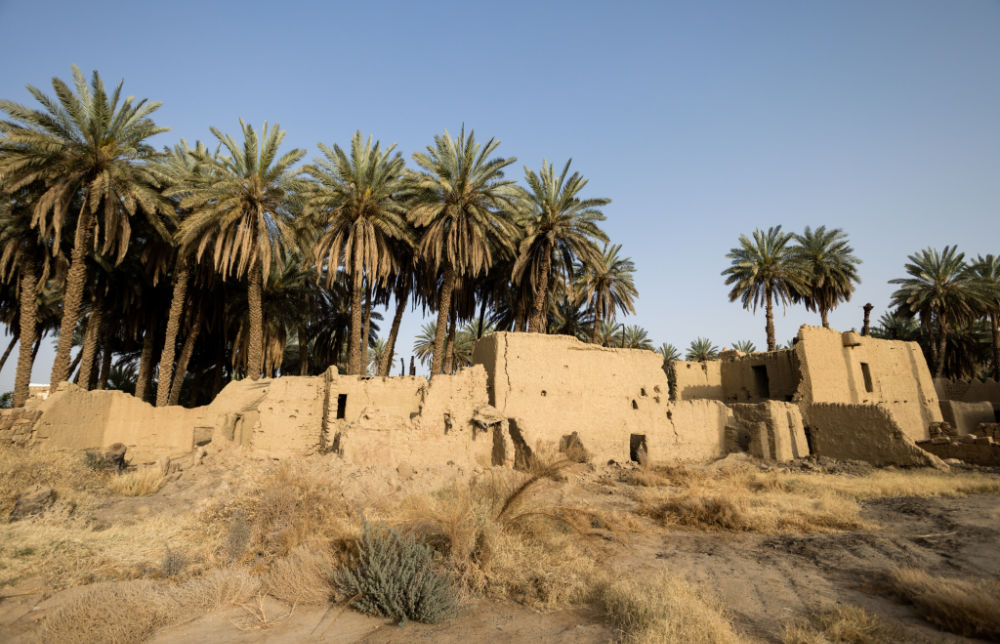
At Tayma, visitors will get the first glimpse of the Land of Kings, a legendary oasis home to the Ancient Temple of Salm, and Bir Haddaj, which is a well believed to have been built by the last Babylonian King Nabonidus.

Tayma will offer visitors a chance to experience the old marketplace at Suq Al-Najm Oasis, and Qasr Ibn Rumman, an atmospheric example of Arabian architecture, with an audio guide and an immersive show after dark.


Ancient Saudi Arabia’s Festival will link three oases together for the first time: Al-Ula, Khaybar, and Tayma. (Supplied)

Khaybar will be revealed through tethered hot-air balloon rides and helicopter excursions to give a bird’s-eye view of its landscape that is home to the luxurious Khaybar Camp, near the Harrat Khaybar volcanic site.

Al-Rawan, also in Khaybar, is another vantage point interlinking the oases and the first point of entry to exploring the area through adventure trails.

Visitors eager for a first glimpse of Tayma and Khaybar, which are two and three hours away from AlUla, respectively, can do so by self-drive, bus or luxury/VIP car service moving between the sites, or they can “Ride with a Rawi”: a journey escorted by local Rawi storytellers who will share their local knowledge.


Saudi Arabia launches key projects at World Defense Show in Riyadh

Updated 09 February 2026
Follow

Saudi Arabia launches key projects at World Defense Show in Riyadh

  • Defense Minister Prince Khalid bin Salman unveils initiatives
  • New firms set up and deals inked at event running to Feb. 12  

RIYADH: Defense Minister Prince Khalid bin Salman unveiled new initiatives and signed several agreements on the opening of the third World Defense Show in Riyadh on Sunday.

Prince Khalid opened the show on behalf of Crown Prince Mohammed bin Salman, the Saudi Press Agency reported.

Organized by the General Authority for Military Industries, the five-day event will run until Feb. 12, showcasing the Kingdom’s rapid strides toward strategic independence and technological leadership in the defense sector.

The 2026 edition features a purpose-built venue with a 2,700-meter runway for live air and land demonstrations, underscoring the show’s status as a premier global defense event.

The GAMI’s Gov. Ahmad Al-Ohali said the show reflects Saudi Arabia’s commitment to localizing over 50 percent of military spending in line with Vision 2030, and fostering an integrated ecosystem where government bodies and international partners collaborate on innovation.


The event brings together official delegations, government entities, and leading international companies specializing in the defense and security sectors. (SPA)

Strategic agreements and major launches

At the Saudi Arabian Military Industries Group pavilion, Prince Khalid launched several key initiatives.

  • New entities: The inauguration of the SAMI Land Co., SAMI Autonomous Co., and the SAMI Land Industrial Complex.
  • Supply chain: The unveiling of the SAMI Local Content Program and the HEET Program.
  • International cooperation: A memorandum of understanding was signed between the Saudi General Authority for Defense Development and the Korean Agency for Defense Development on advanced military research.
  • Defense deals: The minister signed cooperation agreements with Slovakia, Malaysia, and Somalia.
Defense Minister Prince Khalid signed cooperation agreements with Slovakia, Malaysia, and Somalia. (SPA)


Technological debuts and innovations

The show is also serving as a launchpad for cutting-edge security technologies across various government sectors.

  • AI-Powered Lucid Gravity: Public Security debuted its advanced Lucid Gravity electric security vehicle at the Ministry of Interior’s pavilion.

The vehicle integrates state-of-the-art artificial intelligence and specialized security equipment designed to accelerate emergency response times and support field operations.

Public Security’s advanced Lucid Gravity electric security vehicle is displayed at the Ministry of Interior’s pavilion. (SPA)

By leveraging predictive intelligence and advanced command-and-control systems, the Lucid Gravity exemplifies the ministry’s commitment to protecting the Kingdom.

  • Smart helmet: Also at the Ministry of Interior’s pavilion, the General Directorate of Civil Defense unveiled its smart helmet.

Designed to revolutionize public safety and emergency response, the helmet features day-and-night cameras and specialized sensors to detect hazardous materials in hard-to-reach locations.

The device serves as a mobile command node, delivering live video feeds directly to command-and-control centers. By enabling real-time data analysis and faster decision-making, the helmet reduces response times and enhances personnel safety in high-risk environments.


The smart helmet features day-and-night cameras and specialized sensors to detect hazardous materials in hard-to-reach locations. (SPA)


  • Border security: The General Directorate of the Border Guard showcased an integrated security system featuring radar and thermal cameras capable of detecting drones and classifying moving targets to protect critical infrastructure.

It also functions as an early warning system for critical facilities and border areas and is fully integrated with command-and-control systems.


Border Guard's ntegrated security system features radar and thermal cameras capable of detecting drones and classifying moving targets to protect critical infrastructure. (SPA)
  • Counter-terrorism: The Islamic Military Counter Terrorism Coalition presented a comprehensive framework integrating intellectual, media, and military domains to combat extremism and terror financing.

    Visitors were briefed on specialized programs designed to raise the readiness of national personnel and foster sustainable institutional cooperation among member states to combat extremism.

    On the event’s opening day, the pavilion hosted high-level delegations, including ministers, military leaders, and ambassadors who reviewed and praised the coalition’s pivotal role in coordinating local and international security efforts.

    A view of the Islamic Military Counter Terrorism Coalition pavilion. (SPA)
  • Meteorology: The National Center for Meteorology displayed advanced weather systems essential for ensuring the safety of the event’s air shows and military operations.

    At its dedicated pavilion, the NCM is showcasing its latest advanced meteorological technologies and systems. These solutions serve both the military and civilian sectors, providing accurate data to support beneficiary entities’ operational processes.

World Defense Show CEO Andrew Pearcey said that participation is expected to surpass previous records, reflecting the event’s growing importance on the international stage.

NCM's latest meteorological technologies and systems serve both the military and civilian sectors