

Ancient art of preserving dates lives on in AlUla

1 / 2
The process begins with the slaughtering of farm-raised sheep or goats. The farming family uses the meat and other parts for food and fuel, and the animal’s skin is cleaned and dried in the sun. (AN photos by Huda Bashatah)
2 / 2
The process begins with the slaughtering of farm-raised sheep or goats. The farming family uses the meat and other parts for food and fuel, and the animal’s skin is cleaned and dried in the sun. (AN photos by Huda Bashatah)
Short Url
Updated 31 October 2022
Follow

Ancient art of preserving dates lives on in AlUla

  • Al-Shannah involves dried animal skins being stuffed with washed and dried dates

ALULA: There is much more to historic AlUla than ancient rock formations and luxury resorts.

The ancient site is also home to 10,000 hectares of palm plantations, consisting of 2.3 million palm trees producing 90,000 tons of dates per year.

And it is not uncommon to see groups of tourists and locals watching farmers demonstrate the process of Al-Shannah — a traditional method of preserving dates unique to AlUla.

Al-Shannah involves dried animal skins being stuffed with washed and dried dates and stored for as little as four months or up to four years.

The process begins with the slaughtering of farm-raised sheep or goats. The farming family uses the meat and other parts for food and fuel, and the animal’s skin is cleaned and dried in the sun.
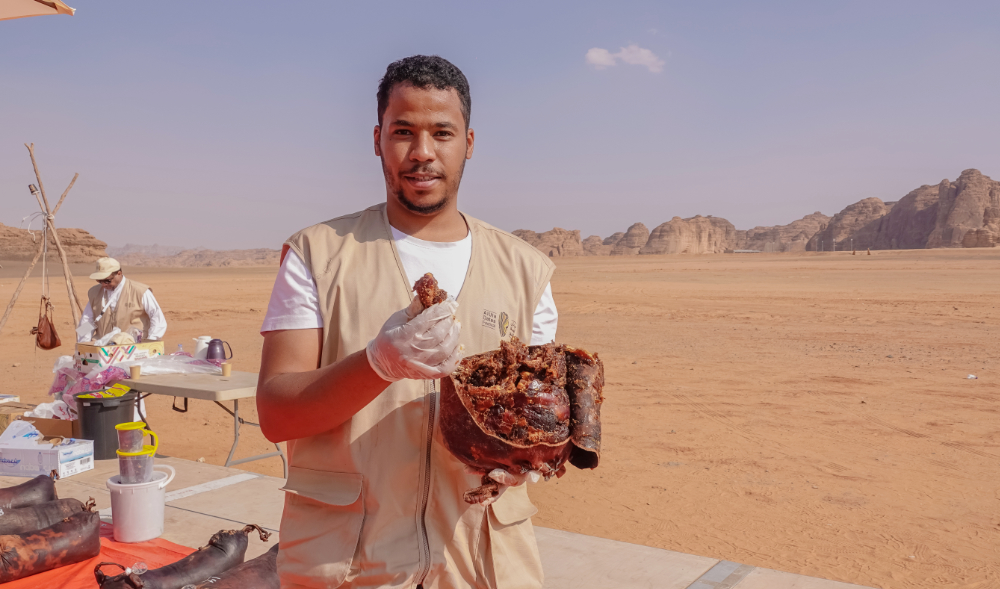


(AN photo by Huda Bashatah)

It is then used as a water dispenser for a year or more. When it no longer serves a purpose, it is once again dried in the sun and re-purposed for use in the Al-Shannah process.

Hamed Al-Showikan, an expert on Al-Shannah, told Arab News that if stored properly, dates could last up to four years.

HIGHLIGHT

Due to AlUla’s low humidity, the dates to be used in Al-Shannah are sprinkled with fresh water to add moisture and bulk them up and they are naturally heated in the afternoon sun. When ready, they are stuffed into the dried shell.

“Al-Shannah is from our heritage, it’s more than 300 years old. Our fathers and grandfathers used it before electricity. It was how they stored the dates — it can be used for many years.
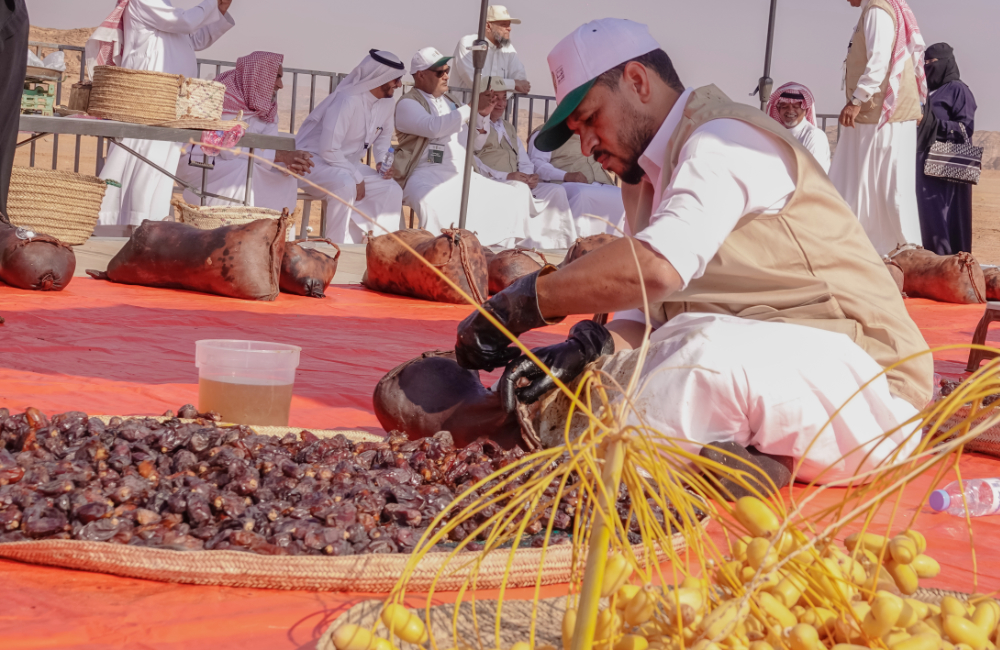


(AN photo by Huda Bashatah)

“It’s full of carbohydrates, sugar — all the minerals. AlUla valley has more than 3 million palm trees,” Al-Showikan said.

Due to AlUla’s low humidity, the dates to be used in Al-Shannah are sprinkled with fresh water to add moisture and bulk them up and they are naturally heated in the afternoon sun.

When ready, they are stuffed into the dried shell. Sesame seeds, cinnamon, mint, or other herbs and spices can be added to provide more flavor to the mixture before the container is sewn shut.
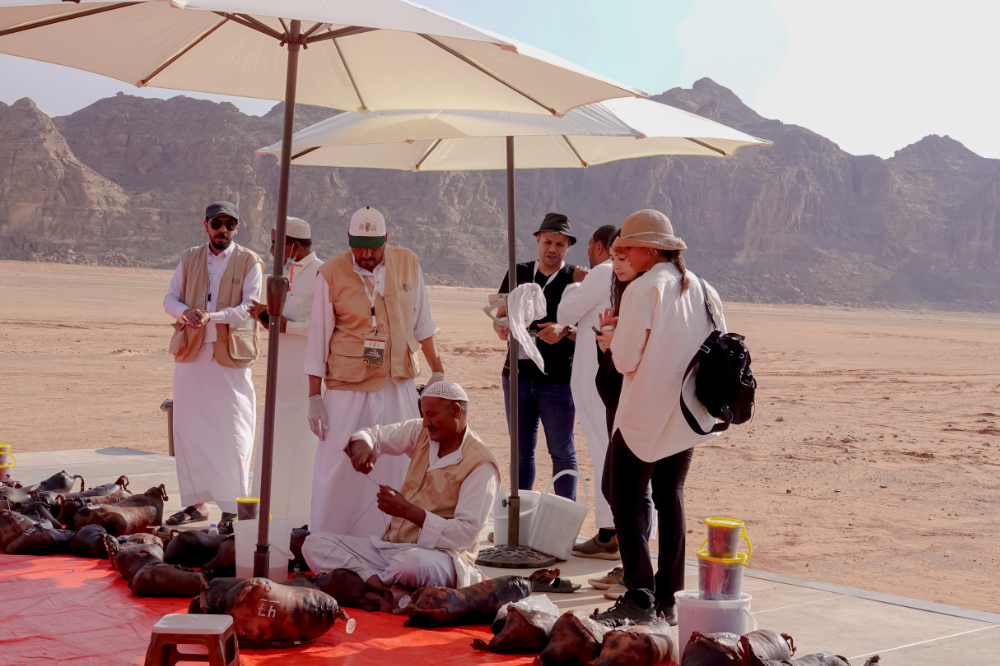


(AN photo by Huda Bashatah)

A year or so later, the skins are ripped open using a sharp knife and the gooey, sweet, nutritious contents removed.

Families typically store the date parcels on a shelf in a small room. No refrigeration is necessary, and the skins can be folded and tucked down if the contents are not consumed in one go.

Historically, Al-Shannahs were often used to barter goods such as fabrics or materials with merchants arriving in AlUla from the Levant or other countries.
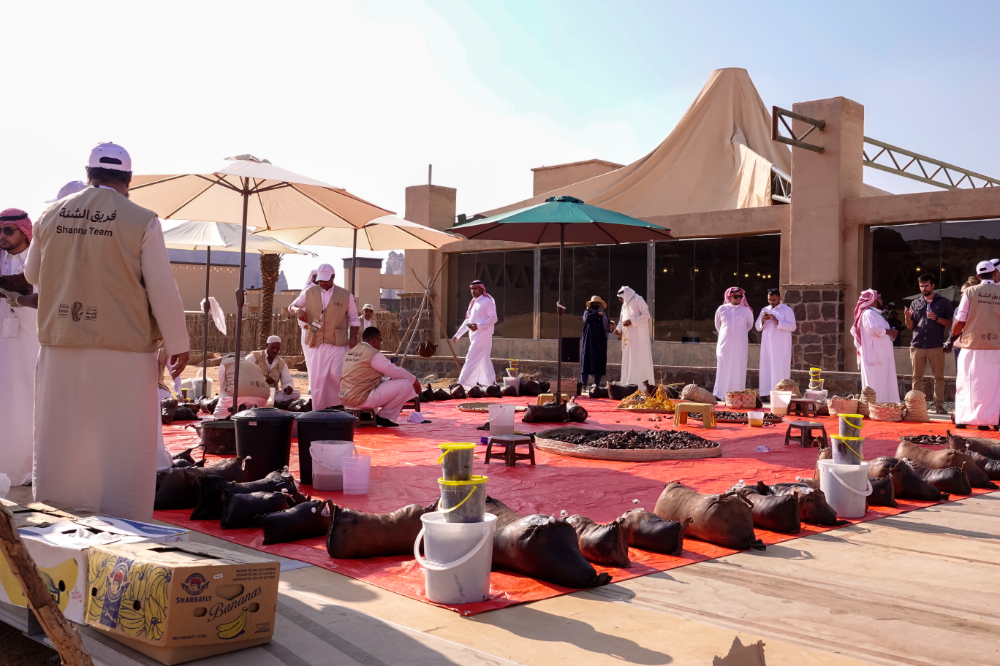


(AN photo by Huda Bashatah)

Khalid Al-Harbi, another Al-Shannah expert, said: “Al-Shannah ritual is the finale of the dates season in AlUla. Dates are the main source of nourishment to us in AlUla, since we are blessed to have fresh, abundant water.

“The palm tree is the mother of AlUla, and we use her to build everything in our lives; it goes into our furniture, building our homes, we even have a version similar to Al-Shannah made from palms to preserve dates.

“Al-Shannah needs the air to be removed, so it’s important to push it all the way down tightly to not allow any air to pass through since oxygen might prevent it from preserving.
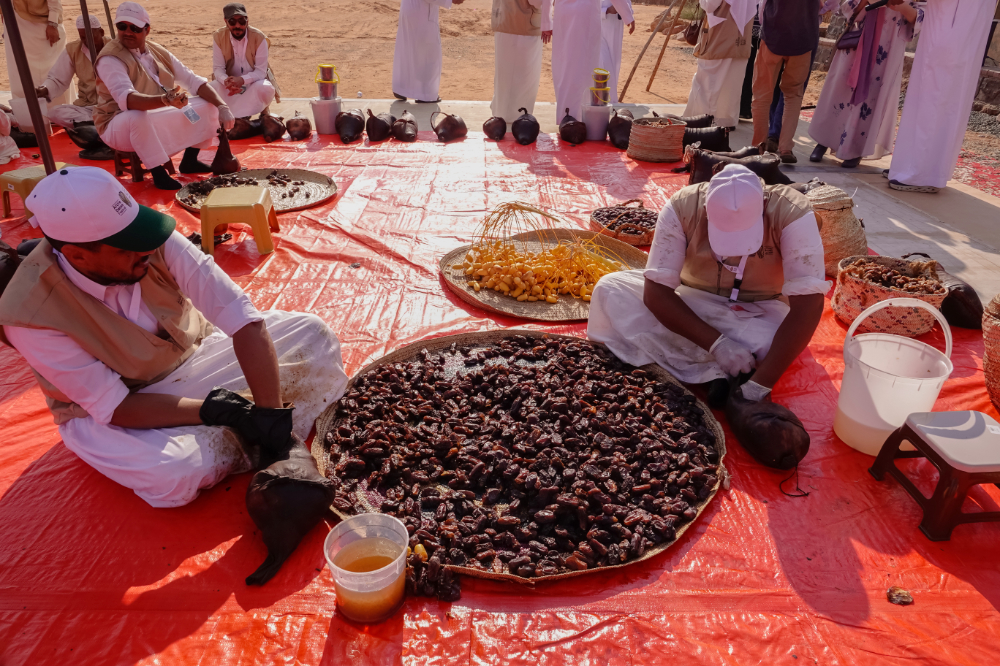


(AN photo by Huda Bashatah)

“Also, we don’t remove the pits because the pit has a role, it helps to keep the date intact and it’ll help fill out any space between the dates. If no air enters, it won’t spoil. If we keep it for over a year, it tastes even better,” Al-Harbi added.

The Royal Commission for AlUla has been helping to empower local farmers by offering them a platform to sell their goods and to form stronger bonds within the community.

Recently, the AlUla Dates Festival provided farmers with the opportunity to demonstrate their family rituals for stuffing the dates into Al-Shannah.

At the end of the festival, Al-Shannahs created at the site were sold off at an open-air auction.


Saudi initiative to host ‘dialogue’ between southern Yemeni factions widely welcomed

Updated 6 sec ago
Follow

Saudi initiative to host ‘dialogue’ between southern Yemeni factions widely welcomed

  • Conference in Saudi capital requested by Rashad Al-Alimi, president of the Yemeni Presidential Leadership Council
  • Kingdom urged all factions to participate “to develop a comprehensive vision” that would fulfill the aspirations of the southern people

RIYADH: The Saudi Foreign Ministry’s move to invite factions in South Yemen to hold a dialogue in Riyadh has been widely welcomed.

A statement by the ministry said the conference in the Saudi capital had been requested by Rashad Al-Alimi, president of the Yemeni Presidential Leadership Council, and the Kingdom urged all factions to participate “to develop a comprehensive vision” that would fulfill the aspirations of the southern people.

Arab League Secretary-General Ahmed Aboul Gheit welcomed Al-Alimi’s call to convene a comprehensive conference to discuss just solutions to the southern issue. 

He also expressed his appreciation for Saudi Arabia’s swift response to the request and its readiness to host and sponsor the conference with the participation of southern factions.

The situation in southern Yemen, Aboul Gheit said, has “well-known historical dimensions and includes legitimate issues that must be addressed at the negotiating table within a comprehensive Yemeni framework.” 

He stressed that attempts to impose a fait accompli did not serve the southern cause but instead caused serious harm by exposing the country to further fragmentation and disintegration.

He reiterated the Arab League’s consistent position, as reflected in its repeated resolutions on the Yemeni crisis, which is based on full commitment to Yemen’s unity and the preservation of its territorial integrity.

Commending the Saudi announcement, Sheikh Dr. Mohammed bin Abdulkarim Al-Issa,  the Muslim World League’s secretary-general, said that the step “reflected the Kingdom’s steadfast and sincere approach to supporting the Yemeni people in all their diversity.”

It also highlights the Kingdom’s continued efforts to preserve peace and stability in Yemen by addressing the southern issue through inclusive dialogue among all parties, Al-Issa added.

Meanwhile, Qatar has expressed its appreciation for Saudi Arabia’s hosting of the inclusive conference to explore fair solutions to the southern issue.

In a statement, Qatar’s Foreign Ministry welcomed the efforts exerted by the legitimate Yemeni government to support the Yemeni dialogue track and address the southern issue.

The ministry underlined the importance of the constructive participation of all southern stakeholders, prioritizing the interests of the Yemeni people at the anticipated conference in Riyadh.

It emphasized adherence to the outcomes of the national dialogue as the consensual framework and comprehensive mechanism for reaching an inclusive political solution that meets the aspirations of the Yemeni people in all their segments and preserves Yemen’s unity, sovereignty, and territorial integrity.

The ministry warned that unilateral declarations and measures taken without consultation and consensus among Yemeni parties, and without engaging in serious and responsible dialogue, could lead to a descent into chaos, harming the interests of the Yemeni people and undermining prospects for reaching a sustainable political settlement.

The ministry reaffirmed Qatar’s full support for all regional and international efforts aimed at advancing the political process, contributing to ending the Yemeni crisis through dialogue and peaceful means.