

Palestinian Chilean singer Elyanna to appear at Saudi Arabia’s SOUNDSTORM, XP Music Futures

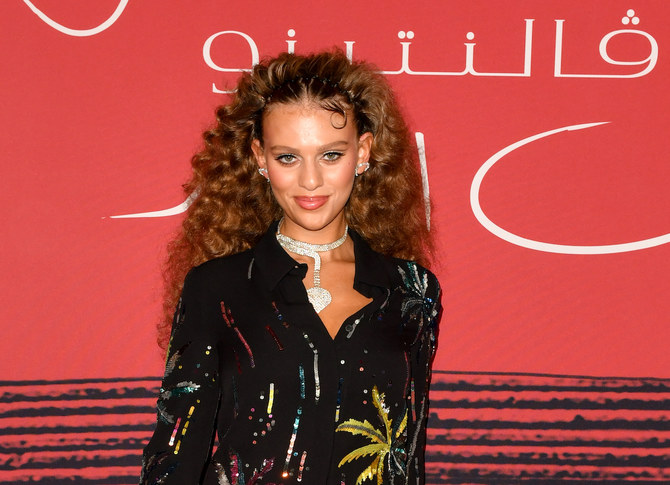
The Los Angeles-based music sensation will host a one-on-one session, called “Pro Xperience.” (Getty Images)
Short Url
Updated 05 November 2022
Follow

Palestinian Chilean singer Elyanna to appear at Saudi Arabia’s SOUNDSTORM, XP Music Futures

  • The Los Angeles-based music sensation, who has been taking the music industry by storm, will host a one-on-one session, called “Pro Xperience,” at XP Music Futures

DUBAI: Palestinian Chilean singer Elyanna is gearing up to head to Saudi Arabia for the first time to perform at Riyadh’s awaited music festival SOUNDSTORM and be a guest speaker at MDLBEAST’s music conference XP Music Futures.

SOUNDSTORM will take place from Dec. 1-3 and XP Music Futures will be held from Nov. 28-30.

The Los Angeles-based music sensation, who has been taking the music industry by storm, will host a one-on-one session, called “Pro Xperience,” at XP Music Futures to discuss her professional career.

“I’m thrilled to be taking part in XP Music Futures in Riyadh,” the 20-year-old singer told Arab News. “I’m eager to see what the XP team and MDLBEAST have been putting together to really help grow the Saudi Arabian music scene, and to talk about my upcoming performance in Saudi,” she added.

The “Ghareeb Alay” singer is preparing to release her first album soon.

During the talk, she will discuss her journey in launching the album, which involved “recording in the studio, trying new approaches, working with a team, and other elements like fashion and styling,” she said.

“It will reveal other sides of Elyanna that have never been seen before,” she teased. But with that comes a lot of hardship that the star said has taught her a lot as an artist.

“A lot of experience came with creating my album as a young up-and-coming artist, so to be able to express that in an industry event such as XP and connect with an audience passionate to learn is incredible,” she said.

Elyanna’s music is a mix of Arabic and Western beats, something that the singer ascribes to her multinational upbringing.

“Growing up, I was inspired by a lot of genres such as jazz; it was all I would sing as a young girl,” she said. “When I moved to the US, I felt an immediate connection with Arabic music and my culture. It gave me another perspective on the type of music I wanted to create.”

Elyanna has always believed in working hard as well as constantly seeking growth and knowledge.

“Each of my projects have a different source of inspiration and I still have a lot to achieve and learn from,” she said. “I work on always improving my music from lyrics to melody and production but also the overall purpose behind my music.

“The hardest thing in my career, which also happens to be the most enjoyable, is being myself,” she added. “There are no rules when it comes to that. I am always revealing my truest self through my music.”

Elyanna has worked with international artists like Canadian Lebanese singer Massari, and has met with A-list stars like Lana Del Ray, Cheb Khaled and Nancy Ajram.

“Each one of these artists has had a huge influence on my career and my style of music. I feel so lucky that I got the chance to personally meet and learn from them,” she said.

Her dream collaboration is with The Weeknd. “I’ve always been a huge fan of his music and his vision. He’s a very unique artist and I really connect with his music,” she said.

Elyanna’s talent was first discovered by her brother, Feras, when he heard her sing an Adele track.

“He believed in my talent from that day on,” she said. “He would always encourage me to sing at school and to participate in different talent shows. We would shoot album covers and post them to social media, just like professional artists did.”

When she moved to the US aged 15, Elyanna was first offered a professional opportunity through Palestinian Canadian producer and writer Nasri Atweh.

“He discovered me. He believed in my talent and invited me to his studio to sing in Arabic,” she said. “He then introduced me to Massari, the international artist who had a huge influence on my career, as an adviser and a huge supporter.”

The young star’s career then kicked off and her songs have garnered the likes of thousands of fans around the world.

“I think my detail-oriented, hardworking personality has been the secret to my success … with a bit of luck, of course,” she told Arab News.


Recipes for Success: Chef Karishma Sakhrani offers advice and a mutton kabab recipe

Updated 05 February 2026
Follow

Recipes for Success: Chef Karishma Sakhrani offers advice and a mutton kabab recipe

DUBAI: Karishma Sakhrani’s path into the kitchen was not a straightforward one. Before food became her full focus, she was working in fashion and business, building a career that looked good on paper but felt incomplete.  

It was not until she reached the finals of “MasterChef India” that the disconnect became impossible to ignore and she decided to pursue food seriously, even without formal culinary training. 

Sakhrani built her skills through repetition and risk — hosting pop-ups, cooking private dinners, developing menus, collaborating with restaurants and moving between cities as opportunities came up.  

Now based in Dubai, Sakhrani runs her own dining concept, Viceroy’s Table, while also collaborating with a number of other restaurants.  

When you started out, what was the most common mistake you made? 

I tried to do too much. I was obsessed with complexity — more elements on the plate, more techniques, more garnishes. I believed that effort automatically translated to excellence. Over time, I realized that restraint is actually the hardest skill to master. The most memorable dishes are often the simplest ones, executed with confidence and consistency. Learning when to stop, when not to add another step or ingredient, was a turning point for me. 

What’s your top tip for amateur chefs? 

Recipes are guides, not rulebooks. Go with your instinct and trust your palate. Ingredients vary, stoves behave differently, and your taste matters. If something needs more salt or acidity, adjust it. Also, don’t rush! Cooking is much more enjoyable when you allow yourself to be present rather than stressed about the outcome. For me, cooking is meditative. I just lose myself in a trance when I’m cooking at home.  

What one ingredient can instantly improve any dish?  

Lemon! A squeeze of lemon can completely transform a dish because acidity wakes everything up; it sharpens flavors, balances richness and adds freshness without overpowering what’s already there. Whether it’s a few drops at the end of a curry, a salad dressing, grilled vegetables, or even a dessert, lemon brings brightness and clarity. It’s often the missing element when a dish tastes flat, and a reminder that balance is just as important as seasoning. 

When you go out to eat, do you find yourself critiquing the food?  

I try not to overanalyze when I’m dining out, but it’s instinctive to notice details. 

What’s the most common issue you see in other restaurants? 

Inconsistency — a dish might be great one visit and disappointing the next. Often, this comes down to lack of attention to basics or rushed execution. Consistency is what builds trust with diners. 

What’s your favorite cuisine or dish to order? 

Pizza. The perfect char, crisp crust, and molten cheese of a wood-fired pizza is impossible to achieve in a regular oven. I also love Japanese food. The precision, balance, and respect for ingredients always impress me. From delicate sushi to rich ramen, it’s about technique meeting simplicity; flavors are subtle, textures matter, and everything feels intentional. 

What’s your go-to dish if you have to cook something quickly at home? 

Spaghetti Aglio e Olio. It’s simple, satisfying, and full of flavor. With just garlic, olive oil, chili, parsley, and spaghetti, you can create something comforting yet vibrant. It hits the spot every time, proving that a few good-quality, basic ingredients can make a dish feel elevated without spending hours in the kitchen. 

What customer behavior most annoys you? 

I’m generally very relaxed, so I don’t get annoyed easily. If anything, it’s when guests make changes to a dish, and then aren’t exactly happy at the end of it: the way a dish is designed is very intentional and thoughtful. 

What’s your favorite dish to cook? 

Believe it or not, my favorite dishes are salads. It might sound simple, but salads are where my creativity really shines. My journey with cooking actually started with a focus on healthy eating, and over time I’ve come to love the challenge of turning basic ingredients into something extraordinary. What excites me about salads is the endless opportunity to experiment with flavors, textures, and colors.  

What’s the most difficult dish for you to get right? 

Desserts are by far the most challenging for me. They demand such precision — temperatures, measurements, timing, and technique all have to align perfectly. Even a tiny misstep can change the texture, consistency, or flavor completely. That’s what makes them so intimidating, but also so fascinating. I genuinely wish I had more time to dedicate to learning and experimenting with them.  

As a head chef, what are you like in the kitchen? 

I’m firm but really calm. I believe kitchens run best on clarity, respect, and accountability rather than fear. High standards don’t need aggression. When people feel supported, they perform better, learn faster, and take pride in their work. 

Chef Karishma’s peshawari mutton chapli kabab recipe 

Chef Karishma’s peshawari mutton chapli kabab. (Supplied) 

Servings: 6–8 kababs 
Prep time: 20 mins 
Cook time: 15 mins 

 Ingredients

Mutton mince (with some fat) – 500g (coarsely ground, not fine) 

Onions – 1 large (finely chopped, water squeezed out) 

Tomato – 1 medium (finely chopped) 

Green chilies – 2–3 (finely chopped) 

Coriander leaves – a handful (chopped) 

Mint leaves – a few (chopped, optional) 

Garlic paste – 1 tsp 

Ginger paste – 1 tsp 

Crushed coriander seeds – 1 tsp 

Pomegranate seeds (anardana) – 1 tsp (crushed) 

Cumin seeds – 1 tsp (roasted & crushed) 

Red chili flakes – 1 tsp (adjust to taste) 

Salt – to taste 

Cornmeal (makai ka atta) – 2–3 tbsp (for binding) 

Egg – 1 (optional, for binding) 

Tomato slices – for topping (optional, very authentic!) 

Oil or ghee – for shallow frying 

Instructions

Mix the mince: 

In a large bowl, combine mutton mince with all the chopped veggies, herbs, spices, and cornmeal. 

Mix well using your hand (the warmth helps blend everything). 

Add egg if needed for extra binding. 

Let the mixture rest in the fridge for 30 mins (helps firm it up). 

Shape the kababs: 

Wet your hands and shape large, flat patties (authentic chapli kababs are wide and a bit thin). 

Optional: press a thin tomato slice into the center of each kabab. 

Fry: 

Heat oil or ghee in a shallow frying pan. 

Fry kababs on medium-high heat until golden brown and cooked through, about 4–5 minutes per side. 

Serve hot: 

Enjoy with naan, chutney, and raw onions or salad.