

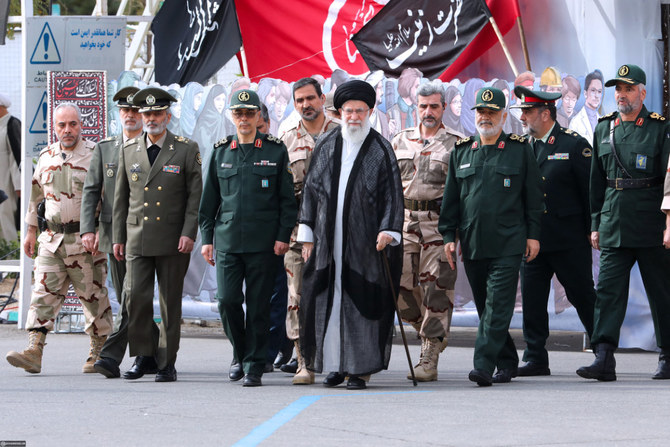


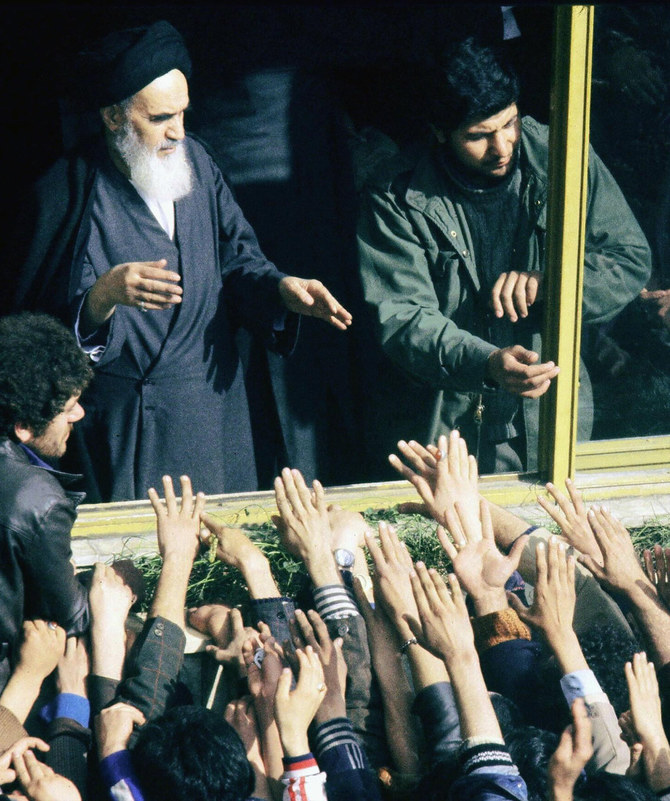

LONDON: Following a month of nationwide protests, sparked by the death of 22-year-old Mahsa Amini while in the custody of Iran’s notorious morality police, there is growing belief that the militant clerical regime, in place since the 1979 Islamic Revolution, is living on borrowed time.
Amini’s death on Sept. 16 ignited a tinderbox of pent-up frustrations in Iran over falling living standards and discrimination against women and ethnic minorities, leading to the biggest wave of mass protests since the Green Movement of 2009.
A month on, the unrest has persisted, spreading to at least 80 cities despite a “ruthless” crackdown that has left more than 200 dead.
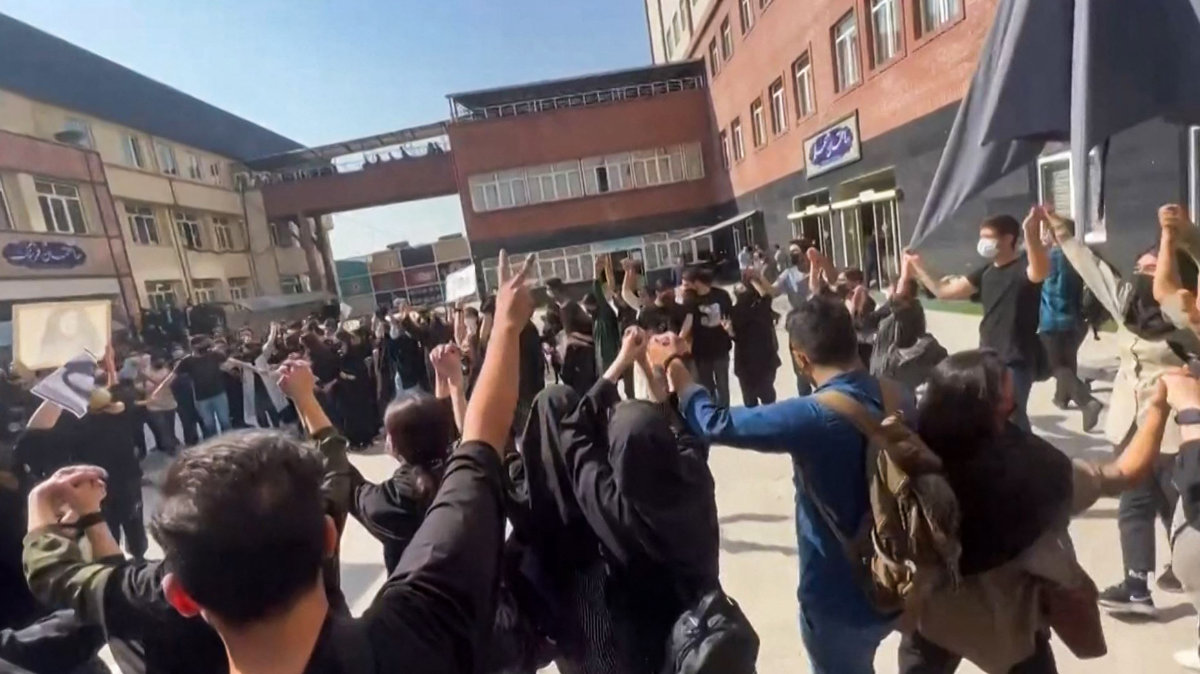
This image grab from a UGC video made available on October 15, 2022, shows Iranian students protesting at Tehran's University of Science and Culture. (AFP)
Such is the scale, fury and determination of the protests there are now many Iran watchers and scholars of social movements beginning to talk openly about the possibility of regime change.
It certainly would not be unprecedented for a nonviolent protest movement of this scale to succeed. According to research by Erica Chenoweth, a political scientist at Harvard University, nonviolent protests are twice as likely to succeed in this vein as armed conflicts.

Looking at hundreds of campaigns over the last century, including in the Philippines in 1986, Georgia in 2003, and Sudan and Algeria in 2019, Chenoweth found it takes around 3.5 percent of the population actively participating in such protests to ensure serious political change.
Such is the influence of Chenoweth’s work that the phenomenon has been dubbed “the 3.5 percent rule.”
Roham Alvandi, associate professor of international history at the London School of Economics, believes “something fundamental” has changed in the wake of the protests, which may constitute “the beginning of the end of the Islamic Republic.”
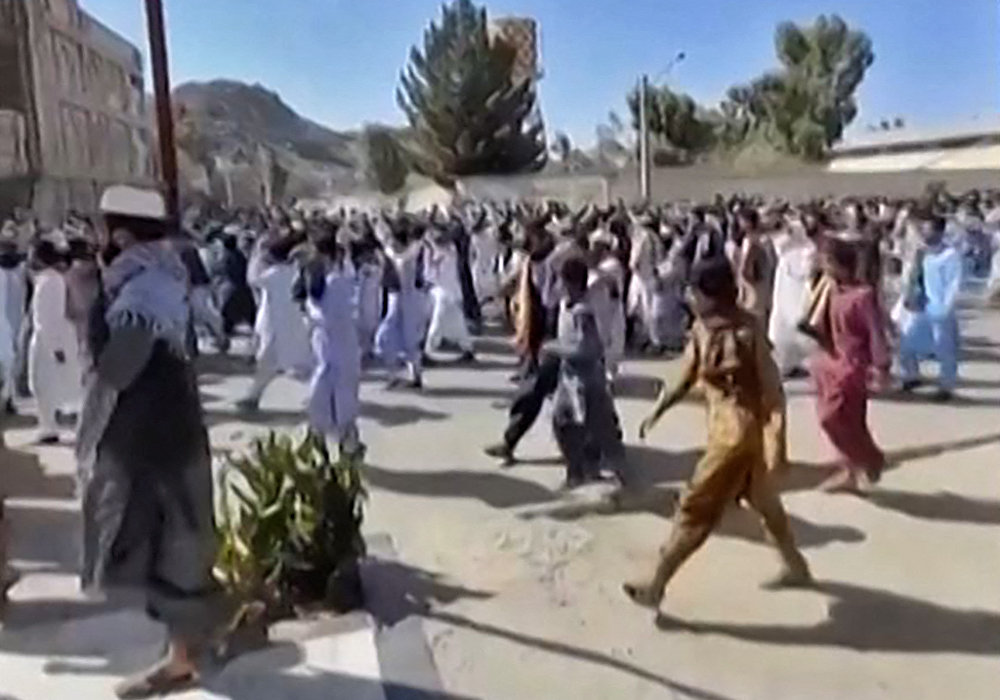
Iranian students protest at the Art University in the central city of Isfahan in this image grab from a UGC video made available on October 15, 2022. (AFP)
In the immediate aftermath of Amini’s death, the protests primarily focused on the morality police and their strict dress code for women. Videos of these early demonstrations shared on social media showed women removing and burning their headscarves in acts of defiance.
Soon, however, the focus of the protests grew to include a whole range of other grievances, from tumbling living standards as a result of crippling Western sanctions, to the denial of basic rights for ethnic minorities.
However, it was the decision by workers at the Abadan and Kangan oil refineries and the Bushehr petrochemical plant to join the protests that galvanized the belief that the regime could be on its last legs.
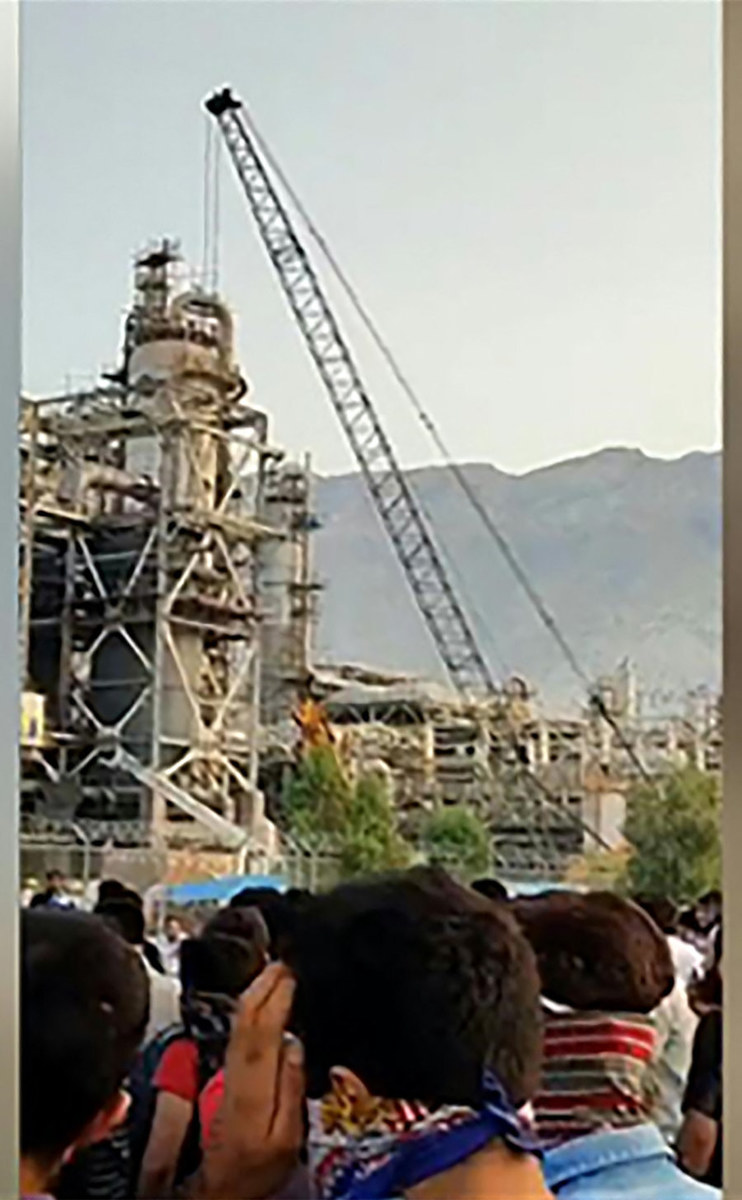
An image grab from a UGC video made available on Twitter on Oct. 10, 2022 shows
employees of the Asaluyeh Petrochemical Refinery in Bushehr province protesting Mahsa Amini's death. (AFP)
Strike action played a critical role in Iran’s 1906 and 1979 revolutions, Alvandi told Arab News, arguing that it could now serve to “paralyze the Islamic Republic and show the powerlessness of the state in the face of this movement.”
Sanam Vakil, deputy director and senior research fellow for the Middle East North Africa program at Chatham House, concurs with this assessment, telling Arab News a series of strikes comparable to those experienced in 1979 could be a “key ingredient, crippling the economy and showcasing a broader base of support.”
However, Vakil says there are several factors that could determine the success of the movement. Chief among them is leadership.
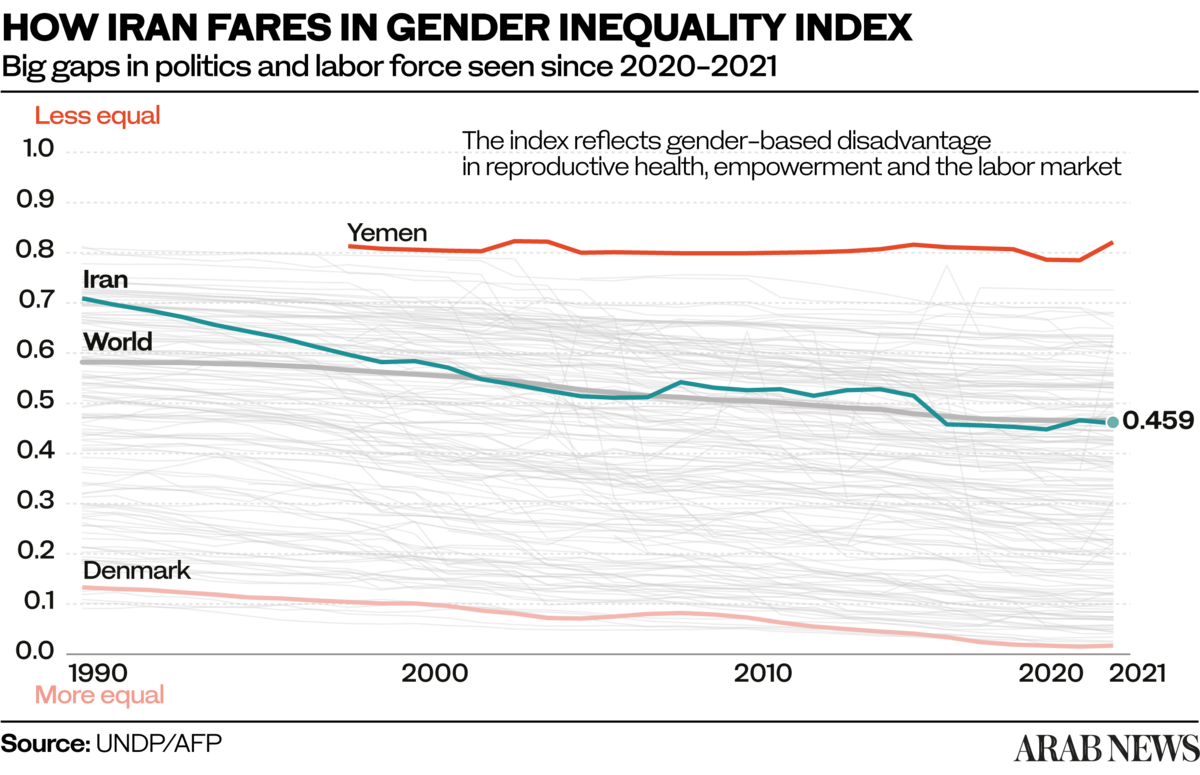
“The strength and weakness of the movement is its lack of clear leadership,” Vakil tld Arab News. “It is a strength because without a clear structural organization and leader it will be hard to stamp it out completely, but those components are also very necessary if this movement is going to be a real challenge to the regime.”
And although the protests of 2009 and 2019 may have been bigger in terms of numbers taking to the streets, analysts have pointed to the cross-generational character of the movement and the sheer number of cities and regions that are taking part.
“It’s not often you have schoolchildren telling the Iranian president to get lost,” said Vakil.
Yassamine Mather, an expert in Iranian politics at Oxford University and the editor of the academic journal “Critique,” believes this wide base of support spanning many segments of Iranian society is a key strength which raises the possibility of regime change.
“It is also a strength that they have gone beyond the hijab and are addressing other issues — repression, political prisoners, the high price of basic foods, unemployment or lack of secure employment, and corruption,” Mather told Arab News.
“And then there is support from oil workers in specific areas, such as Assalouyeh, as well as support by Hafttapeh sugarcane workers, a syndicate of Iran’s teachers, and sections of the legal profession. In Tehran, lawyers have been demonstrating this week.
FAST FACTS
Mahsa Amini, an ethnic Kurd, died on Sept. 16 after being arrested for allegedly violating the regime’s strict hijab rules.
Iranian officials claimed she had suffered a heart attack, but reports indicated she died as a result of a severe beating on the day of her arrest.
“Not to mention that many of the protesters are young. In some cases they are schoolchildren, so they are not easily scared. It helps that the regime has failed to launch either sustained or successful pro-government counter demonstrations.”
Mather also pointed to an apparent sense of mounting disunity at the top following the decision by former parliamentary speaker Ali Larijani to publicly deviate from the regime’s line that US and Israeli intelligence efforts had manufactured the protests.
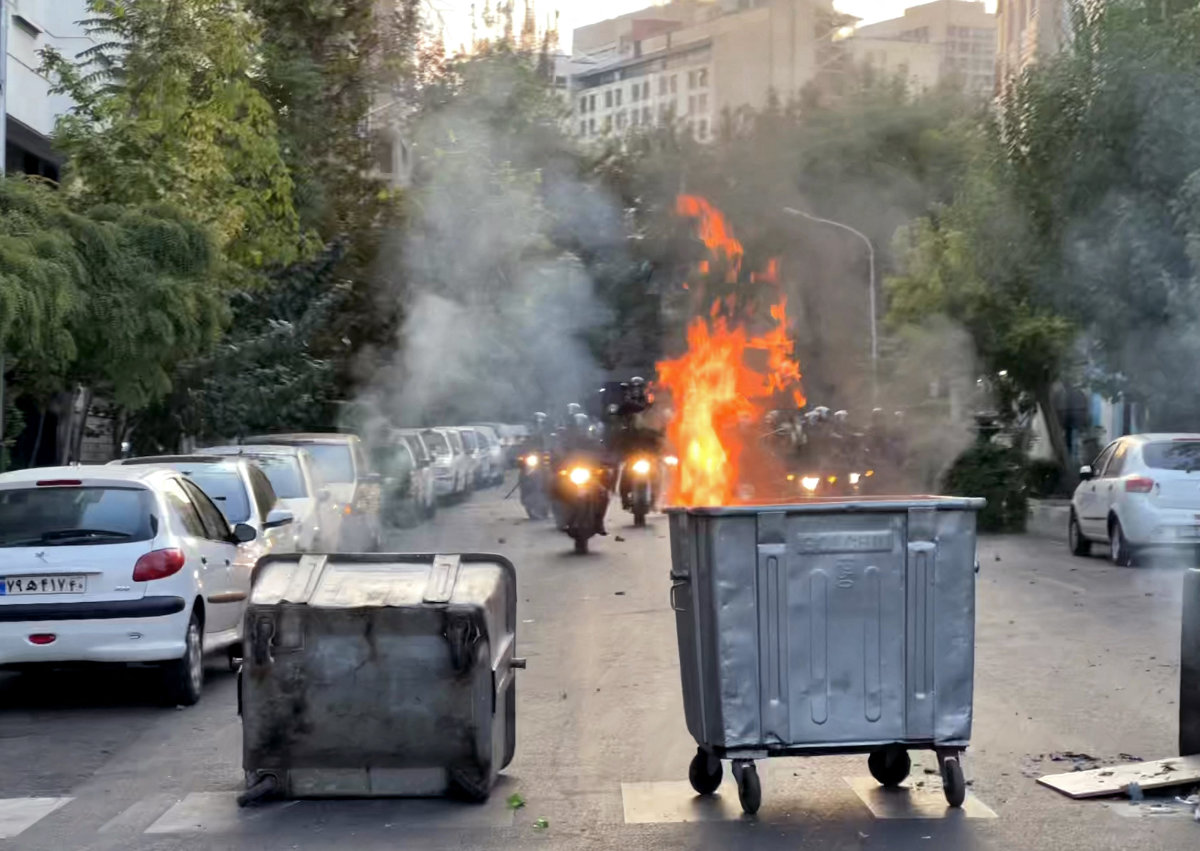
A bin burns in the middle of an intersection during a protest for Mahsa Amini in Tehran on September 20, 2022. (AFP)
Speaking to an Iranian news site, Larijani said an “extremist” government policy on the hijab had engendered an extremist counterreaction among the Iranian public, and called for greater tolerance.
“Reformists within the regime trying to distance themselves from hardliners, some calling on security forces to side with the ‘people who are protesting,’ have probably come a little too late,” said Mather.
“The fact is, protesters are distancing themselves from the regime itself and the slogan ‘death to the dictator, be it Khamenei or the Shah’ is now very prominent.”
Iranian opposition groups in the diaspora are watching closely as events unfold in Iran, but fear the regime is unlikely to collapse without putting up a fight.
Elham Zanjani, a member of the National Council of Resistance of Iran Women’s Committee, told Arab News it was “certainly possible” that the protests could lead to regime change, but far from inevitable.
“The vast majority of the Iranian people are against the regime, they are chanting ‘down with Khamenei,’ ‘We don’t want the mullahs nor the Shah,’ and they have little doubt that what they are looking for, freedom and democracy, separation of religion and state etc., won’t see the light with this regime in power,” said Zanjani.
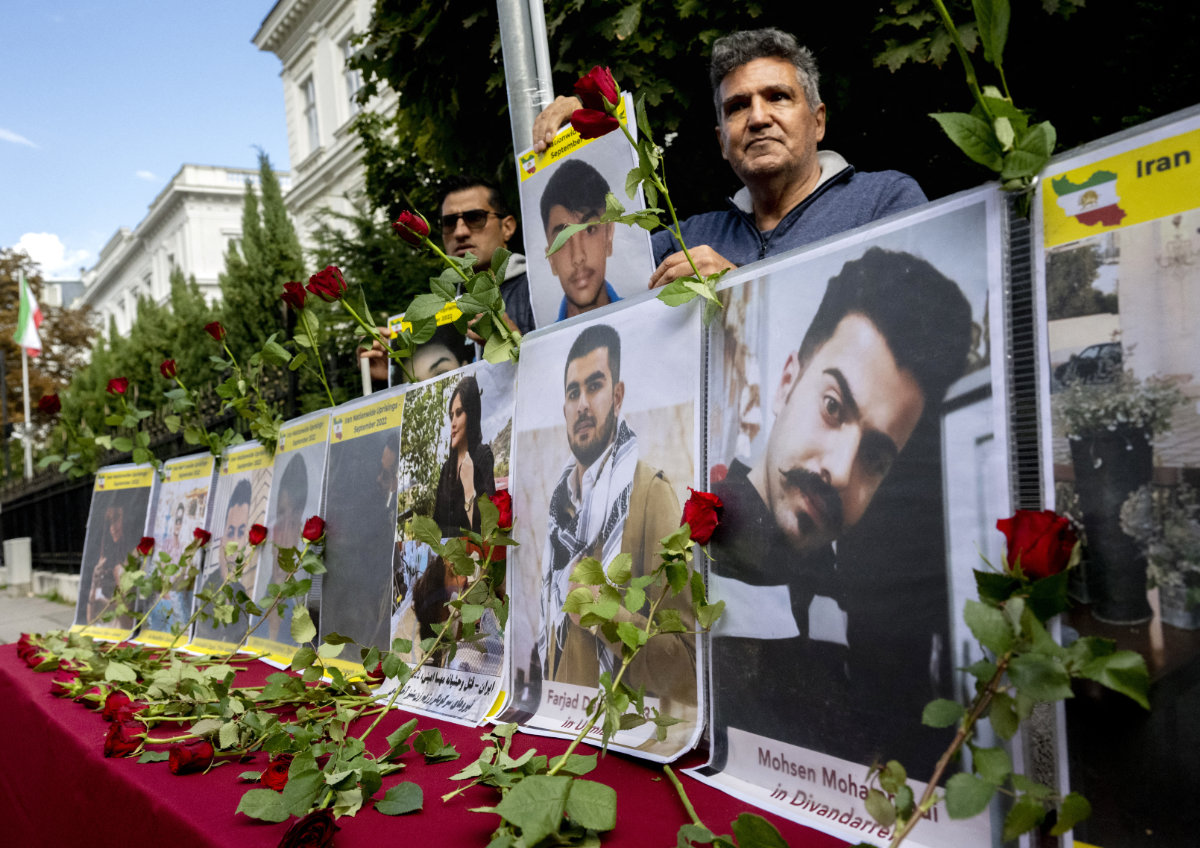
Sympathizers of the National Council of Resistance of Iran (NCRI) and of the People's Mujahedin of Iran (MEK) demonstrate near the Iranian Embassy in Vienna, Austria, on Sept. 26, 2022. (AFP)
“But one cannot underestimate the regime’s dreadful potential of repression, as they showed in November 2019, killing over 1,500 protesters in five days.”
Indeed, sheer brute force could well be enough to ultimately stifle the movement.
“There is also the issue that there is neither an obvious alternative nor a strategy about who or what would replace the current regime,” said Mather. “Mixed with this you have the ability of the security forces to kill, injure and arrest protesters.”
Help from external powers is also likely to taint the movement and lend weight to the regime’s claims of a foreign conspiracy.
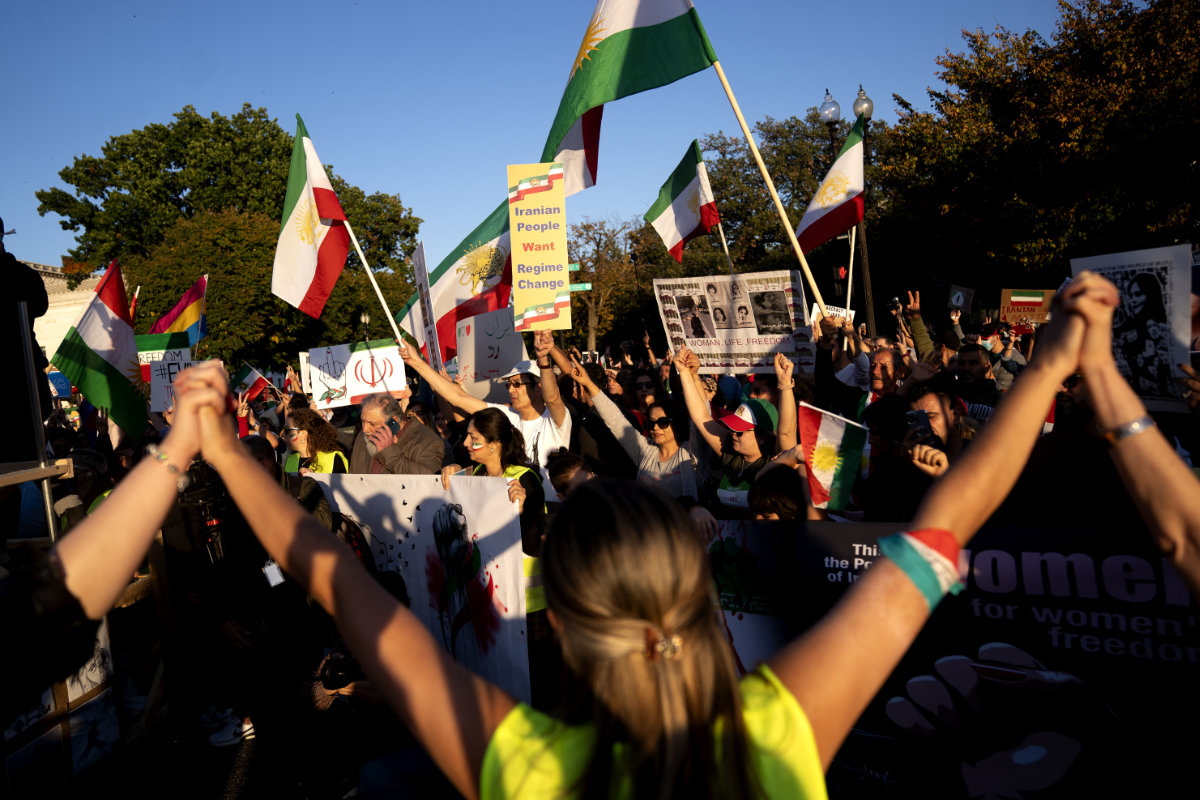
Demonstrators chant slogans in front of the US Capitol during the "March of Solidarity for Iran" in Washington, DC, on Oct.15, 2022. (AFP)
“Support by Western governments — this is also a potential weakness as it invokes ideas of ‘color revolutions,’ and notions of foreign interventions with the aim of dividing Iran into small regional states,” said Mather, referring to the fragmentation of the former Soviet Union in the 1990s along predominantly ethnolinguistic lines.
For Zanjani, however, international support remains an important factor for the ultimate overthrow of the regime. Such support ought to include punitive measures to prevent the regime employing further oppressive measures against peaceful protesters.
“We must overcome, one way or another, this evil repressive power,” Zanjani told Arab News.


