

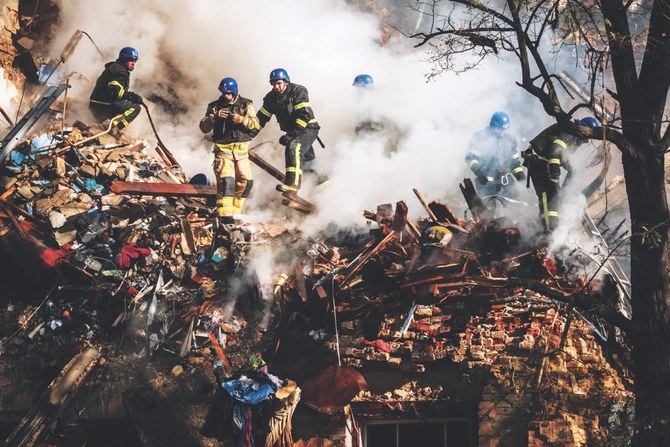

LONDON: Over the past month, the regime in Tehran has been responsible for the deaths of scores of civilians, from young protesters on the streets of Iran who died at the hands of security forces to citizens of distant Ukraine killed by Iranian drones supplied to Russia.
And yet, in its attempt to salvage the 2015 Iran nuclear deal at any cost, the Western world appears willing to make concessions to the regime regarding its conventional weapons programs and proxy tactics, in the single-minded hope of preventing Tehran from obtaining a nuclear bomb.
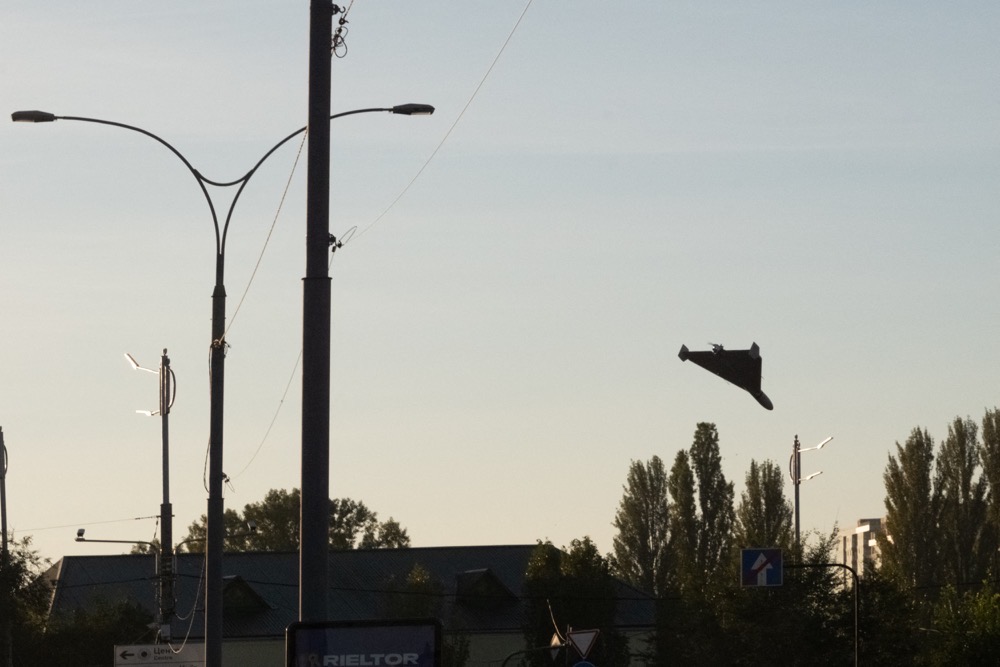
The Shahed-136 drones, the name of which translates as “martyr” in Persian, have been used by Iran’s Islamic Revolutionary Guard Corps and its proxies in conflicts across the Middle East. (AFP)
“The unrelenting focus on the Iran nuclear deal replaced policy work on Iran’s conventional and missile systems for years,” Norman Roule, a Middle East expert and former senior official in the CIA, wrote in a message posted on Twitter on Monday.
“Iraqis, Syrians, Emiratis, Saudis, Yemenis, Ukrainians and the multinational expatriates living in these countries paid the price for that decision.
Alberto Miguel Fernandez, a retired US diplomat and former head of the Middle East Broadcasting Network, echoed Roule’s assessment and called out the White House for its seemingly high tolerance for the malign activities of the Iranian regime.
“The Biden administration unfairly targets Saudi Arabia as helping Russia, meanwhile the same American administration has been indulging Iran (which actually supplies Russia with drones) for most of the last two years,” Fernandez tweeted on Monday.
Former President Donald Trump withdrew the US from the Obama-era nuclear deal, more formally known as the Joint Comprehensive Plan of Action, in 2018. His successor Joe Biden, aided by European allies, has been adamantly trying to restore the accord by offering several major concessions to the Islamic Republic.
“Iran has used the talks to show that it is able to successfully defy major powers and the International Atomic Energy Agency,” Roule told Arab News.
“It has also normalized a larger and more dangerous nuclear program. Both of these achievements came at no cost to Tehran.”
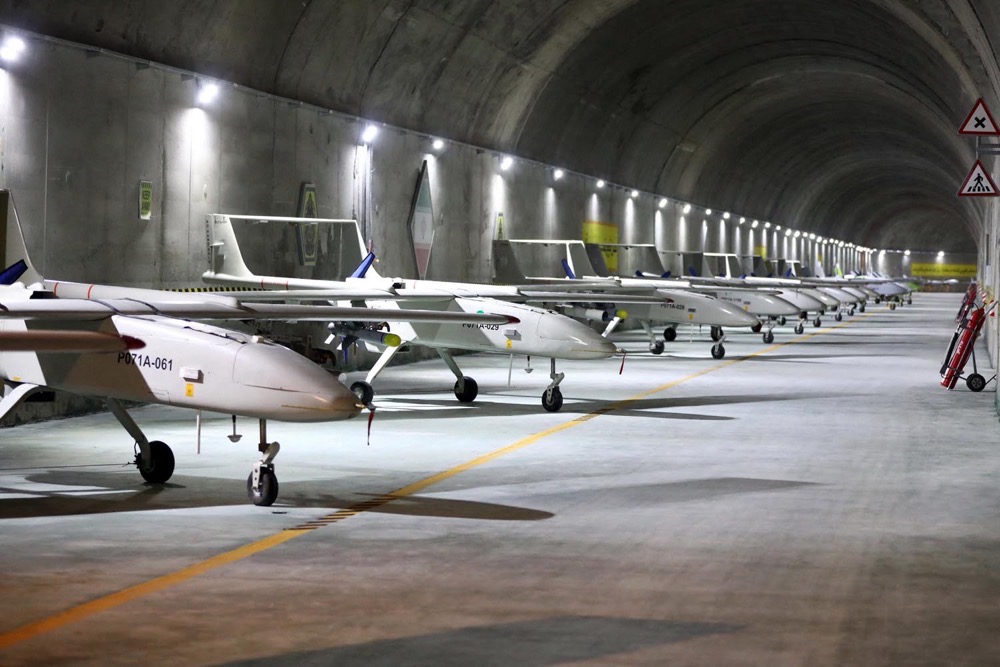
According to US officials, Iran is supplying Russia with “hundreds” of armed drones in an attempt to turn the tide of the war against the Western-backed Ukrainian armed forces. (AFP)
Far from showing a willingness to meet the international community halfway, the Islamic Republic has been free to intensify its malign activities with impunity, massively expanding its uranium-enrichment program and continuing to interfere in regional affairs with its arsenal of drones, missiles and proxy militias.
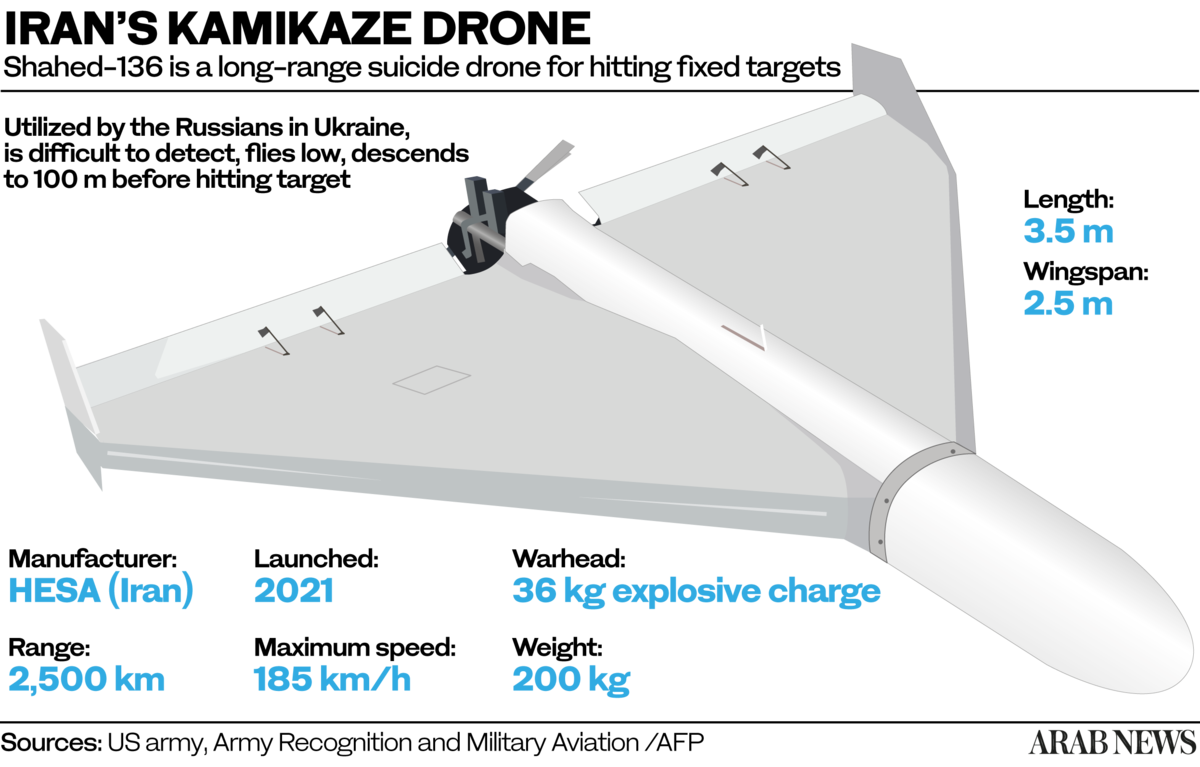
On Monday, about 30 “kamikaze” drones, supplied to Russia by Iran, rained down on residential areas of the Ukrainian capital, Kyiv, in an onslaught that left at least four people dead. The Shahed-136 drones, the name of which translates as “martyr” in Persian, have been used by Iran’s Islamic Revolutionary Guard Corps and its proxies in conflicts across the Middle East.
The Houthi militia in Yemen, for instance, has frequently used explosive-laden drones to target Saudi Arabia. Tehran provided the militants with the means and the know-how to assemble and launch these drones to devastating effect.
In September 2019, Iranian drones and cruise missiles were used to attack oil processing facilities at Abqaiq and Khurais in eastern Saudi Arabia, causing significant disruption to global oil markets. The recent use of them in Ukraine marks a major escalation in the regime’s efforts to export terror.
Responding to the reports of Iranian drones targeting Ukraine, Josep Borrell, the EU’s foreign policy chief, told reporters in Luxembourg on Monday: “We will look for concrete evidence about the participation.”
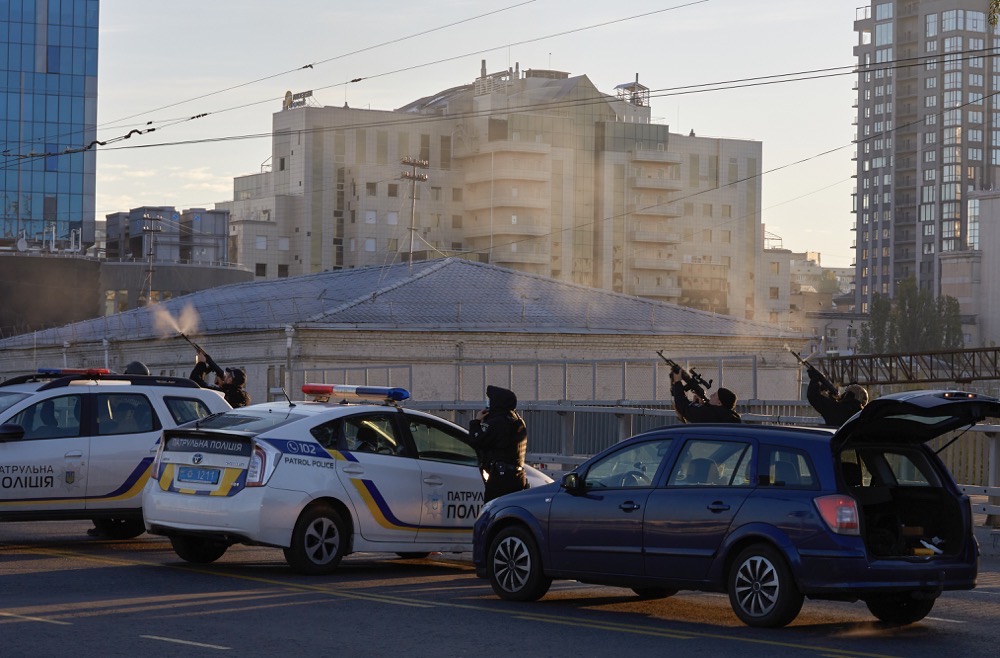
On Monday, about 30 “kamikaze” drones, supplied to Russia by Iran, rained down on residential areas of the Ukrainian capital, Kyiv. (AFP)
According to US officials, Iran is supplying Russia with “hundreds” of armed drones in an attempt to turn the tide of the war against the Western-backed Ukrainian armed forces, which have reclaimed vast swaths of the country’s eastern territory in recent weeks.
Russia has used several of its newly acquired loitering munitions, also referred to as “kamikaze” or “suicide” drones. These particular drones are relatively cheap and can be used in large numbers, enabling them to overwhelm enemy defenses and reach their targets, where they self-destruct.
The Shahed-136 — also known as the air moped because of the buzzing sound it makes as it flies overhead — was first used in Ukraine in September, with reports suggesting they were sold to the Russians in August, despite Iranian denials.
“It is sad that we have to recognize that the Iranian government is lying, as the Russian Federation government is, because we had contact with Iran’s leaders at the topmost level,” Ukraine’s President Volodymyr Zelensky recently said during an interview with Arab News’s Frankly Speaking.
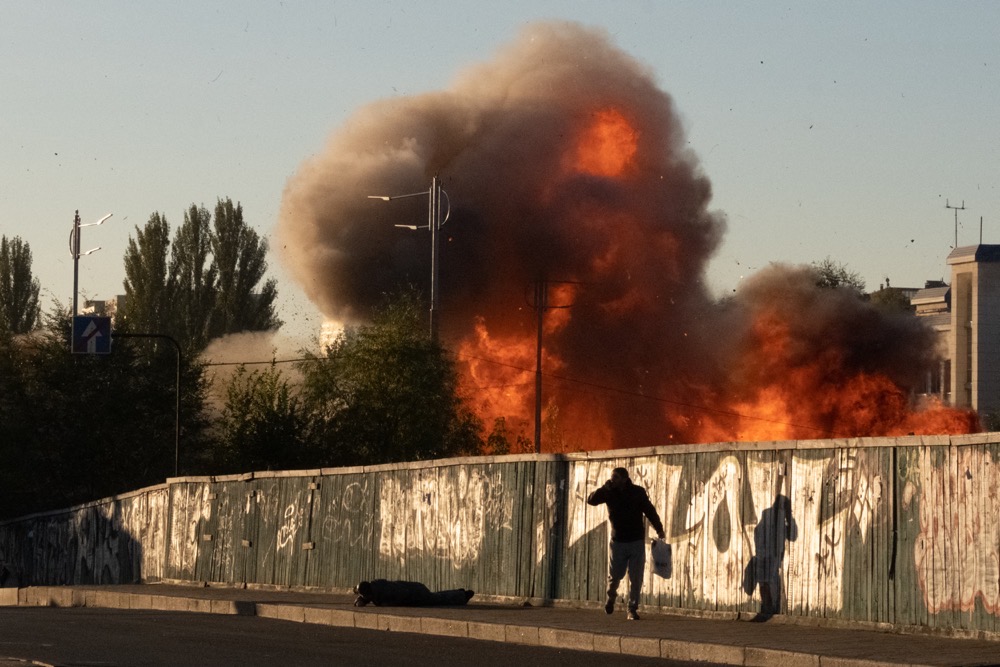
On Monday, about 30 “kamikaze” drones, supplied to Russia by Iran, rained down on residential areas of the Ukrainian capital, Kyiv. (AFP)
“We talked to the embassy, we had the ambassadors called up to the Ministry of External Affairs, and we were assured that nothing was sold to Russia, it wasn’t their drones, and nothing of the kind.
“We have a number of these downed Iranian drones and these have been sold to Russia to kill our people, and they … are being used against civilian infrastructure and civilians, peaceful civilians. Because of that, we sent Iranian diplomats away from the country. We have nothing to talk with them about.”
Although there are reports that the US is considering further sanctions against Iran in response to the sale of the drones to Russia, experts say they are unlikely to deal a body blow to the regime of Supreme Leader Ali Khamenei.
“There will likely be more sanctions against Iran but it is unlikely that sanctions on drone entities will have much impact in the short term,” said Roule.
“Iran’s leaders must understand that their actions have produced diplomatic and economic isolation that will destabilize the regime. It is critical that Iran’s oil revenue be cut.”
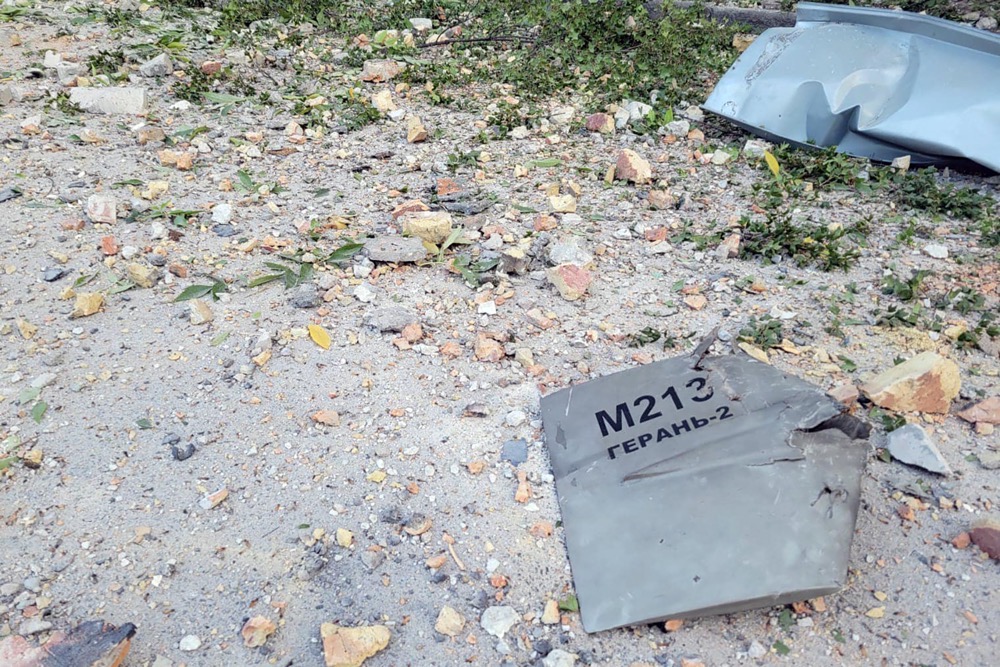
On Monday, about 30 “kamikaze” drones, supplied to Russia by Iran, rained down on residential areas of the Ukrainian capital, Kyiv. (AFP)
Azeem Ibrahim, director of the New Lines Institute for Strategy and Policy, said the Iran nuclear deal, which eased the sanctions pressure on the regime in exchange for restrictions on its nuclear program, gave Tehran the financial means to expand its drone and missile programs.
A revival of the nuclear deal, without additional restrictions on the development of conventional weapons and the use of proxy forces, will only repeat the same mistake, he warned.
“The West first needs to understand that the first Iran deal explicitly gave Iran the capital and time to develop its drone program, which is the cornerstone of a vast and aggressive regional strategy,” Ibrahim told Arab News.
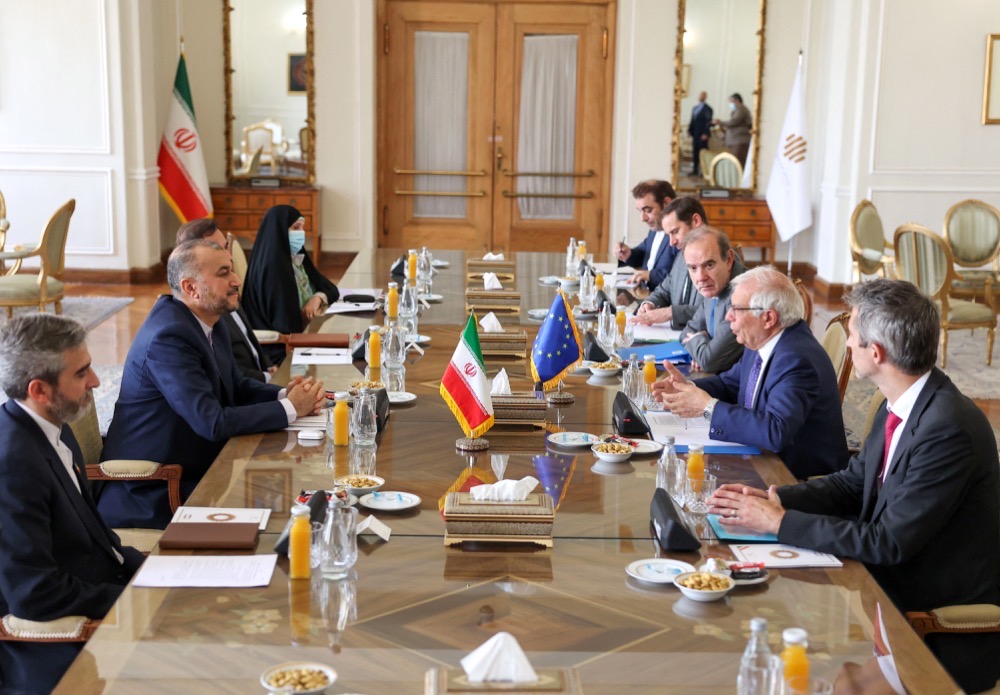
The Western world appears willing to make concessions to the regime regarding its conventional weapons programs and proxy tactics, in the single-minded hope of preventing Tehran from obtaining a nuclear bomb. (AFP)
“Any new Iran deal must not make the same mistake and the West must do everything it can to curb Iran’s drone campaign in Yemen, Syria, Lebanon and now Ukraine. But first it must recognize that there is such a campaign being waged.”
Ibrahim believes the Western response to the latest drone attacks should be “fearsome.”
“For too long Iran has counted on Western indifference and laxity,” he said. “It has built a regional empire of militia groups and set about arming them with ballistic missiles and drones, which are used to directly attack NATO forces and their Middle Eastern allies.
“Iran’s drone program has only flourished with Western negligence. For that negligence to end, the West’s policy must make up for years of inattention with aggression … of its own.”


