
CAIRO: Technology has opened new vistas for the education sector by optimizing the ability to learn inside a classroom and beyond.
Educational technology has supported teaching facilities using online learning and smart applications in various academic and non-academic environments.
According to market research firm Valuates Reports, the 2021 global e-learning market revenue was about $15 billion, and the market is expected to grow at a compound annual growth rate of 6.5 percent from 2021 to 2028.
Arab News has compiled a list of the Middle East and North African region’s top 10 most funded edtech startups.
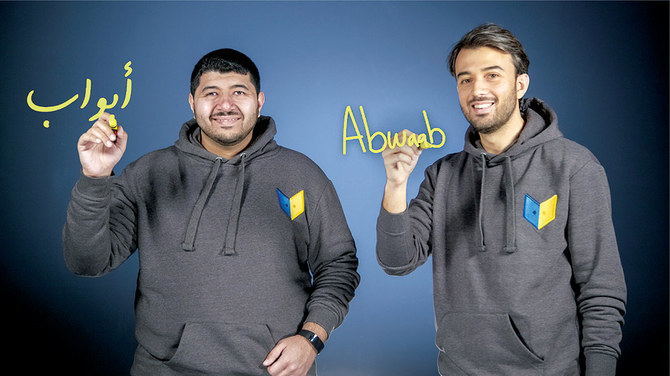
1. Abwaab
Total funding: $27.5 million
Founders: Hamdi Tabbaa, Sabri Hakim and Hussein Al-Sarabi
Investors: BECO Capital, 4DX Ventures, GSV Ventures and Water Partners
Funding rounds: Four
Headquarters: Jordan
Founded in 2019, Abwaab provides online content tailored to the local curriculums of secondary school students, thereby filling the educational resources gap.
Through the platform, students can participate in lessons, get access to feedback and join discussion boards to tackle the region’s high dependence on offline tutoring.
In its last funding round, Abwaab raised $20 million in a series A funding round to expand its services to Egypt and Pakistan.
2. Noon Academy
Total funding: $21 million
Founders: Mohammed Al-Dhalaan and Aziz Al-Saeed
Investors: STV, Al-Turki Holding and NFX Ventures
Funding rounds: Two
Headquarters: Saudi Arabia
Noon Academy is a student-centric social learning platform that offers free live and interactive tutoring with “gamified” features.
Established in 2013, the company incorporates social and “gamification” features to make learning more enjoyable and collaborative for students.
With a presence in Saudi Arabia, Egypt, India and Pakistan, the company managed to raise $13 million in a pre-series B funding round led by STV in 2020.
3. Al-Mentor
Total funding: $14.5 million
Founders: Ihab Fikry, Ibrahim Kamel, Hesham Heikal, Husni Khuffash and Abdelrhman Fahmy
Investors: Partech, Sawari Ventures, Egypt Ventures and Sango Capital
Funding rounds: Five
Headquarters: UAE
Al-Mentor, one of the leading video learning platforms in the region, offers online content for Arabic speakers with a wide range of courses developed by distinguished experts.
Founded in 2016, the company delivered over 2 million learning experiences with over 80 enterprise partnerships in the Middle East and North African region.
In 2021, Al-Mentor raised $6.5 million in a series B funding round led by Partech as it aimed to sustain its position as a leader in the industry.
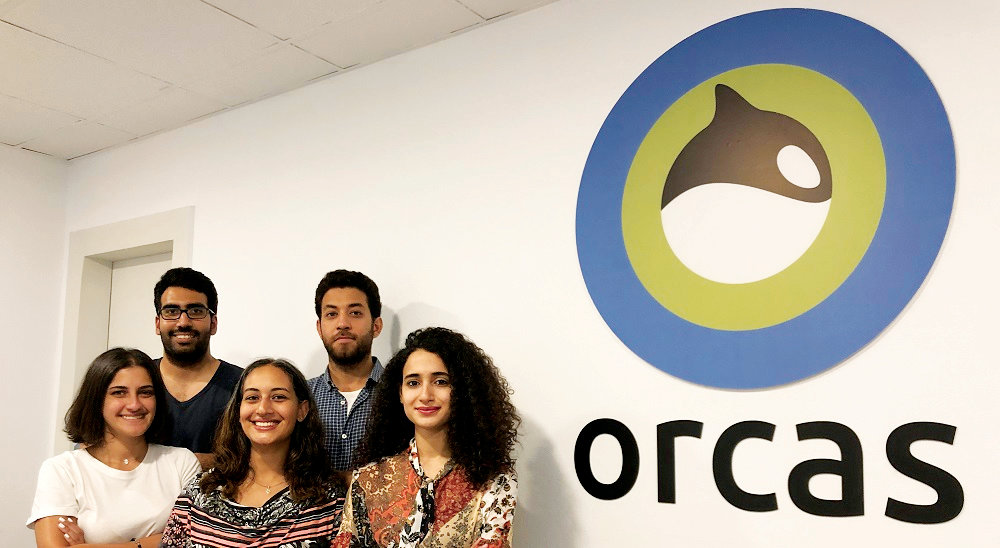
Orcas links parents and students with nearby tutors or online courses. (Supplied)
4. Orcas
Total funding: $3.5 million
Founders: Hossam Taher, Amira El-Gharib, Omar Fayez and Ahmed Ismail
Investors: NFX Ventures, Launch Africa and Access Bridge Ventures
Funding rounds: Five
Headquarters: Egypt
Established in 2013, Orcas is a mobile application that connects parents and students with nearby tutors or online courses.
Based in Cairo, the company provides K-12 students with live one-on-one tutoring sessions online and in person.
In January 2022, Orcas secured $2.1 million in pre-series A funding round to expand geographically.
5. Ostaz
Total funding: $2.8 million
Founders: Audrey Nakad, Zeina Sultani and Sibylle Nakad
Investors: Hub71, Inspired Education and Phoenician Funds
Funding rounds: Five
Headquarters: Lebanon
Founded in 2017, Ostaz connects students with qualified private tutors to support the pupils in setting learning goals on their academic journey.
The UK-based Inspired Education Group acquired the company in 2021 as it had registered more than 43,000 students and clocked over 65,000 tutoring hours.
6. Al-Gooru
Total funding: $2.6 million
Founders: Khalid Abou Kassem
Investors: Oqal, Raz Holding Group, 100 Ventures, Ray Investment and RZM Investment
Funding rounds: Two
Headquarters: Saudi Arabia
Al-Gooru, another player in the online tutoring space, is a platform for students to connect with their desired private teachers.
Founded in 2021, the company secured $1.8 million in a seed funding round to expand its scope in the education sector across Saudi Arabia.
7. Baims
Total funding: $2.2 million
Founders: Yousef Al-Husaini and Bader Al-Rasheed
Investors: Rasameel Investment Co. and AlWazzan Education
Funding round: One
Headquarters: Kuwait
Established in 2017, Baims is an online platform that offers customized courses for university students in Saudi Arabia, Kuwait, Bahrain and Jordan.
The company raised $2.2 million in a pre-series A funding round in 2022 to grow its content library and strengthen its presence in existing markets.
8. Al-Academia
Total funding: $2 million
Founder: Ahmed Ashour
Investors: Entlaqa and Goldmines
Funding round: One
Headquarters: Egypt
Al-Academia is a distance education platform focusing on professional development in small courses from industry experts.
The company launched in 2020 after raising $2 million in investments to support the enormous digital transformation ignited by COVID-19.
9. Aanaab
Total funding: $1.5 million
Founders: Mounira Jamjoom and Naila Al-Khalawi
Investors: Nour Nouf and Wamda Capital
Funding Rounds: One
Headquarters: Saudi Arabia
Founded in 2016, Aanaab’s platform facilitates ongoing professional and personal development of Arab teachers through distance learning solutions, providing them an opportunity to acquire Cambridge credentials.
The company secured its first funding in 2020 with a $1.5 million investment to strengthen its presence in Saudi Arabia and the UAE and explore business-to-business opportunities.
10. Zedny
Total funding: $1.2 million
Founders: Mohamed Youssef El-Baz and Basil Khattab
Investors: Undisclosed
Funding round: One
Headquarters: Egypt
Established in 2020, Zedny is an Arabic learning platform that targets individuals keen on developing their business skills, acquiring general knowledge and scouting for jobs.
The company launched after a $1.2 million pre-seed funding round and has offered over 200 online courses on its platform since then.