

Top 10 most funded health tech startups in MENA region

When quarantines and social distancing became a daily norm, people used digital technologies to interact with the world, especially in healthcare. (Supplied)
Short Url
Updated 16 October 2022
Follow

Top 10 most funded health tech startups in MENA region

  • Healthcare industry has given rise to newer business models such as telehealth

CAIRO: In a post-pandemic era, people have never been more aware of their wellness, including physical well-being and prevalent health issues.

COVID-19, on the other hand, had a significant effect on technology.

When quarantines and social distancing became a daily norm, people used digital technologies to interact with the world, especially in healthcare.

The result: The healthcare industry became one of the fastest growing sectors in the world and gave rise to newer business models such as telehealth and next-gen managed care. Arab News compiled a list of the top 10 most funded health-tech startups in the Middle East and North Africa region.

Vezeeta

Total funding: $73 million

Founders: Amir Barsoum and Ahmed Badr

Investors: BECO Capital, Silicon Badia, Vostok New Ventures, Crescent Enterprises’ CE-Ventures, Endeavour Catalyst and STV

Headquarters: Egypt

Founded in 2012, Vezeeta offers appointment management software for doctors and healthcare providers to manage their operations better.

The company also provides patients with a free platform to book their appointments, as doctors can opt for the platform using a subscription model.

In 2020, Vezeeta managed to secure $40 million in a series D funding round to roll out new products and introduce its telehealth services.

Altibbi

Total funding: $52.5 million

Founders: Jalil Labadi and Abdel Aziz Labadi

Investors: Foundation Holdings, Hikma Ventures, Global Ventures and DASH Ventures

Headquarters: UAE

Founded in 2008, Atlibbi is a digital platform that allows users to receive remote medical consultations and connect with professionals via calls and text chats.

The company has over 10,000 doctors on its platform and won the World Summit Award for the Best Digital Health Content Award and the Schwab Foundation for Social Entrepreneurship.

In its latest funding round, Altibbi raised $44 million in a series B funding round in March 2022 to enhance its technology and e-pharmacy services.

Bayzat

Total funding: $31 million

Founders: Talal Bayaa, Tarek Bayaa and Brian Habibi

Investors: Mohammed Bin Rashid Innovation Fund, Point72 Ventures, Mubadala, Beco Capital, Silicon Badia and Hamed Kanoo Co.

Headquarters: UAE

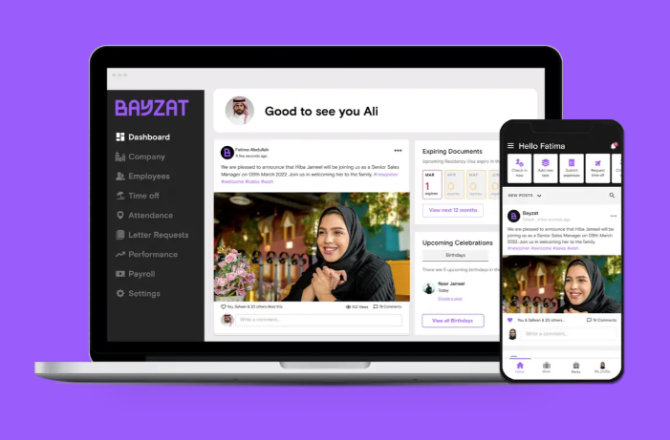
Founded in 2013, Bayzat is a web and mobile application that allows clients to buy and sell health insurance.

The company’s health tech platform compares health insurance and offers them the best options. Raising $16 million in a series B funding round in 2019, the company used its funding to empower its technology to serve its clients better.

It also provides HR solutions for companies.

GluCare Health

Total funding: $20 million

Founders: Ali Hashemi and Ihsan Almarzooqi

Investors: Polymath Ventures

Headquarters: UAE

Founded in 2020, GluCare offers diabetic care in the clinic and virtually for its patients using its data monitoring and artificial intelligence.

With the company’s application, patients can connect with a care team to monitor glucose, insulin, diet intake and more. 
Selfologi

Total funding: $18 million

Founder: Tamer Wali

Investors: Xenel

Headquarters: UAE

Founded in 2020, Selfologi is an online platform for aesthetic medical treatments that allows users to book appointments with doctors in fields like botox, hair removal, acne scarring and more.

The company raised its $18 million investment in a round led by its founder and angel investor, Tamer Wali, with participation from Xenel international group. 



Tamer Wali, founder of Selfologi.

Okadoc

Total funding: $12 million

Founders: Fodhil Benturquia

Investors: Abu Dhabi Investment Office, Ithmar Capital and iGan Partners

Headquarters: UAE

Founded in 2018, Okadoc is an appointment booking platform provider that allows people to search for the nearest clinic, practitioners and hospitals.

In 2020, the company closed its $10 million series A funding, expanded its operations and promoted its telehealth offering and virtual consultations.

Yodawy

Total funding: $8.5 million

Founders: Karim Khashaba, Yasser AbdelGawad and Sherief El-Feky

Investors: Global Ventures, MEVP, Algebra Ventures, CVentures, P1 Ventures and Athaal Angel Investors Group

Headquarters: Egypt

Founded in 2018, Yodawy is a virtual pharmacy providing a marketplace for people who want access to medication with over 3,000 pharmacies.

In mid-2021, the company secured $7.5 million in a series B funding round to build its digital marketplace to serve its wide range of customers.

Aumet

Total funding: $8.5 million

Founders: Yahya Aqel and Shahed Altawafsheh

Investors: 500 Startups, Right side capital, TechStars, Shorooq Partners and Plug and Play

Headquarters: Saudi Arabia and Jordan

Established in 2020, Aumet is a B2B marketplace for healthcare providers to buy supplies from retailers. In 2020, the company raised $1.25 million in a seed funding round and had not disclosed its later investments.

Webteb

Total funding: $5.1 million

Founders: Majed Abukhater and Mahmoud Kayal

Investors: Sadara Ventures and Siraj Palestine Fund

Headquarters: Jordan

Founded in 2011, Webteb is an online platform that provides health news, medical information, and lifestyle-related topics.

The company raised $3.2 million in its series C investment round to fuel regional expansion.

Health at Hand

Total funding: $4 million

Founder: Charlie Barlow

Investors: Simon Charlton and Rockfirst Capital

Headquarters: UAE

Born in 2015, Health at Hand is a mobile application that facilitates virtual consultations for patients with nonemergency conditions like colds, coughs and others.

The company raised its total funding in a seed round in 2017 to develop its technology further and introduce its subscription-based model.


Over 3k flights cancelled across the Middle East after attack on Iran by the US, Israel

Updated 01 March 2026
Follow

Over 3k flights cancelled across the Middle East after attack on Iran by the US, Israel

RIYADH: US and Israeli strikes on Iran led to widespread airspace shutdowns in the Middle East, canceling and rerouting thousands of flights and paralyzing key international travel corridors.

Flight cancellations affected seven airports across the Middle East, including Dubai and Abu Dhabi in the UAE, Doha in Qatar, and Manama in Bahrain.

Emirates Airlines said in a statement: “Due to multiple regional airspace closures, Emirates has temporarily suspended all operations to and from Dubai, up until 1500 hrs UAE time on Monday, 2 March.”

A flydubai spokesperson said the situation is evolving, and the airline is closely monitoring developments while coordinating with authorities to adjust its flight schedule.

“Our teams are working diligently to implement comprehensive welfare for all affected customers. The safety of our passengers and crew remains our highest priority,” the spokesperson said.

He added: “We are currently experiencing a high volume of calls and appreciate our customers’ patience while our teams work to assist everyone as quickly as possible.”

Qatar Airways announced that the airport will remain closed until at least the morning of March 2.

“Qatar Airways flights to, and from, Doha have been temporarily suspended due to the closure of Qatari airspace,” the airline said.

It added: “Qatar Airways will resume operations once the Qatar Civil Aviation Authority announces the safe reopening of Qatari airspace.”

Saudia also said in an official statement that it had canceled a number of flights due to developments in the region and the closure of airspace.

The organization said the decision was taken in line with aviation safety and security standards, noting that its Emergency Coordination Center is closely monitoring developments with relevant authorities.

Saudia urged passengers to verify the status of their flights before heading to the airport and said guests would be notified of updates through the contact details associated with their bookings.

The carrier added that further information would be announced in a subsequent statement if available.

Air Arabia also said its flights were experiencing cancellations, delays, or rerouting as a result of the evolving situation and airspace closures.

Airlines cited airspace closures and safety concerns as the main reasons for flight disruptions, urging passengers to check official channels for updates as the situation develops.

Israeli airspace also remained closed on March 1st. Israeli airline El Al said it was preparing a recovery effort to bring home Israelis stranded abroad once the airspace reopened.

Travelers were either stranded or diverted to other airports on Feb. 28 after Israel, Qatar, Syria, and Iran as well as Iraq, Kuwait and Bahrain, closed their airspace.

After the UAE announced a temporary partial airspace closure, FlightRadar24 recorded no flights over the country.

The closures affected key hub airports in Dubai, Abu Dhabi, and Doha. Emirates, Qatar Airways, and Etihad, airlines that operate from these hubs, normally handle around 90,000 passengers daily, with even more traveling to other Middle Eastern destinations, according to aviation analytics firm Cirium.

Airports hit by attacks

Two airports in the UAE reported incidents as the government there condemned what it called a “blatant attack involving Iranian ballistic missiles” on Feb.28.

Dubai International Airport, the UAE’s largest and one of the world’s busiest, reported four injuries, while Abu Dhabi’s Zayed International Airport said a drone attack killed one person and injured seven others. Strikes were also reported at Kuwait International Airport.

Though Iran did not publicly claim responsibility, the scope of retaliatory strikes that Gulf nations attributed to Iran extended beyond the US bases that it previously said it would target.

Flight delays, cancellations are likely to continue

“For travelers, there’s no way to sugarcoat this,” said Henry Harteveldt, an airline industry analyst and president of Atmosphere Research Group.

“You should prepare for delays or cancellations for the next few days as these attacks evolve and hopefully end,” he added.

To avoid conflict zones, airlines are rerouting Middle East flights over Saudi Arabia, adding hours and fuel costs, which could push ticket prices higher if the tensions persist.

The extra flights will strain air traffic controllers in the Kingdom, who may need to slow traffic for safety. Meanwhile, countries that closed their airspace will lose out on overflight fees from passing airlines.

Mike McCormick, former head of air traffic control at the FAA and now a professor at Embry-Riddle Aeronautical University, said some countries may reopen parts of their airspace in the coming days once US and Israeli officials provide airlines with details on military flight zones and Iran’s missile capabilities.

“Those countries then will be able to go through and say, ok, we can reopen this portion of our space but we’ll keep this portion of our airspace closed,” McCormick said.

“So, I think what we’ll see in the next 24 to 36 hours is how the use of airspace evolves as the kinetic activity gets more well-defined and as the capability of Iran to actually shoot missiles and create additional risk is diminished due to the attacks,” he added.

But it is unclear how long the disruption to flight operations could last. For comparison, the Israeli and US attack on Iran in June 2025 lasted 12 days.