

Egypt’s non-oil economy under strain as inflationary pressure grows: S&P Global

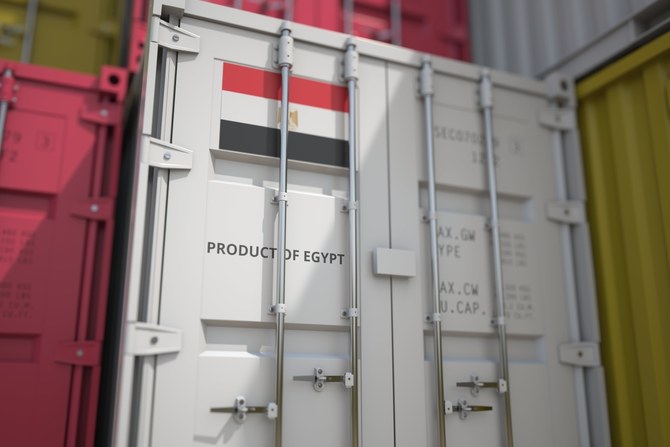
Egypt’s PMI signals a solid deterioration in business conditions, albeit one that was the joint-weakest for seven months. (Shutterstock)
Short Url
Updated 04 October 2022
Follow

Egypt’s non-oil economy under strain as inflationary pressure grows: S&P Global

RIYADH: Business conditions in Egypt’s non-oil economy continue to be under strain with the country’s Purchasing Managers’ Index staying unchanged at 47.6 in September compared to the previous month, according to S&P Global.

According to S&P Global, a PMI above 50.0 marks growth, while those below 50.0 signals contraction.

Egypt’s PMI signals a solid deterioration in business conditions, albeit one that was the joint-weakest for seven months, as inflationary pressures, energy rationing, import restrictions, and weak demand continue to impact the country’s non-oil economy.  

“Non-oil activity in Egypt continued to suffer from weak demand, geopolitical tensions and surging inflation in the final month of the third quarter,” said Shreeya Patel, an economist at S&P Global Market Intelligence.

She added: “Firms nevertheless remain hopeful that macroeconomic conditions would improve in the medium-term, but for now, non-oil Egyptian businesses are challenged to operate in an environment which includes persistently high prices, weak demand and growing uncertainty.”

The report added that high prices and consumer uncertainty caused a staggering decrease in output during the last month of the third quarter.

Exports also fell in September for the second consecutive month to their lowest level in over two years. 

Higher input prices — caused by increased energy, material and wage expenses — pushed retail prices through the roof, adding on to the already high rate of inflation.

Consequently, low demand interlinked with high input costs forced non-oil firms in Egypt to slow down business activity, decreasing inventory holdings to their lowest in fourteen months.  

Moreover, vendors reported higher lead time due to delays at ports and restrictions on materials.

Looking at employment, headcounts rose for the third month in a row, but backlogs increased simultaneously.

However, Egypt's future outlook on business activity improved compared to August’s near-survey low, as firms showed optimism with regards to macroeconomic conditions in the next few months.  


Saudi Arabia’s foreign reserves rise to a 6-year high of $475bn

Updated 22 February 2026
Follow

Saudi Arabia’s foreign reserves rise to a 6-year high of $475bn

RIYADH: Saudi Arabia’s foreign reserves climbed 3 percent month on month in January to SR1.78 trillion, up SR58.7 billion ($15.6 billion) from December and marking a six-year high.

On an annual basis, the Saudi Central Bank’s net foreign assets rose by 10 percent, equivalent to SR155.8 billion, according to data from the Saudi Central Bank, Argaam reported.

The reserve assets, a crucial indicator of economic stability and external financial strength, comprise several key components.

According to the central bank, also known as SAMA, the Kingdom’s reserves include foreign securities, foreign currency, and bank deposits, as well as its reserve position at the International Monetary Fund, Special Drawing Rights, and monetary gold.

The rise in reserves underscores the strength and liquidity of the Kingdom’s financial position and aligns with Saudi Arabia’s goal of strengthening its financial safety net as it advances economic diversification under Vision 2030.

The value of foreign currency reserves, which represent approximately 95 percent of the total holdings, increased by about 10 percent during January 2026 compared to the same month in 2025, reaching SR1.68 trillion.

The value of the reserve at the IMF increased by 9 percent to reach SR13.1 billion.

Meanwhile, SDRs rose by 5 percent during the period to reach SR80.5 billion.

The Kingdom’s gold reserves remained stable at SR1.62 billion, the same level it has maintained since January 2008.

Saudi Arabia’s foreign reserve assets saw a monthly rise of 5 percent in November, climbing to SR1.74 trillion, according to the Kingdom’s central bank.

Overall, the continued advancement in reserve assets highlights the strength of Saudi Arabia’s fiscal and monetary buffers. These resources support the national currency, help maintain financial system stability, and enhance the country’s ability to navigate global economic volatility.

The sustained accumulation of foreign reserves is a critical pillar of the Kingdom’s economic stability. It directly reinforces investor confidence in the riyal’s peg to the US dollar, a foundational monetary policy, by providing SAMA with ample resources to defend the currency if needed.

Furthermore, this financial buffer enhances the nation’s sovereign credit profile, lowers national borrowing costs, and provides essential fiscal space to navigate global economic volatility while continuing to fund its ambitious Vision 2030 transformation agenda.