

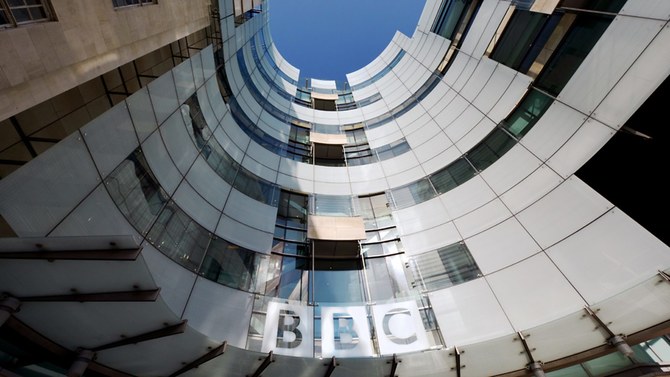

DUBAI: The BBC’s announcement that it is set to end several of its foreign-language services, including BBC Arabic radio station, has been met with disappointment around the world.
Channel 4 News’ international editor Lindsey Hilsum said on Twitter that “people rely on these radio language services for fair and balanced news they can’t get elsewhere.”
People rely on these radio language services for fair and balanced news they can’t get elsewhere. Especially in countries where the govt may cut the internet so ‘digital only’ means that at critical moments the service is unavailable. https://t.co/RdZfUtgSjR
— Lindsey Hilsum (@lindseyhilsum) September 30, 2022
This was especially critical in countries where governments restricted internet services, she added.
Yaser Atrash, a journalist at Syria TV, said on Twitter that “the memory of generations is extinguished.”
مع إطفاء ميكرفون BBC عربي، تنطفئ مرحلة وذاكرة أجيال، أنا منها.. مرحلة عشق المذيعين والمذيعات من أصواتهم، المصدر الوحيد للخبر عند كثيرين.. وسأتذكر دائماً صوت جارنا الختيار الذي كان يقول لمجادليه منهياً الجدال: بي بي سي قالت. pic.twitter.com/t2wKXjIKGe
— ياسر الأطرش (@yaser_atrash) September 29, 2022
The reactions follow an announcement from the corporation last week that it is planning to close its BBC Arabic station after 84 years as part of a cost-cutting exercise and move to digital-first broadcasting that will also see the demise of several other foreign-language services.
A total of 382 workers at the BBC World Service are set to lose their jobs amid rising costs, a freeze in license fees and the move to digital platforms, the company said.
The corporation’s international services needed to make savings of £28.5 million ($31 million) as part of wider reductions of £500 million, it added.
Ali Al-Ahmed, a Saudi political affairs expert and founder and director of the Institute for Gulf Affairs, said on Twitter: “In May 2000 I visited #BBCArabicRadio for the 1st time & told its manager then Gamon McLellan to plan to shutter radio service & focus on TV.”
In May 2000 I visited #BBCArabicRadio for the 1st time & told its manager then Gamon McLellan to plan to shutter radio service & focus on TV. He rejected my opinion. Radio is dying i told him. I guess i was right. https://t.co/CIYbsPmNRJ
— Ali AlAhmed (@AliAlAhmed_en) October 3, 2022
Liliane Landor, director of BBC World Service, said the cuts and closures would not mean a reduction in the quality of service.
“We will continue to bring the best journalism to audiences in English and more than 40 languages, as well as increasing the impact and influence of our journalism by making our stories go further,” she said.
The World Service currently operates in over 40 languages around the world and has a weekly audience of about 364 million people. But the corporation said audience habits were changing and more people were accessing news online.
The company said it was proposing to stop its radio services in Arabic, Persian, Kyrgyz, Uzbek, Hindi, Bengali, Chinese, Indonesian, Tamil and Urdu.
The language services it is proposing to move to digital-only are: Chinese, Gujarati, Igbo, Indonesian, Pidgin, Urdu and Yoruba.
Eleven language services — Azerbaijani, Brazil, Marathi, Mundo, Punjabi, Russian, Serbian, Sinhala, Thai, Turkish and Vietnamese — are already digital-only.


