

French-Saudi agreements signal ‘beginning of new era of cooperation,’ says French ambassador

1 / 6
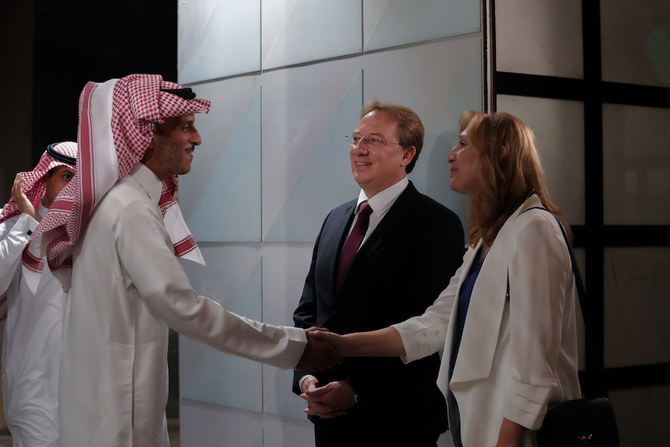
French Ambassador Ludovic Pouille hosts an evening celebrating the French-Saudi cultural dialogue at the French Embassy in Riyadh. (Huda Bashatah/AN)
2 / 6
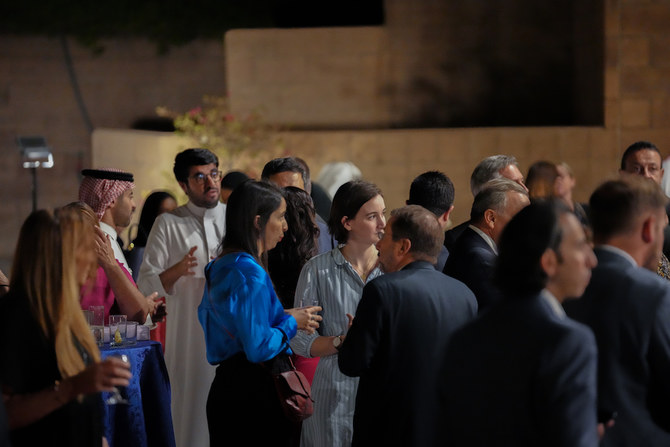
French Ambassador Ludovic Pouille hosts an evening celebrating the French-Saudi cultural dialogue at the French Embassy in Riyadh. (Huda Bashatah/AN)
3 / 6
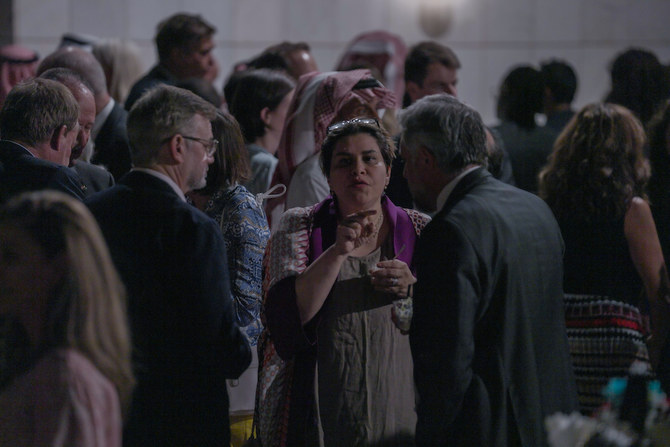
French Ambassador Ludovic Pouille hosts an evening celebrating the French-Saudi cultural dialogue at the French Embassy in Riyadh. (Huda Bashatah/AN)
4 / 6
French Ambassador Ludovic Pouille hosts an evening celebrating the French-Saudi cultural dialogue at the French Embassy in Riyadh. (Huda Bashatah/AN)
5 / 6
French Ambassador Ludovic Pouille hosts an evening celebrating the French-Saudi cultural dialogue at the French Embassy in Riyadh. (Huda Bashatah/AN)
6 / 6
French Ambassador Ludovic Pouille hosts an evening celebrating the French-Saudi cultural dialogue at the French Embassy in Riyadh. (Huda Bashatah/AN)
Short Url
Updated 01 October 2022
Follow

French-Saudi agreements signal ‘beginning of new era of cooperation,’ says French ambassador

  • Saudi Arabia hosts 150,000 French speakers and 500 teachers of the French language in various institutions
  • French presence in the Kingdom is marked by a network of schools in Riyadh, Jeddah and Alkhobar

DUBAI: On the occasion of the launch of the new French Cultural Season in Saudi Arabia, French Ambassador to the Kingdom Ludovic Pouille hosted an evening celebrating French-Saudi cultural dialogue at the French Embassy in Riyadh.

“You make French culture present in the Kingdom of Saudi Arabia,” said Pouille, addressing an audience of artists, entrepreneurs and officials.

The ambassador hailed the joint effort by France and Saudi Arabia to enable the success of cultural events in the Kingdom. “I want to thank our Saudi partners and friends, artists, professors, entrepreneurs and officials from the Saudi government for their contribution in strengthening on a daily basis our cultural relationship,” he added.

Among the participants were partners from the EU, Francophone countries, the Alliance Franҫaise d’Arabie Saoudite led by Zaher Al-Munajjed and the French Embassy’s team led by Catherine le Thomas.

Saudi Arabia hosts 150,000 French speakers and 500 teachers of the French language in various institutions. The French presence in the Kingdom is marked by a network of schools in Riyadh, Jeddah and Alkhobar, making education one of the primary elements on which the two nations collaborate.


As part of its Vision 2030, the Kingdom has initiated large-scale events enabling its development as a culture, education, tourism and sports hub on an international level. These events include Riyadh Season, Jeddah Season, AlUla Season, the Red Sea International Film Festival, the Diriyah Contemporary Art Biennale and the upcoming Islamic Arts Biennale in Jeddah.

“We are all very lucky to live in a thrilling context in which Saudi Arabia is rapidly opening up and exploring new directions for its future. The Kingdom is now witnessing what President (Emmanuel) Macron called a ‘cultural revolution’ during his visit to Jeddah,” said the ambassador.

The new French Cultural Season in Saudi Arabia is a promising one, with events starting in October with the celebration of the 20th anniversary of French-Saudi cooperation in the field of archaeology. The event is a two-day symposium that will see the participation of the 15 French archaeological missions collaborating with Saudi archaeologists across the Kingdom in the Farasan Islands, Hegra and AlUla, among other locations.

The second event in the pipeline is “Digital November,” which is aimed at bringing art and technology together. A series of tournaments, workshops and other activities centered on esports and e-games will be featured.

Other cultural cooperation projects will involve music, cinema, fashion, design and poetry, with the annual Night of Poetry to be held in December.

Franco-Saudi cooperation is also evident through the Kingdom’s giga-projects — such as the development of AlUla — that will shape the country for decades to follow.

AfAlula, the French Agency for the Development of AlUla, is collaborating with the Royal Commission for AlUla to develop the region “based on an intergovernmental agreement signed in April 2018 during Crown Prince Mohammed bin Salman’s visit to Paris,” Pouille said.

The AlUla project is the first of a series of initiatives that aim to reinforce the ties between the two countries.

Since the French president’s visit to Jeddah in December 2021, several agreements have been signed, including one for Villa Hegra, an ambitious institution of contemporary art that will enable the Kingdom to build a creative and artistic hub, the first of its kind in the Middle East.

The agreements signal the “beginning of a new era of cooperation between France and Saudi Arabia,” according to the ambassador.

This story originally appeared on Arab News en Français.


The secret keepers of desert balance in Saudi Arabia

Updated 11 sec ago
Follow

The secret keepers of desert balance in Saudi Arabia

  • How the Kingdom’s wildcats control pests, protect public health, and sustain the ecosystem

Did you know:

Sand cats are the only cat species with hair on the soles of their feet, allowing them to walk on hot sand without sinking.

Caracals, locally known as Al-Washaq, are native and endangered, capable of jumping 3 to 4 meters in a single leap.

Pure populations of the Arabian wildcat are at risk due to hybridization with domestic cats.

Haifa Alshammari

RIYADH: During the summer of 2024, two desert lynx kittens were born in Taif as part of Saudi Arabia’s efforts to protect and increase the population of caracals in the country.

Although caracals are critically endangered, wildcats in general play a significant ecological role in the Kingdom. They act as natural pest control, and Saudi Arabia is committed to conserving these species while increasing their populations to support a thriving ecosystem.

Despite the Kingdom’s harsh, arid climate, conditions are suitable for wildcats not only to survive but also to flourish. Among the terrestrial species inhabiting Saudi Arabia are sand cats, Arabian wildcats, and the desert lynx.

Felis margarita, or sand cats, are small — around 40-60 cm — with pale sandy fur that allows them to blend into the desert. They have a broad head, large ears, and long hair on the bottom of their feet to walk on hot sand.

“It is small in size and does not mate with other cats. It is the only cat species in the world with hair on the soles of its feet instead of skin to prevent it from sinking into the sand,” said Obaid Alouni, a Saudi environmentalist.

Alouni explained that one defensive technique sand cats use is to lie flat on the ground to avoid detection.
“It lies flat on the ground when it senses danger to avoid being noticed by other animals.”

These cats primarily feed on rodents and small reptiles, occasionally large insects, obtaining their water from their prey. Sand cats are native to West Asia and help regulate rodent and insect populations, preventing outbreaks and reducing disease spread.

Interestingly, raising sand cats as domestic pets is becoming more popular, Alouni said. But he emphasized that adoption is easier when they are kittens, as they remain wild animals. Although widely distributed across the Kingdom, exact population numbers are difficult to determine due to their elusive nature. They are currently listed as “least concern” by the International Union for Conservation of Nature.

Similar to sand cats, Arabian wildcats (Felis lybica) are found across the Arabian Peninsula and play a vital role in environmental health.

“They are wild cats that live independently without human intervention,” Alouni told Arab News.

Arabian wildcats resemble domestic cats but have thicker, sandy to grey-brown coats with faint stripes or spots and ringed tails with blunt tips. Like sand cats, they feed on rodents, birds, reptiles, and insects and are listed as “least concern” by the IUCN.

However, Alouni warned that pure populations of Arabian wildcats in Saudi Arabia could be threatened by hybridization with domestic cats.

“Currently, wild cats face the problem of interbreeding with domestic cats. This weakens their immune systems and makes them more susceptible to diseases from other cats,” he said.

“This contributes to the extinction of the purebred lineage and, consequently, the disappearance of their wild instincts,” he added.

While both species are desert dwellers, sand cats are harder to spot as they avoid heavily trafficked areas. They are mainly found in the Ad Dahna desert and the Empty Quarter, where sand dunes dominate the landscape. Arabian wildcats, however, inhabit rocky or mountainous areas such as the Tuwaiq Mountains, valleys, and farms with abundant small prey.

“Wild cats come around towns and villages, and unfortunately, begin mating with domesticated cats that people release outside,” Alouni explained. He stressed the importance of keeping domestic cats away from wildcat habitats, including deserts and camping sites.

The third wildcat species native to Saudi Arabia, the caracal or desert lynx, is critically endangered. “The lynx is classified in size between large and small, and is distinguished by its jump, which can reach 3 meters or even 4 meters in the sky,” Alouni described.

Locally known as Al-Washaq, desert lynx have reddish-tan coats, long legs, and black-tufted ears. They feed on birds, rodents, and sometimes small antelopes. Thankfully, these cats are protected under Saudi law due to their critically endangered status.

Hunting any sand cats, Arabian wildcats, or desert lynx can result in fines of approximately $20,000, according to the Saudi Ministry of Environment, Water, and Agriculture.
“There is a very severe financial penalty in Saudi Arabia for anyone who hunts it,” Alouni added.

The Kingdom has strict regulations to protect endangered animals, criminalizing not only hunting or killing but also trade. Violators could face penalties of up to $8 million, up to 10 years in prison, or both.

Overall, sand cats, Al-Washaq, and Arabian wildcats are essential to maintaining a healthy environment in Saudi Arabia. By controlling rodent populations, they help prevent outbreaks that could threaten agriculture and public health.