

After floods, diphtheria deaths raise alarm in southern Pakistan

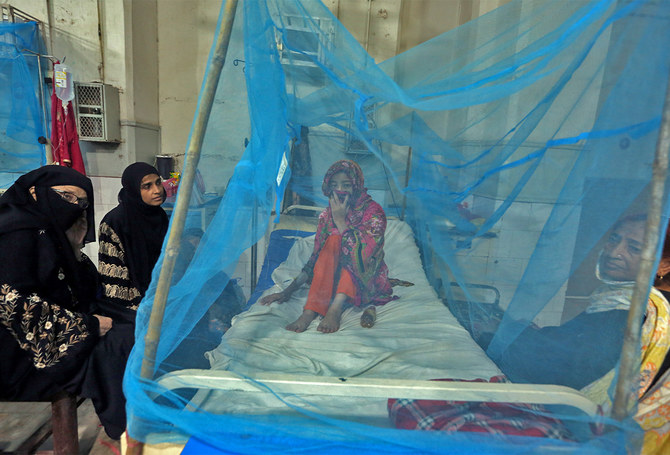
A Pakistani patient suffering from dengue fever, a mosquito-borne disease, is treated in an isolation ward, at a hospital in Karachi, Pakistan, on September 24, 2022. (AP)
Short Url
Updated 27 September 2022
Follow

After floods, diphtheria deaths raise alarm in southern Pakistan

  • The highly contagious disease may lead to breathing issues, heart problems, and even death
  • Experts fear number of deaths due to the vaccine-preventable disease could be much higher

ISLAMABAD: Pakistan’s southern Sindh province has reported at least 10 deaths from diphtheria, a long-eliminated infectious disease, over the last two months, local media reported, amid warnings about the spread of waterborne diseases in flood-affected areas. 

Diphtheria is a highly contagious disease caused by strains of bacteria called ‘corynebacterium diphtheriae’ that make toxins in a person’s body, according to infectious disease experts. It can lead to difficulty in breathing, heart problems, and even death. 

In Sindh, health experts fear the number of deaths due to the vaccine-preventable disease, has vanished from most parts of the world, could be much higher than the official figures. 

“So far 10 children have lost their lives due to diphtheria in Sindh while 39 cases have been confirmed in the province,” Pakistani English-language daily The News reported, citing Dr. Irshad Memon, project director of the Sindh Expanded Program on Immunization (EPI). 

Dr. Asad Ali, a senior paediatric infectious disease expert, said that the outbreak of the disease was being reported in Karachi and elsewhere in the province. 

The number of deaths due to the vaccine-preventable disease could be five times higher than the official figures, he said. 

“We need outbreak investigation, higher rates of routine childhood immunization and additional booster Diphtheria-Pertussis-Tetanus (DPT) vaccine in our EPI program,” Dr. Ali, who is the associate dean of research at the Aga Khan University, was quoted as saying in the report. 

Most countries had eliminated diphtheria by giving booster doses of the DPT vaccine to children in the later stage of their childhood, but no booster doses were administered in Pakistan which was why the disease was affecting children with weak immunity, the expert said. 

The report quoted another senior paediatrician, Professor Jamal Raza, who said Pakistan’s immunization coverage was not very good and it was less than the officially stated 70 percent reach. 

Several health officials and infectious disease experts in Karachi and Hyderabad said diphtheria cases were now being reported as a matter of routine, but due to lack of experience and knowledge of general practitioners, these cases were being referred to specialized hospitals quite late, when the disease progressed to an incurable stage, according to the report. 

“We are seeing diphtheria cases on and off at our facility and at the moment, we have a girl in serious condition at our intensive care unit,” said Dr. Abdul Wahid Rajput, medical superintendent of Sindh Infectious Diseases Hospital. 

“If a patient is referred late, even given anti-toxin proves ineffective and chances of survival become difficult.” 


Pakistan tightens private Hajj scheme for 2026 after thousands miss pilgrimage

Updated 5 sec ago
Follow

Pakistan tightens private Hajj scheme for 2026 after thousands miss pilgrimage

  • Saudi Arabia awarded Pakistan ‘Excellence Award’ for overall Hajj 2025 arrangements
  • The government says it refunded $12.5 million to pilgrims who went to Hajj last year

ISLAMABAD: Pakistan said on Wednesday it had tightened regulations for private Hajj operators for the 2026 pilgrimage after thousands of pilgrims were unable to travel last year, as the government moved to curb mismanagement and ensure refunds for affected applicants.

Federal Minister for Religious Affairs and Interfaith Harmony Sardar Muhammad Yousuf told the media in Islamabad that the private Hajj quota had been reduced and an investigation carried out on Prime Minister Shehbaz Sharif’s instructions.

The announcement came even as Pakistan received Saudi Arabia’s “Excellence Award” for its overall arrangements during Hajj 2025, while authorities said they had refunded Rs 3.5 billion ($12.5 million) to pilgrims who performed Hajj in 2025.

“Last year, 60,000 pilgrims were unable to perform Hajj under the private Hajj scheme, prompting the Prime Minister to order inquiries,” Yousuf said. “Consequently, the private Hajj quota has been reduced this year.”

He said private operators had been directed to prioritize pilgrims who were left behind last year and had yet to receive refunds, adding that full refunds would also be ensured for pilgrims unable to travel on medical grounds or under the hardship quota.

Yousuf said the government had expanded the “Pak Hajj App” and extended Saudi Arabia’s Makkah Route Initiative to Karachi to reduce travel and immigration difficulties for pilgrims.

He added that new regulations for Umrah and religious travel were being finalized to protect pilgrims from exploitation by private operators and to fully digitize the system.

The minister also said women who were confident of performing Hajj and Umrah without a male guardian could do so, with separate groups now being formed, while certificates would be mandatory for women traveling alone.

Responding to another question, Yousuf said no member of parliament or standing committee was being provided free Hajj or Umrah by the ministry, adding that all officials would bear their own expenses.