- New e-mining platform aims to improve transparency and project coordination
- Islamabad pitches minerals sector, including Reko Diq, as investment bottlenecks ease
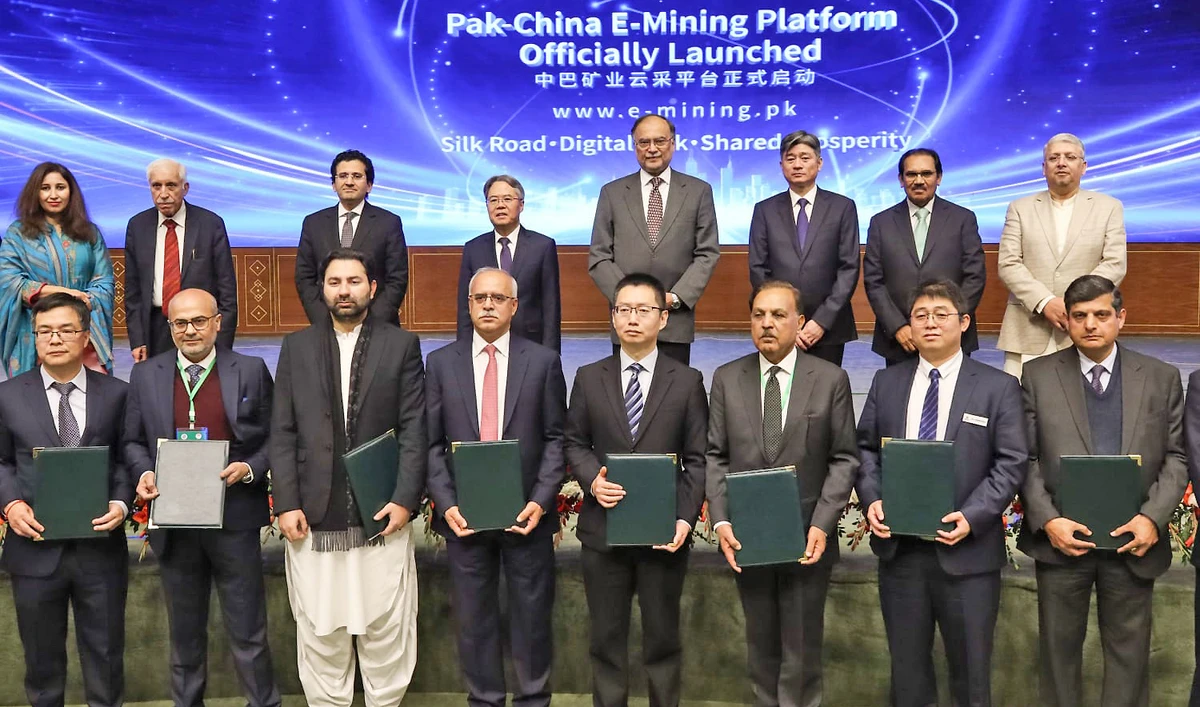
ISLAMABAD: Pakistan and China on Wednesday launched a joint digital “e-mining platform” and signed new memorandums of understanding to deepen cooperation in the mineral sector, as Islamabad seeks foreign investment to unlock vast but underdeveloped mineral resources and position itself in global critical-minerals supply chains.
The initiatives were announced at the Pak–China Mineral Cooperation Forum in Islamabad, where Pakistani officials outlined plans to move beyond raw extraction toward value-added mining, processing and export-oriented development, while Chinese firms explored opportunities across the mineral value chain.
Pakistan holds significant reserves of copper, gold, coal and other critical minerals, but much of its resource base has remained untapped for decades due to regulatory uncertainty, infrastructure gaps, security concerns and limited downstream processing capacity. Successive governments have identified mining as a potential driver of long-term growth and foreign exchange earnings, particularly as global demand rises for minerals linked to the energy transition.
The flagship of that strategy is the Reko Diq copper-and-gold project in Balochistan, one of the world’s largest undeveloped copper deposits, which Islamabad views as a test case for attracting large-scale foreign capital and restoring investor confidence after years of legal disputes.
“A major milestone of the Forum was the launch of the ‘Pak–China E-Mining Platform,’ a digital initiative aimed at improving information sharing, project connectivity and cooperation between Pakistani authorities and Chinese enterprises,” Pakistan’s information ministry said in a statement.
“The platform is expected to enhance transparency, efficiency and collaboration in mineral sector development,” it said, adding that several cooperation memorandums were also signed.
According to the ministry, the mineral forum drew more than 70 Chinese companies, over 100 Pakistani firms and around 800 participants, reflecting growing interest in Pakistan’s minerals sector as regulatory frameworks are streamlined and federal-provincial coordination improves.
Among the agreements signed was a framework to explore digital cross-border industrial trade between Pakistani and Chinese companies. Another MoU was signed between the Pakistan Mineral Development Corporation (PMDC), POWERCHINA International and Pak China Investment Company Limited, focusing on investment facilitation, technical cooperation and joint mineral development.
Pakistan’s Minister for Petroleum Ali Pervaiz Malik told participants that Islamabad was pursuing “responsible and value-added mineral development” aligned with international standards, particularly as global demand accelerates for copper and other critical minerals.
He cited existing joint ventures such as the Saindak copper-gold project in Balochistan, one of Pakistan’s longest-running Chinese-backed mining operations, and the Duddar lead-zinc mine, a major producer supplying export markets, as examples of established cooperation, and invited Chinese firms to participate in the Pakistan Minerals Investment Forum 2026.
Speaking at the event, Chinese Ambassador Jiang Zaidong said Beijing was keen to expand investment in Pakistan’s mining sector while supporting technology transfer, workforce training and sustainable mining practices. He described Saindak as an example of long-term cooperation, noting its role in training thousands of local workers.