



QUETTA: Unusually high rains and subsequent deluges have destroyed more than 3,000 schools, mostly run by the government, in Pakistan’s southwestern Balochistan province, officials said on Sunday, with hundreds of thousands of students affected across the province where the literacy rate is the lowest.
The deadly floods have killed more than 1,600 people, displaced 33 million and washed away standing crops on 4 million acres of land in Pakistan since mid-June. Hundreds of kilometers of roads, over 370 bridges and other key infrastructure have been damaged, with officials estimating the nationwide losses at around $30 billion.
Muhammad Ikramullah, 14, last week returned to his school in Hanna Urrak valley, some 17 kilometers away from the provincial capital of Quetta, after two-week suspension of classes as the floods damaged several classrooms of his government-run school in August.
“It was a heavy rain in the valley on August 25 and the flooding from mountains destroyed several mud houses in my village,” the 14-year-old told Arab News on Sunday.
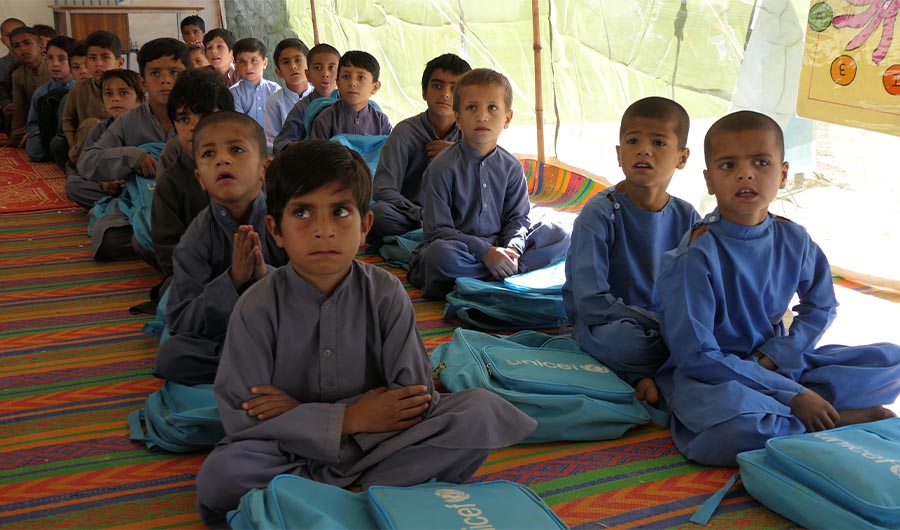
Primary school students attend classes inside a tent at the Government Boys High School, Hanna Urrak in Balochistan, Pakistan on September 24, 2022. (AN Photo)
“In the morning we heard the downpour had damaged a large part of the only government-run school in Killi Aleemzai area. When I visited the school, I saw nothing but water and debris of destroyed classrooms.”
The 9th grader said educational activities were restored at his school after international non-government organizations (INGOs) provided tents for students, but demanded the government rebuild their classrooms.
Torrential rains and floods have damaged or destroyed 2,859 government-run and 147 private schools in Balochistan, according to the provincial government figures. This has affected educational activities in 34 districts across the province.
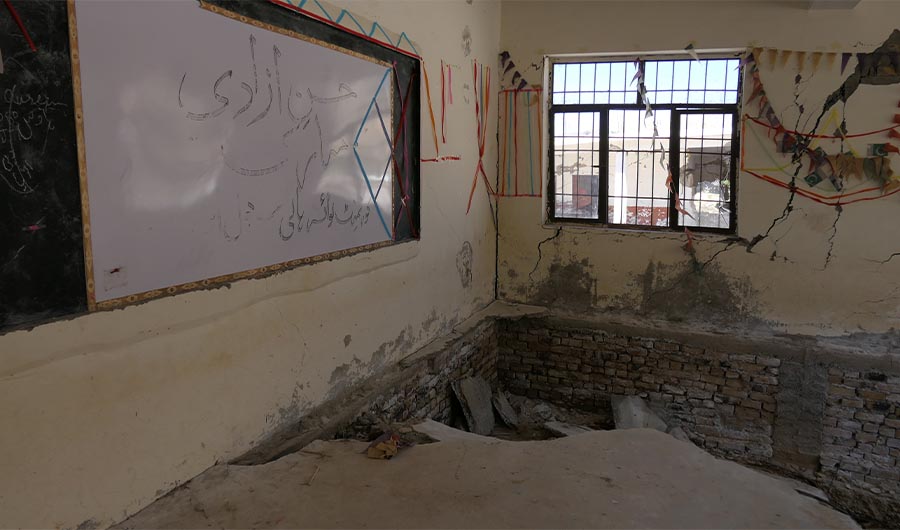
An inside view of a damaged classroom at the Government Boys High School, Hanna Urrak in Balochistan, Pakistan on September 24, 2022. (AN Photo)
Najeeb Shair Tareen, principal of the Government Boys High School in Hanna Urrak, said the flooding had destroyed 11 classrooms, but educational activities have now been restored with 85 percent student attendance.
“Many children were in shock after witnessing torrential rains and flood inundate the nearby villages,” Tareen told Arab News.
“With the support of INGOs, we have opened the school under the Temporary Learning Center Program in order to end the trauma among students.”
He said currently students were attending classes in tents, but temperatures are likely to drop significantly in October, after which it would not be possible for them to continue outdoor classes.
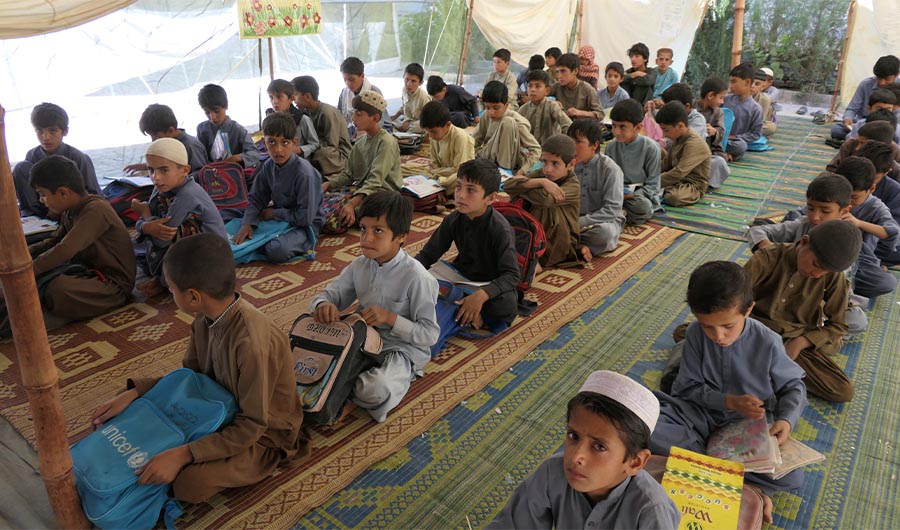
Primary school students attend classes inside a tent at the Government Boys High School, Hanna Urrak in Balochistan, Pakistan on September 24, 2022. (AN Photo)
Rauf Baloch, the Balochistan education secretary, said his department had submitted a report of damages to the government and was adopting alternate options to continue educational activities in flood-hit areas.
“Though the reconstruction will take time, we have been in liaison with INGOs to rebuild damaged infrastructure at all government-run schools,” Baloch said.
Balochistan has the lowest 46 percent literacy rate as compared to other provinces in the South Asian country, according to the Pakistan Bureau of Statistics’ 2019-20 literacy report.
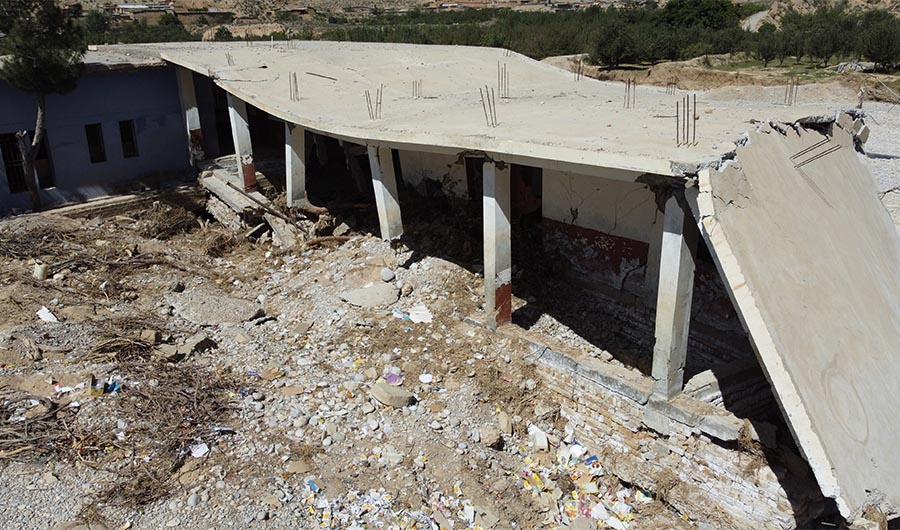
This picture taken on September 24, 2022 shows damaged building of the Government Boys High School, Hanna Urrak in Balochistan, Pakistan. (AN Photo)
“We already have 1.08 million out-of-school children in Balochistan and the recent deluges and monsoon rains will increase this number as the enrollment of more than 300,000 children has been affected in flood-hit areas,” Baloch said.
The damage caused to 147 of 2,583 privately run schools has affected enrollment of 11,121 students in Balochistan, particularly in the Naseerabad division that was worst hit by the floods.
Nazar Jan Barrech, a representative of the Balochistan Private Schools Grand Alliance, said more than 800,000 students had been studying in private schools across the province and they had reports of damages to schools in all 34 districts.
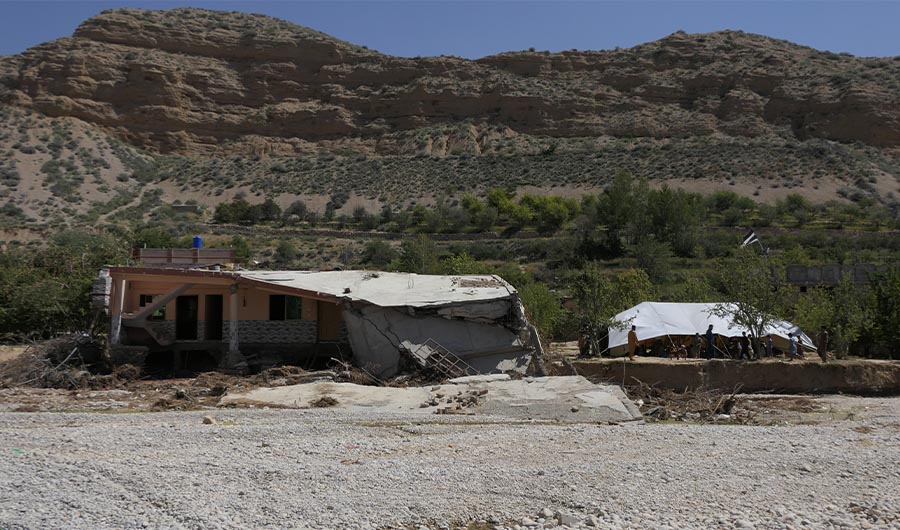
This picture taken on September 24, 2022 shows damaged building of the Government Boys High School, Hanna Urrak in Balochistan, Pakistan. (AN Photo)
“Major damages were reported in the Naseerabad division where the floodwater still stands,” Barrech told Arab News. “We need government and private organizations’ support to rebuild the damaged school infrastructure.”


