SEOUL: South Korea warned Tuesday North Korea that using its nuclear weapons would put it on a “path of self-destruction,” in unusually harsh language that came days after North Korea legislated a new law that would allow it to use its nuclear weapons preemptively.
North Korea will likely be infuriated by the South Korean rhetoric as Seoul typically shuns such strong words to avoid raising tensions on the Korean Peninsula.
South Korea’s Defense Ministry said the legislation would only deepen North Korea’s isolation and prompt Seoul and Washington to “further strengthen their deterrence and reaction capacities.”
To get North Korea not to use its nuclear weapons, the ministry said South Korea will sharply boost its own preemptive attack, missile defense and massive retaliation capacities while seeking a greater US security commitment to defend its ally South Korea with all available capabilities, including nuclear one.
“We warn that the North Korean government would face the overwhelming response by the South Korea-US military alliance and go on the path of self-destruction, if it attempts to use nuclear weapons,” Moon Hong Sik, an acting ministry spokesperson, told reporters.
Last week, North Korea’s rubber-stamp parliament adopted the legislation on the governing rules of its nuclear arsenal. The legislation would allow North Korea to use its nuclear weapons if its leadership face an imminent attack or if it aims to prevent an unspecified “catastrophic crisis” to its people.
The loose wording raised concerns the rules are largely meant as a legal basis to use its nuclear weapons pre-emptively to intimidate its rivals into making concessions amid long-stalled diplomacy on its weapons arsenal.
During the parliament’s meeting, North Korean leader Kim Jong Un said in a speech that his country will never abandon its nuclear weapons it needs to cope with US threats. He accused the United States of pushing to weaken the North’s defenses and eventually collapse his government.
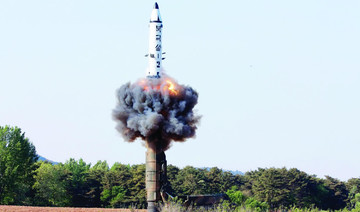
Kim has dialed up weapons tests to a record pace this year by test-launching a slew of nuclear-capable ballistic missiles targeting both the US mainland and South Korea. For months, US and South Korean officials have said North Korea could also carry out its first nuclear test in five years.
Since taking office in May, South Korea’s new conservative government, led by President Yoon Suk Yeol, has said it would take a tougher stance on North Korean provocation but also offered massive support plans if the North denuclearizes. North Korea has bluntly rejected that aid-for-disarmament offer and unleashed crude insults on the Yoon government.
Seoul’s use of words like “self-destruction” is unusual but it’s not the first time. When South Korea was governed by another conservative leader, Park Geun-hye, from 2013-2017, her government also warned North Korea would evaporate from Earth or self-destruct with its provocations, as the North conducted a slew of missile and nuclear tests.
Liberal President Moon Jae-in, who served from 2017 until this year, championed greater reconciliation between the Koreas. He was credited for arranging now-stalled nuclear diplomacy between Pyongyang and Washington but also faced criticism that such a diplomacy only allowed Kim Jong Un to buy time to prefect weapons technology while enjoying an elevated standing on the world stage.


![]()

Seoul warns North Korea will self-destruct if it uses nuclear weapons

Short Url
https://arab.news/wyek6
Seoul warns North Korea will self-destruct if it uses nuclear weapons
- North Korea will likely be infuriated by the South Korean rhetoric
- Seoul typically shuns such strong words to avoid raising tensions

Latest updates


© 2026 SAUDI RESEARCH & PUBLISHING COMPANY, All Rights Reserved And subject to Terms of Use Agreement.