
DUBAI: On Nov. 22, Saudi Arabia will take on Argentina in their first match of the 2022 FIFA World Cup in Qatar. That is, Lionel Messi’s Argentina. There will be a temptation for the players to view the world’s greatest footballer with reverence, with (not misplaced) awe.
While coming up against the two-time world champions and Messi remains an honor, it is unlikely that Saudi Arabia’s French coach Herve Renard will allow his players to think of anything beyond getting a result at Lusail Stadium.
For Saudi Arabia, this is no time for an inferiority complex.
The first World Cup held on Arab soil will have a record-equaling four Arab nations, just as in Russia 2018.
The presence of (host) Qatar, Saudi Arabia, Morocco and Tunisia will be as much a cultural one as it is a sporting one.
While tens of thousands of fans will be descending on Doha from around the world, for once support for the Arab teams will not be restricted to a few flags scattered across the stadia, as has often been the case at previous tournaments.
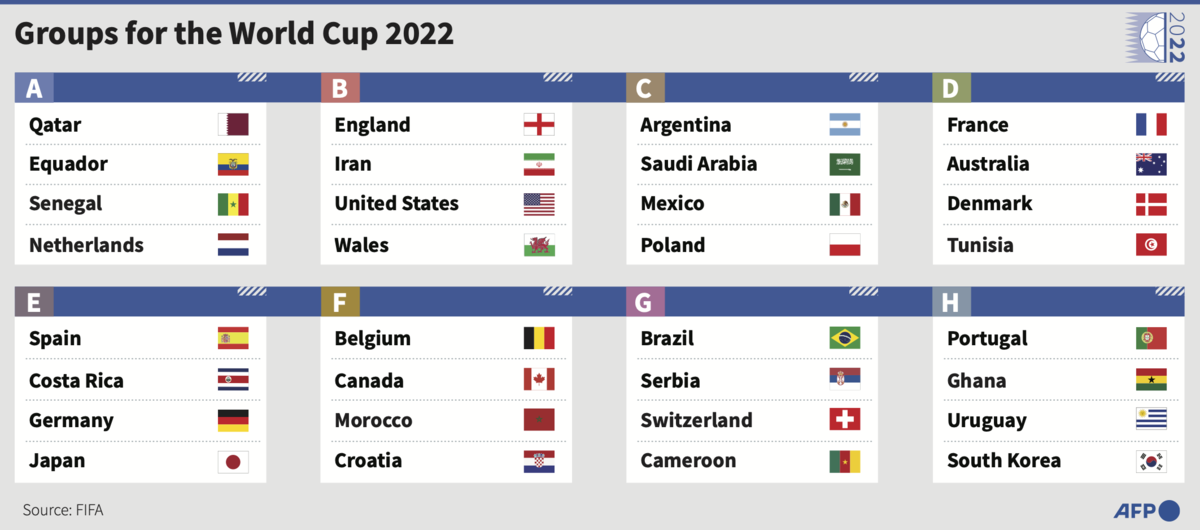
Qatar is home to large Arab communities, many of whom come from countries that have not qualified to the World Cup but who, it is hoped, will throw their support behind their participating neighbors, while thousands more will be expected to make the short trip from nearby countries, or the slightly longer one from North Africa.
Arab teams should, perhaps for the first time ever at a World Cup, be firmly in the spotlight. More than ever before, Arab players have genuine star power.
Qatar’s squad, the reigning Asian champions, is made up of players who have been training from a very young age to take part in this tournament, progressing through Aspire Academy and age group teams for the ultimate goal.
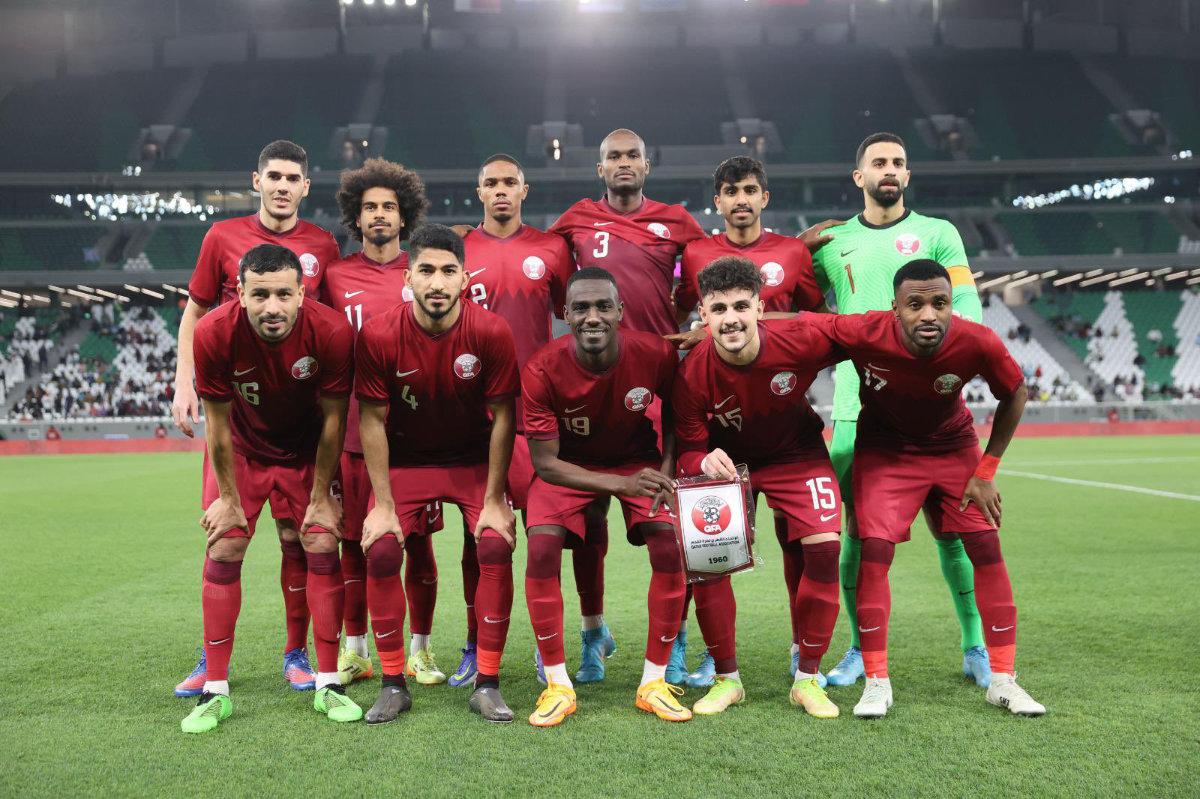
The Qatari national football team. (Qatar Football Association via Twitter)
The world’s media outlets, some not always with good intentions, will likely scrutinize their every move and performance like never before.
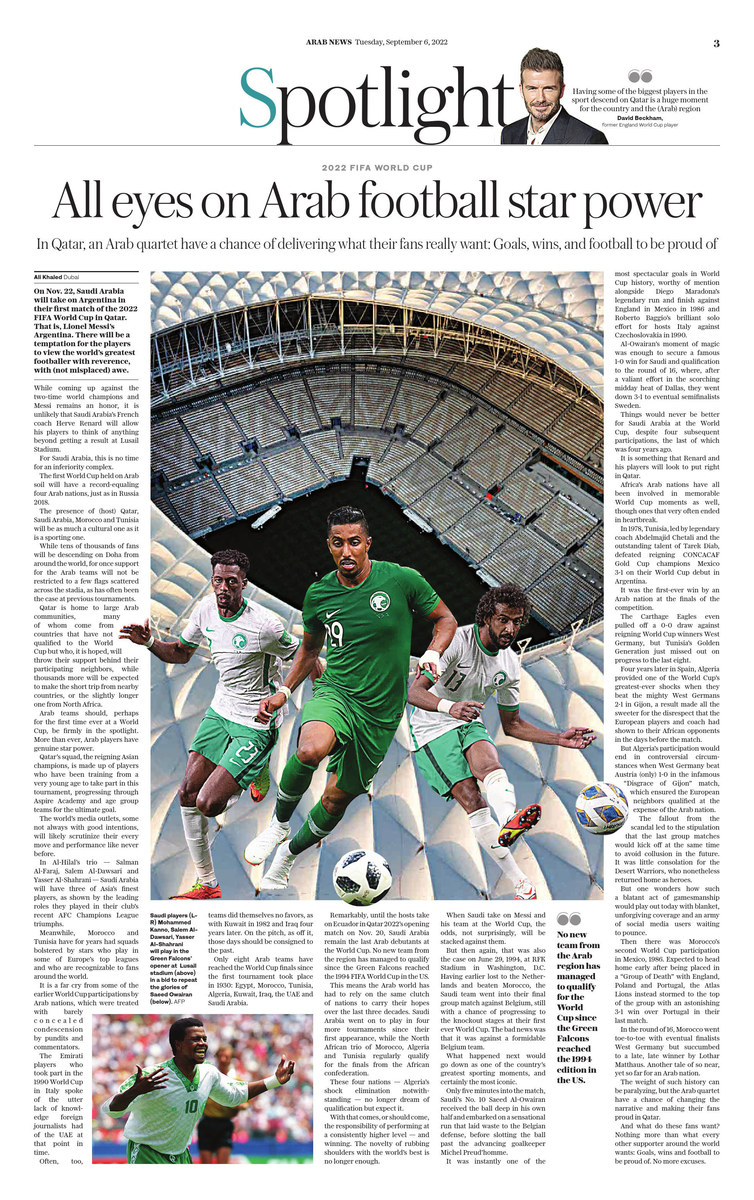
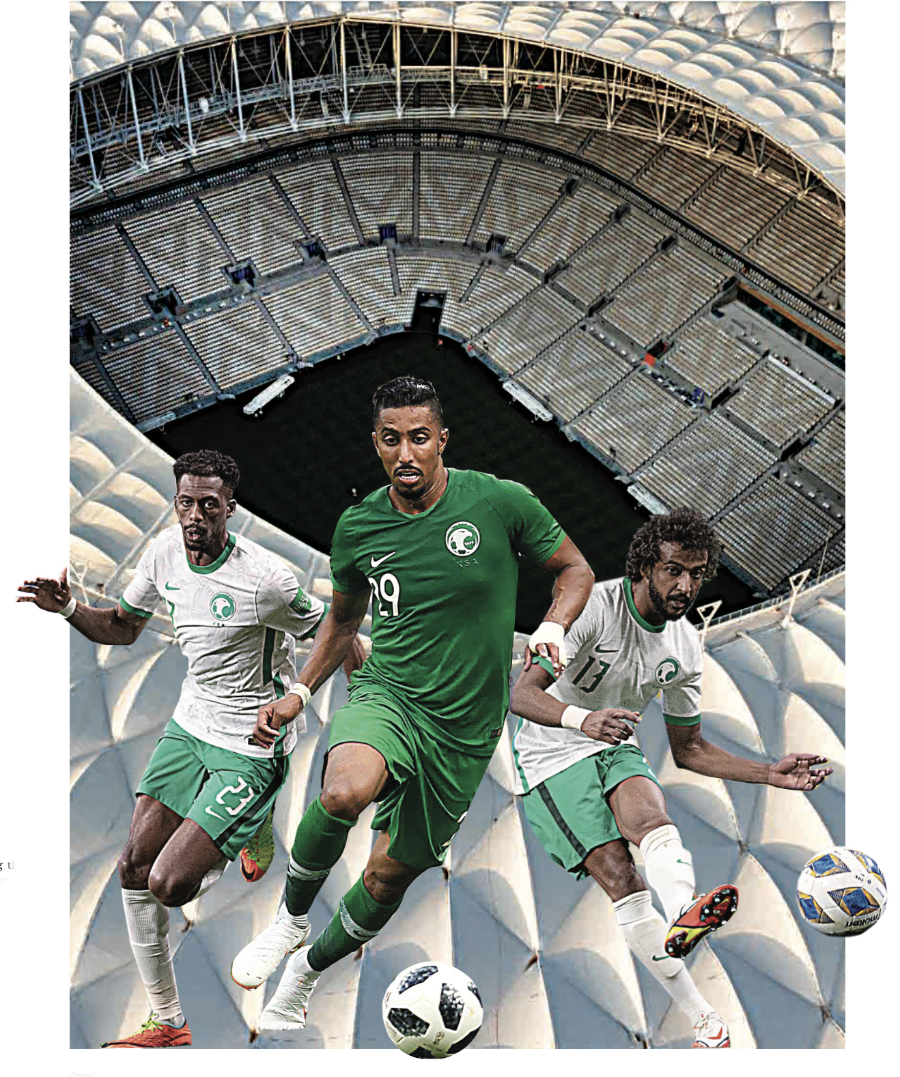
In Al-Hilal’s trio — Salman Al-Faraj, Salem Al-Dawsari and Yasser Al-Shahrani — Saudi Arabia will have three of Asia’s finest players, as shown by the leading roles they played in their club’s recent AFC Champions League triumphs.
Meanwhile, Morocco and Tunisia have for years had squads bolstered by stars who play in some of Europe’s top leagues and who are recognizable to fans around the world.
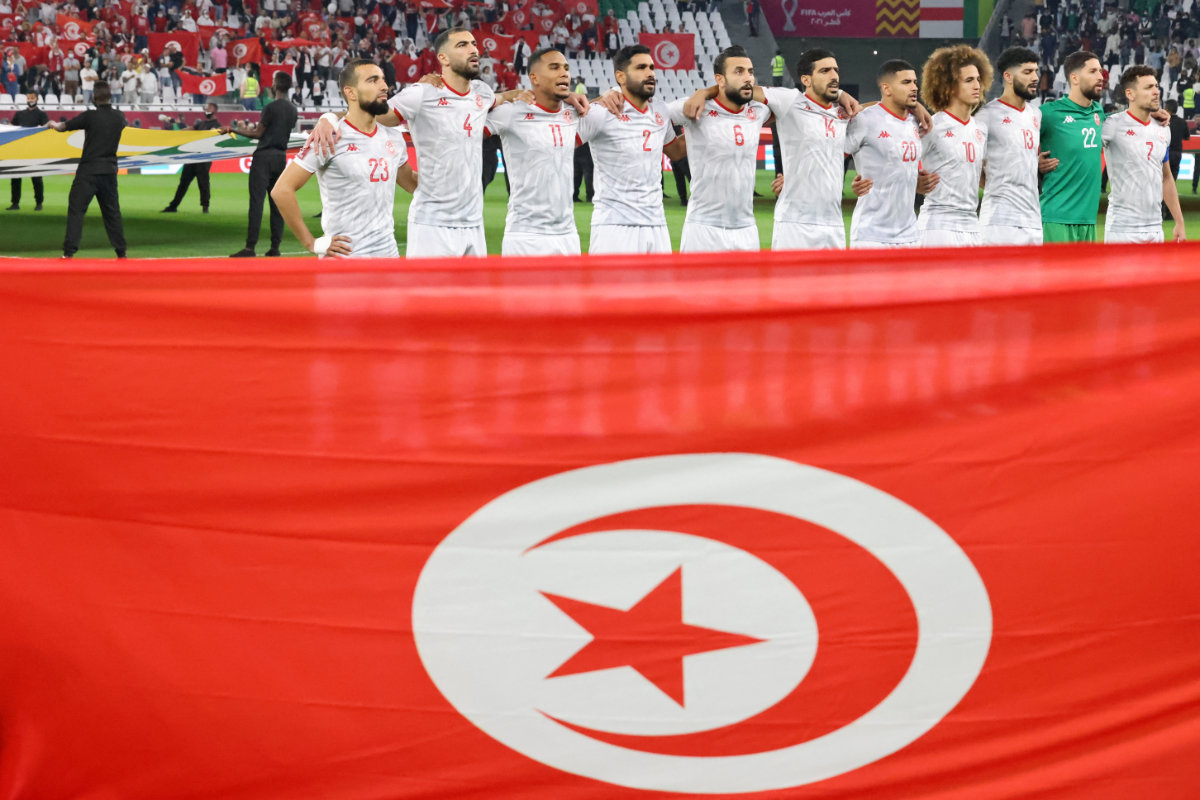
Tunisia's players pose for a group picture during the FIFA Arab Cup 2021 quarter final football match between Tunisia and Oman in Ar-Rayyan on December 10, 2021. (AFP)
It is a far cry from some of the earlier World Cup participations by Arab nations, which were treated with barely concealed condescension by pundits and commentators.
Emirati players who took part in the 1990 World Cup in Italy spoke of the utter lack of knowledge foreign journalists had of the UAE at that point in time.
Often, too, teams did themselves no favors, as with Kuwait in 1982 and Iraq four years later. On the pitch, as off it, those days should be consigned to the past.
Only eight Arab teams have reached the World Cup finals since the first tournament took place in 1930: Egypt, Morocco, Tunisia, Algeria, Kuwait, Iraq, the UAE and Saudi Arabia.
Remarkably, until the hosts take on Ecuador in Qatar 2022’s opening match on Nov. 20, Saudi Arabia remain the last Arab debutants at the World Cup. No new team from the region has managed to qualify since the Green Falcons reached the 1994 FIFA World Cup in the US.
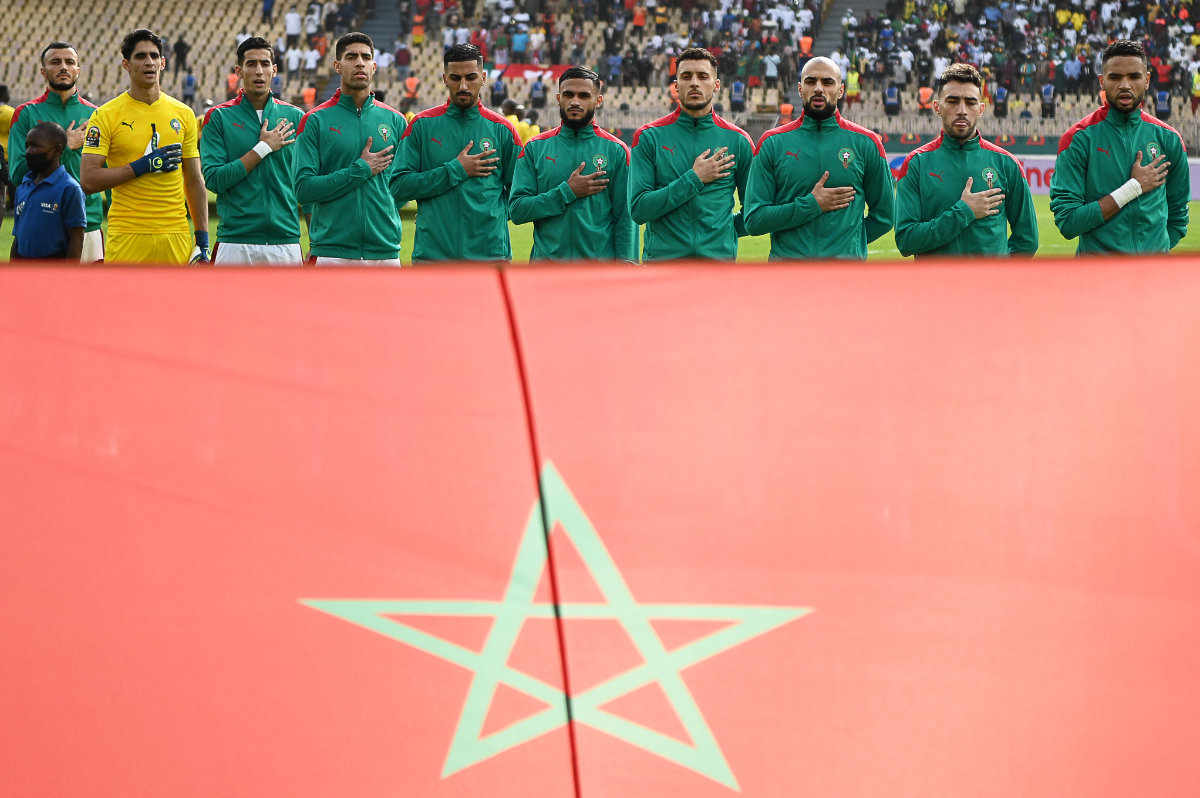
Morocco's players line up behind their national flag during the Africa Cup of Nations 2021 quarter-final football match with Egypt in Yaounde, Cameroon, on January 30, 2022. (AFP)
This means the Arab world has had to rely on the same clutch of nations to carry their hopes over the last three decades. Saudi Arabia went on to play in four more tournaments since their first appearance, while the North African trio of Morocco, Algeria and Tunisia regularly qualify for the finals from the African confederation.
These four nations — Algeria’s shock elimination notwithstanding — no longer dream of qualification but expect it.
With that comes, or should come, the responsibility of performing at a consistently higher level — and winning. The novelty of rubbing shoulders with the world’s best is no longer enough.
When Saudi Arabia take on Messi and his team at the World Cup, the odds, not surprisingly, will be stacked against them.
But then again, that was also the case on June 29, 1994, at RFK Stadium in Washington, D.C. Having earlier lost to the Netherlands and beaten Morocco, the Saudi team went into their final group match against Belgium, still with a chance of progressing to the knockout stages at their first ever World Cup. The bad news was that it was against a formidable Belgium team.
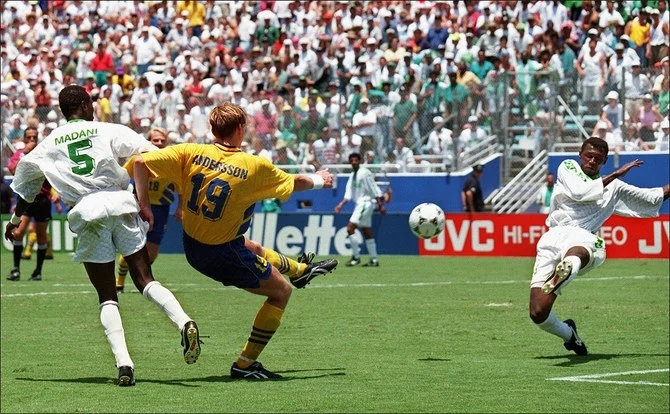
Saudi Arabia's Ahmed Madani tries to stop Swedish striker Kennet Andersson during their World Cup football match on July 3, 1994, in Dallas, Texas. (AFP file)
What happened next would go down as one of the country’s greatest sporting moments, and certainly the most iconic.
Only five minutes into the match, Saudi Arabia’s No. 10 Saeed Al-Owairan received the ball deep in his own half and embarked on a sensational run that laid waste to the Belgian defense, before slotting the ball past the advancing goalkeeper Michel Preud’homme.
It was instantly one of the most spectacular goals in World Cup history, worthy of mention alongside Diego Maradona’s legendary run and finish against England in Mexico in 1986 and Roberto Baggio’s brilliant solo effort for hosts Italy against Czechoslovakia in 1990.
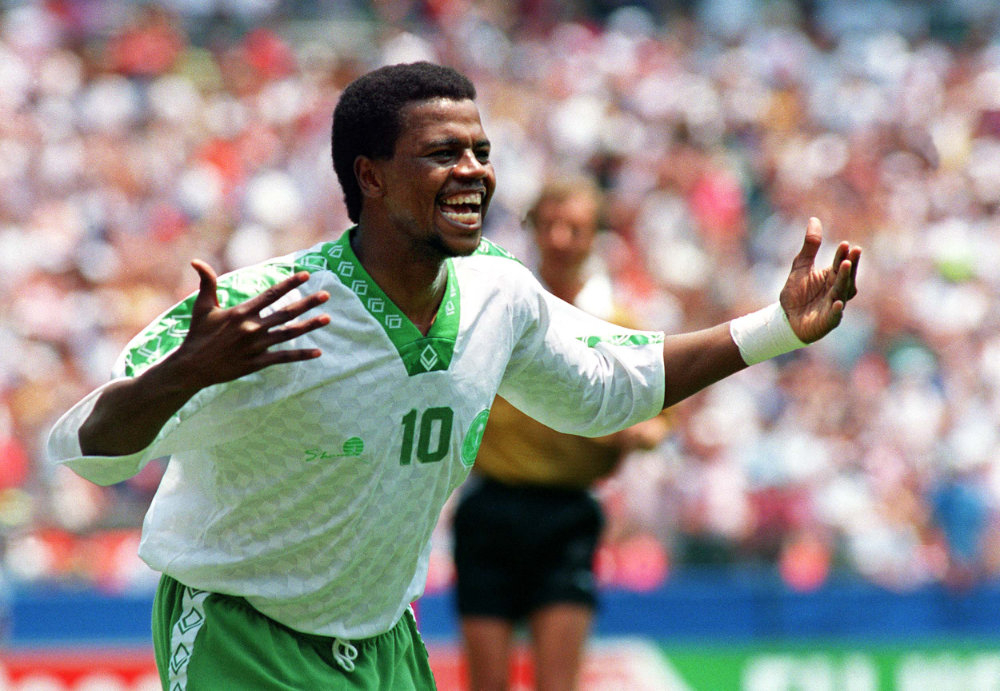
Saeed-Al-Owairan. (AFP)
Al-Owairan’s moment of magic was enough to secure a famous 1-0 win for Saudi and qualification to the round of 16, where, after a valiant effort in the scorching midday heat of Dallas, they went down 3-1 to eventual semifinalists Sweden.
Things would never be better for Saudi Arabia at the World Cup, despite four subsequent participations, the last of which was four years ago.
It is something that Renard and his players will look to put right in Qatar.
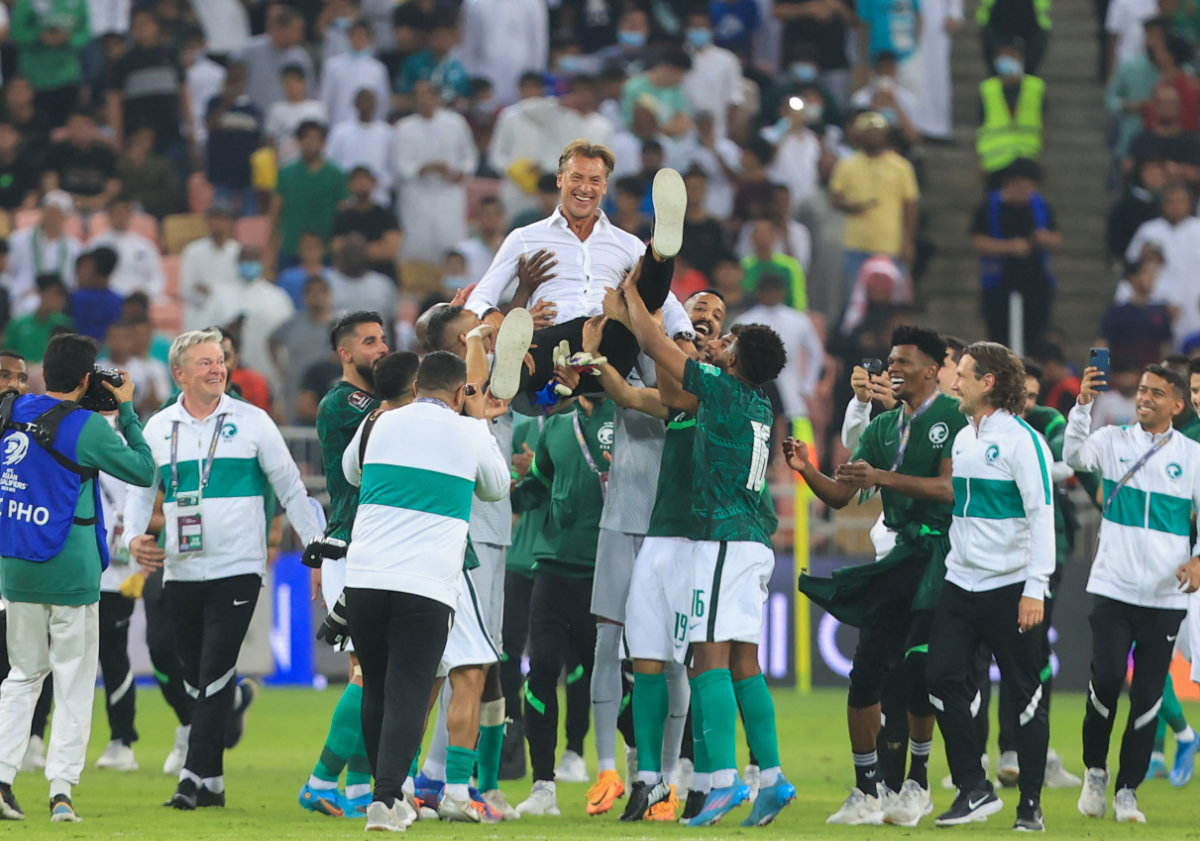
Saudi Arabia's players carry French coach Herve Renard in celebration after beating Australia in their 2022 Qatar World Cup Asian Qualifiers football match in Jeddah on March 29, 2022. (AFP)
Africa’s Arab nations have all been involved in memorable World Cup moments as well, though ones that very often ended in heartbreak.
In 1978, Tunisia, led by legendary coach Abdelmajid Chetali and the outstanding talent of Tarek Diab, defeated reigning CONCACAF Gold Cup champions Mexico 3-1 on their World Cup debut in Argentina.
It was the first-ever win by an Arab nation at the finals of the competition.
The Carthage Eagles even pulled off a 0-0 draw against reigning World Cup winners West Germany, but Tunisia’s Golden Generation just missed out on progress to the last eight.
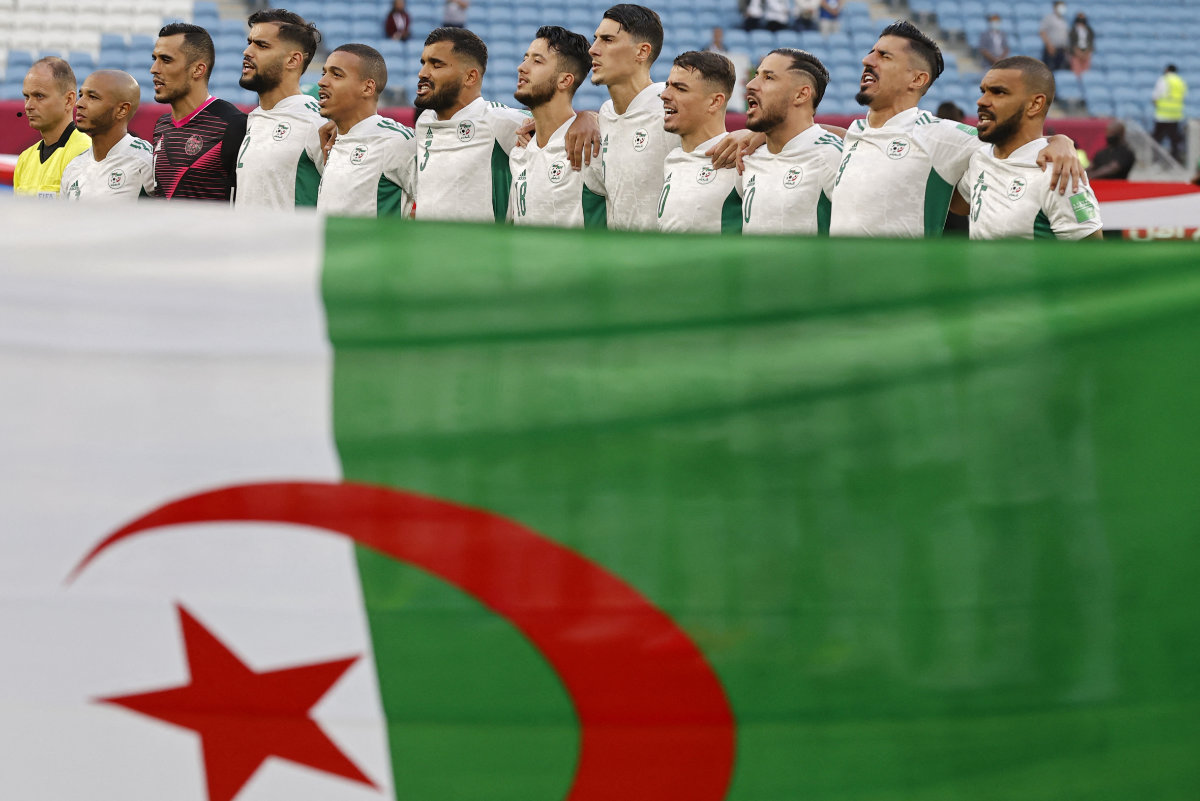
Algeria's players perk themselves up ahead of the FIFA Arab Cup 2021 group D football match with Lebanon at the Al-Janoub Stadium in Al-Wakrah, Qatar, on Dec.4, 2021. (AFP)
Four years later in Spain, Algeria provided one of the World Cup’s greatest-ever shocks when they beat the mighty West Germans 2-1 in Gijon, a result made all the sweeter for the disrespect that the European players and coach had shown to their African opponents in the days before the match.
But Algeria’s participation would end in controversial circumstances when West Germany beat Austria (only) 1-0 in the infamous “Disgrace of Gijon” match, which ensured the European neighbors qualified at the expense of the Arab nation.
The fallout from the scandal led to the stipulation that the last group matches would kick off at the same time to avoid collusion in the future. It was little consolation for the Desert Warriors, who nonetheless returned home as heroes.
But one wonders how such a blatant act of gamesmanship would play out today with blanket, unforgiving coverage and an army of social media users waiting to pounce.
Then there was Morocco’s second World Cup participation in Mexico, 1986. Expected to head home early after being placed in a “Group of Death” with England, Poland and Portugal, the Atlas Lions instead stormed to the top of the group with an astonishing 3-1 win over Portugal in their last match.
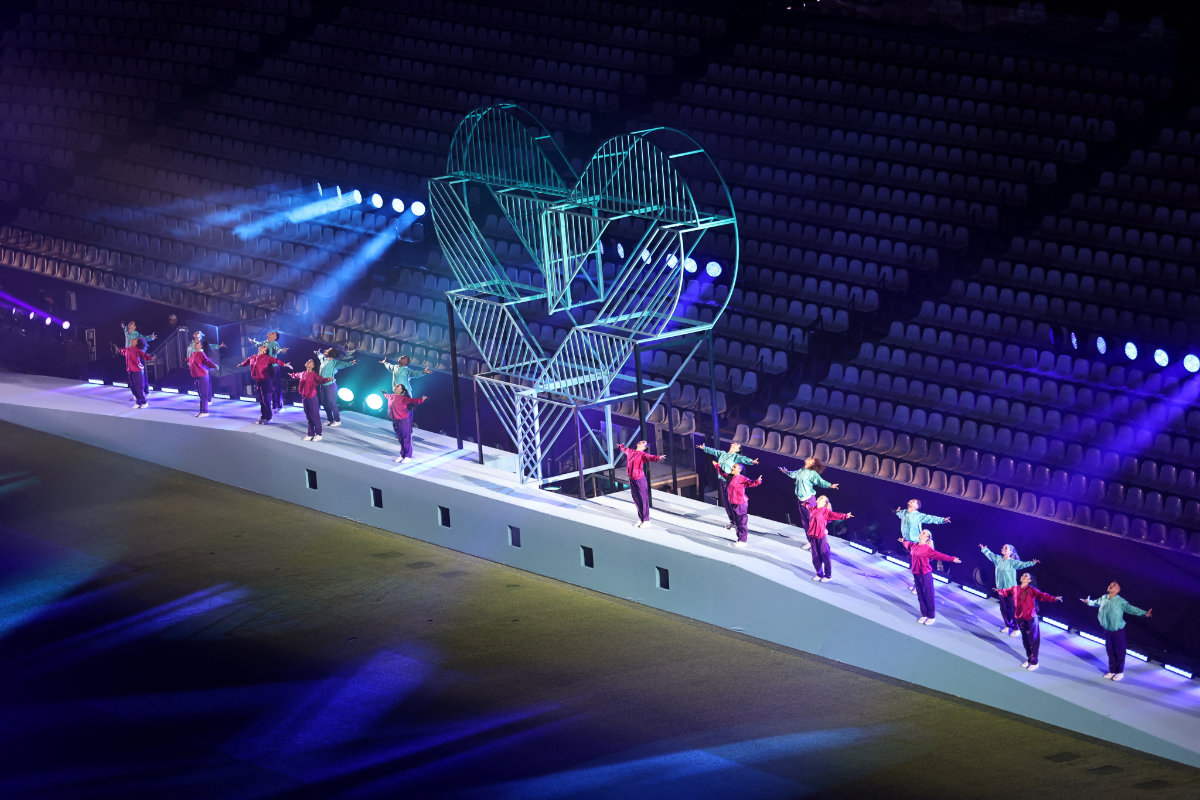
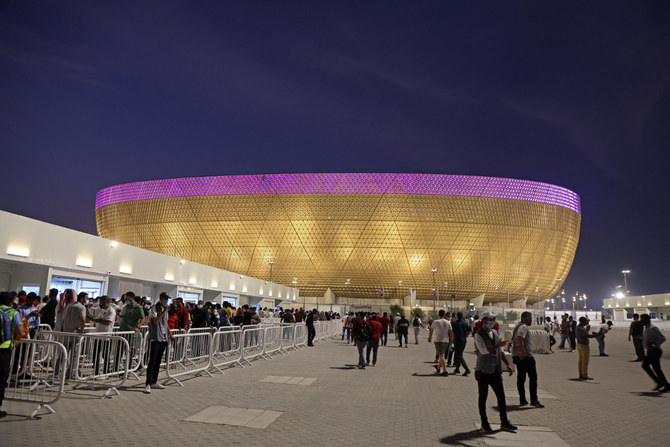
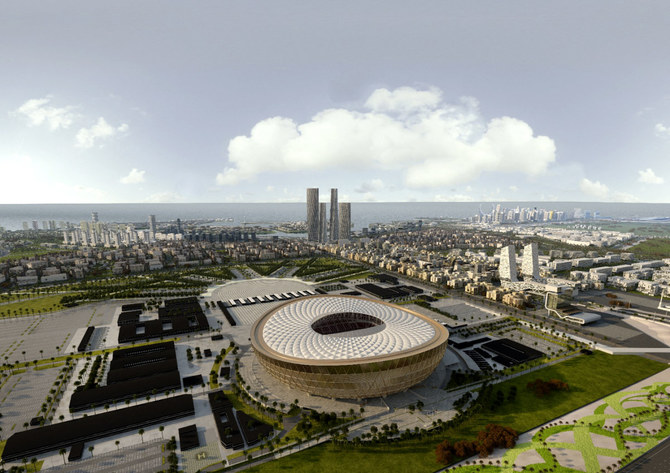
General view of Qatar's Lusail stadium during the volunteers orientation event for the World Cup Qatar 2022. (REUTERS/Mohammed Dabbous)
In the round of 16, Morocco went toe-to-toe with eventual finalists West Germany but succumbed to a late, late winner by Lothar Matthaus. Another tale of so near, yet so far for an Arab nation.
The weight of such history can be paralyzing, but the Arab quartet have a chance of changing the narrative and making their fans proud in Qatar.
And what do these fans want? Nothing more than what every other supporter around the world wants: Goals, wins and football to be proud of. No more excuses.