

EU gas markets brace for price surge after latest Russia gas cut

Lower gas flows from Russia ahead of and following its February invasion of Ukraine have already pushed up European prices by nearly 400 percent over the past year, sending electricity costs soaring.
Short Url
Updated 04 September 2022
Follow

EU gas markets brace for price surge after latest Russia gas cut

LONDON: European gas buyers already grappling with record-high prices face further pain when the markets open on Monday after Russia said one of its main supply pipelines to Europe would remain shut indefinitely, sparking fears over energy rationing.

Lower gas flows from Russia ahead of and following its February invasion of Ukraine have already pushed up European prices by nearly 400 percent over the past year, sending electricity costs soaring.

Europe has accused Russia of weaponizing energy supplies in what Moscow has called an “economic war” with the West over the fallout from the Ukraine conflict, while Moscow blames Western sanctions and technical issues for supply disruptions.

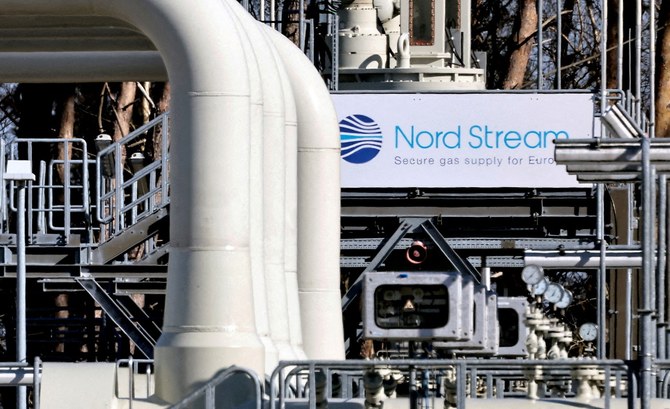
The Nord Stream pipeline, which runs under the Baltic Sea to Germany, historically supplied around a third of the gas exported from Russia to Europe, but was already running at just 20 percent of capacity before flows were halted last week for maintenance.

Expectations were high Russia’s state-controlled energy giant Gazprom would restart flows at 20 percent after the latest stoppage, leading benchmark Dutch TTF gas prices to fall back around 40 percent from Aug. 26’s record high to close at just over €200 per MWh on Friday.

But after Russia scrapped a Saturday deadline for flows to resume, saying it had discovered a fault during maintenance, prices are likely to surge again, analysts said.

“On Friday... the market was already pricing in Nord Stream 1 (NS1) flows coming back,” Energy Aspects gas analyst Leon Izbicki said. “We expect a significantly stronger open for the TTF on Monday.”

Sky-high power costs linked to surging gas prices have already forced some energy-hungry industries, including fertilizer and aluminum makers, to scale back production, and led EU governments to pump billions into schemes to help households.

The impact of the latest cut would depend on Europe’s ability to attract gas from other sources, Jacob Mandel, a senior associate for commodities at Aurora Energy Research, said.

“Supply is hard to come by, and it becomes harder and harder to replace every bit of gas that doesn’t come from Russia,” he said.

Following Russia’s invasion of Ukraine Europe rapidly launched plans to cut its dependence on Russian fuels, switching to alternative suppliers of gas and other fuels and pushing faster deployment of clean energy supplies.

Germany has begun developing liquefied natural gas terminals to enable it to receive gas from global suppliers and move away from Russian gas imports.

“There’s plenty of scope to replace that (Russian) gas with LNG imports for now, but when the weather turns cold and demand starts to pick up in the winter in Europe and Asia, there’s only so much LNG out there that Europe can import,” Mandel said.

Klaus Mueller, president of the Federal Network Agency energy regulator, said in August that even if Germany’s gas stores were 100 percent full, they would be empty in 2.5 months if Russian gas flows were halted completely.

Europe last week met early a target to fill its gas stocks by 80 percent by November. EU stocks are currently 81 percent full, according to Gas Infrastructure Europe data, with Germany’s stores at 85 percent full.

Izbicki said prices would need to reach an average of €400 per MWh between September 2022 and end-October 2023 to encourage enough sellers to send gas to storage for the EU to meet its targets for next year ahead of winter 2023.

Sri Lanka sees scope to expand economic ties with Saudi Arabia, says deputy minister

Updated 8 sec ago
Follow

Sri Lanka sees scope to expand economic ties with Saudi Arabia, says deputy minister

RIYADH: As Saudi Arabia continues to advance diplomatic initiatives and milestones in 2026 with countries around the world, one of the fastest-developing relationships is between the Kingdom and Sri Lanka.

During his visit to Riyadh, Chathuranga Abeysinghe, Sri Lanka’s deputy minister of industry and entrepreneurship development, spoke to Arab News about the bilateral relationship and the sectors it is fostering in the coming year, spanning business cooperation and people-to-people ties.

Abeysinghe described the current relationship between the two countries as still evolving. 

“Currently, I think it’s limited ties, but there are negotiations taking place on a particular investment and trade promotion act agreement … my foreign affairs minister has visited, and they have started the discussions.”

Building on developments in 2025, Abeysinghe noted that “exports from Sri Lanka to Saudi Arabia have increased,” but most of the ties are through the labor market.

“We have about 200,000 Sri Lankans working here, and that has been the most prominent economic activity so far,” he said, before highlighting the renewable energy and minerals sectors as areas with “huge potential” for future collaboration.

Elaborating on renewable energy, Abeysinghe told Arab News that Sri Lanka’s renewable energy potential is 16 times greater than its projected needs even in 2050. “We would like to see how we can make use of that. We are expecting investments to come into this sector because, going forward, green hydrogen will be a key energy source,” he said.

The deputy minister also said there is scope for expanding maritime activities in shipping and ports, as well as tourism, because “we see great potential for Sri Lanka to work with Saudi-based tourists.”

In the IT sector, the minister noted that Saudi Arabia is investing heavily in AI and technology, adding: “We see opportunities for collaboration between our startups and Saudi investors.”

While these key sectors are at the forefront of near-term initiatives, Abeysinghe also pointed to agriculture as a pillar for future cooperation.

“Some of our crops are unique, and we see that the Middle East, especially Saudi Arabia, is focused on food security and authentic food. We have very unique premium agricultural products,” he said, adding that the sector could see strong growth with the right partnerships.

According to Abeysinghe, the potential for these sectors to thrive is also linked to Saudi Arabia’s transformation and strategic positioning.

“What we see from Saudi Arabia’s perspective is strength as a country in terms of driving transformation with a clear vision. We see how changes have taken place both physically and economically in Saudi Arabia,” he said, adding that the past few years have shown that the potential is huge, and there is clearly significant capital that can be tapped into.

A significant portion of that capital comes from the private sector, which Abeysinghe and the Saudi-Sri Lanka Joint Business Council have underscored as a fundamental pillar of the bilateral relationship.

Speaking about the evolving private-sector engagement under the countries’ joint business council, Abeysinghe said: “We, from a government perspective, want to facilitate these two parties to work together, and to see and support the agenda that they will set forth as a council.”

Adding to the discussion on the private sector, he also elaborated on the role of small and medium enterprises, noting that Sri Lanka does not have large corporations and that, by global standards, its companies are either medium or small yet “world class.”

Abeysinghe said partnerships with Saudi brands and large investors could significantly deepen cooperation, particularly by exploring whether some production entities could be based in the Kingdom as it pursues economic diversification beyond oil. “There are opportunities because we have now built expertise,” he added.

Further underscoring Saudi Arabia’s transformation efforts, Abeysinghe pointed to technology as another key area for collaboration, describing it as a sector rich in opportunity because it “doesn’t require large manpower, but it’s about the skills and IP (intellectual property).”

Looking ahead to initiatives planned for the coming year, he told Arab News: “We would like to see G2 (government-to-government) partnerships. We will be sending proposals here and also a targeted approach on certain products that fit the Saudi market, to see more bilateral discussions taking place between the private sector in Sri Lanka and the private sector in Saudi Arabia.”