

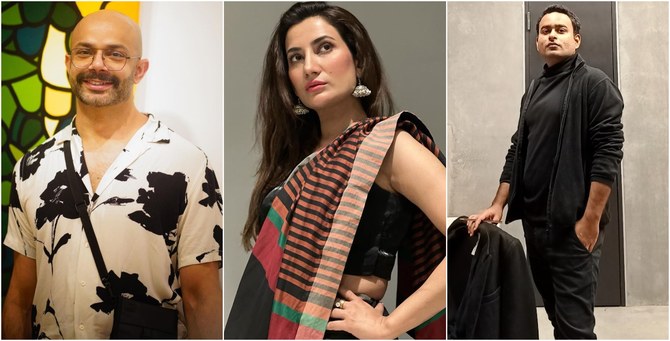

KARACHI: Mahbub Jokhio, a young Pakistani artist who belongs to a small town in southern Sindh province, said last week he was inspired by contemporary art since it helped him reflect on complex issues and raise important questions about life and human assumptions.
While it is not easy to define the genre which became popular toward the end of the last century, contemporary art encourages its followers to use artistic expression to comment on society and deal with abstract issues.
“My work considers the nature of images, their claims to objectivity and ability to manipulate meaning and perception,” Jokhio told Arab News in an interview on Wednesday.
He said he became interested in art while he was still in sixth grade, though he took it up professionally after graduating in fine arts in 2014.
“Working in various mediums, I question image production and reception through subjects ranging from history and religion to love and violence,” he continued. “These investigations often incorporate irony, dark humor and self-referential critiques that locate and decode the image’s capacity to mediate reality.”
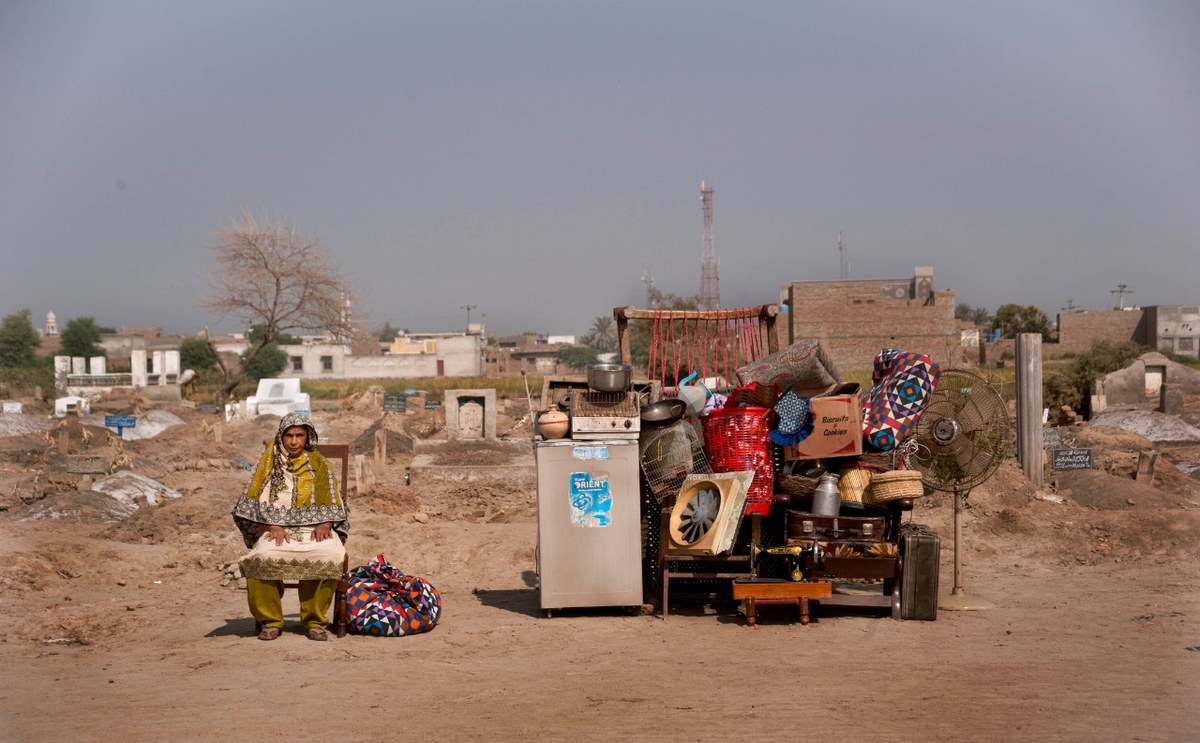
Mahbub Jokhio’s portrait of an old woman at the edge of a graveyard is a digital print which was created in 2016. (Photo courtesy: Mahbub Jokhio)
Jokhio believes artworks should be free for anyone who wants them. His recent project, “Noah’s Dream,” has 24 drawings of extinct fish which he decided to drop at the doorstep of unknown people as gifts.
The work of the young Pakistani artist has also captured significant international attention in recent years. His first solo exhibition, “In the City of Lost Times,” was held in the United Kingdom. He was also awarded Al-Balad Residency by Saudi Arabia’s cultural ministry. Apart from that, he earned a research fellowship at the Lakshmi Mittal Institute at Harvard University and, more recently, another residency in Denmark.
“My practice keeps on changing its subjects with time and place, depending upon what I experience, encounter and observe in the everyday,” he said. “I have never consciously thought about making my work look Pakistani. Rather, I try to make it objectively global enough to be relatable and readable beyond borders.”
Much like Jokhio, Aroosa Rana, a Lahore-based contemporary artist, said she did not like to push regional identity into her craft. She described herself as an “interdisciplinary artist and educator” who mostly comments on politics and society through her work.
“I don’t strategically need to sell my otherness,” she told Arab News. “All the inspiration and information I am gathering is from my surroundings, and its manifestation in my work is bound to happen.”
Rana said she preferred digital media and video art, adding her practice revolved around challenging the construct of the 20th century definition of art itself.
“I am not sure if I have any [signature style] and I think it’s a blessing that I don’t,” she added.
“I made a video in 2020 in which I challenged the very definitions of painting, sculpture, and video – my work was all at the same time,” she continued.
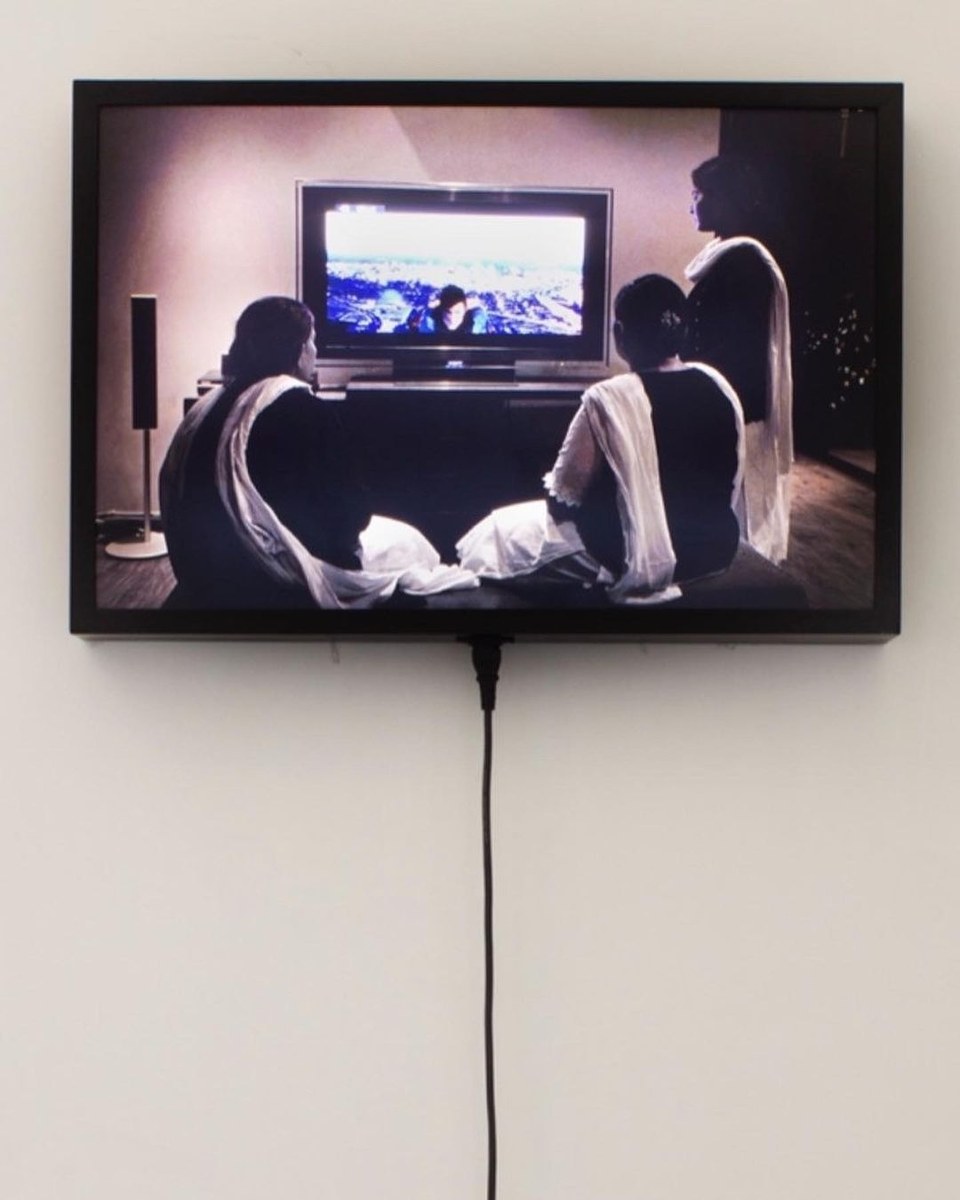
Aroosa Rana’s work is displayed at a group show at Museo capitolare di Atri, Italy, in September 2014. (Photo courtesy: Aroosa Rana)
Rana, who holds an MPhil in Art Education, has exhibited her work at various public and private venues and museums in Italy, Poland, India and Bangladesh. Currently, she is working on her solo exhibition which is scheduled to open on September 13.
“In this new body of work, I am trying to explore the possibilities of making art based on mathematical equation of probability,” she said. “Art does not have boundaries and, in the coming years, it is going to shape up quite differently.”
Another Pakistani visual artist, Ahmer Farooq, is also inspired by contemporary art, though he has carved out a very different niche for himself over the last two decades.
Farooq has developed his own style of calligraphy, saying that he finds Urdu letters “flirtatious and flowy.”
“My work mainly speaks about suppressed sexuality and sexual minority of Pakistan,” he said. “My art depicts how this is a part of our culture but we are trained not to look at it or to even acknowledge the fact that this thing exists in our country. In my work, I use a lot of different kinds of textures and mediums to create that visual feel for the viewer.”
Farooq received his basic art education from Bedford Modern School, England, after which he graduated in Business Studies and completed his MBA. However, he continued to practice art and his first solo show was held at Sanam Taseer’s Art Gallery.
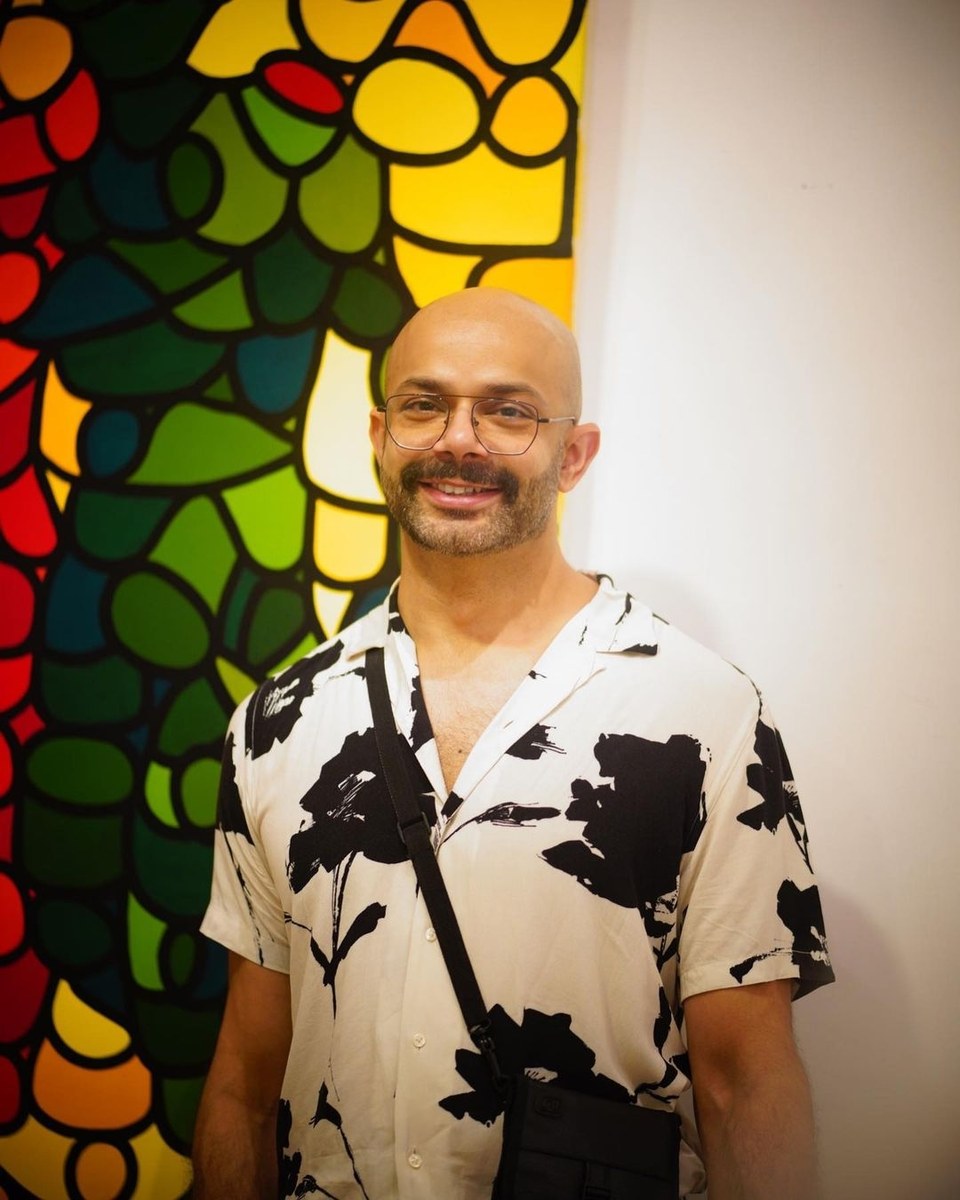
Ahmer Farooq can be seen at his solo show, “Transpose,” at the Ejaz Art Gallery in Lahore, Pakistan, in June 2022. (Photo courtesy: Ahmer Farooq)
He said it was a daylong solo show and everything was sold within a few hours.
“Since then, I have not given away a painting for free, or as a gift,” he said. “I think it’s nice to sell art to people who actually appreciate it.”
The biggest achievement for Farooq was that his creations were displayed next to Andy Warhol and Damien Hirst’s artworks at a gallery in the United States. He said the two artists were “mega stars” and he looked up to them while growing up.
Describing the crux of the message built into his work, he said: “We should let people live the way they want to. Everyone should be able to make their own choices and we should respect that.”


