

Monsha’at offered over 200 training programs to Saudi entrepreneurs as Kingdom bets on SMEs

Short Url
Updated 31 August 2022
Follow

Monsha’at offered over 200 training programs to Saudi entrepreneurs as Kingdom bets on SMEs

  • The Saudi vision is to create suitable job opportunities for its citizens by supporting SME entrepreneurship, privatization and investments in new industries

RIYADH: The Small and Medium Enterprises General Authority, or Monsha’at, has been offering training programs to entrepreneurs to enhance the sector’s contribution to the gross domestic product.

Monsha’at established an online academy in 2020 to support aspiring entrepreneurs and business owners by improving their ability to access markets, manage established enterprises and explore options to grow their businesses. 

The academy offered more than 200 training events, including boot camps, workshops and self-paced e-learning programs.

Its programs include technology and innovation, planning and strategy, sales and marketing, accounting and financial management, human resource, franchise, e-commerce and retail business.

“The circumstances of COVID-19 in the lockdown accelerated the need to have such a platform. So we started as a learning management system, where we get all of our training services in one place,” said Abdulrahman Alotaibi, director of SMEs Training for Capacity Building at Monsha’at. 
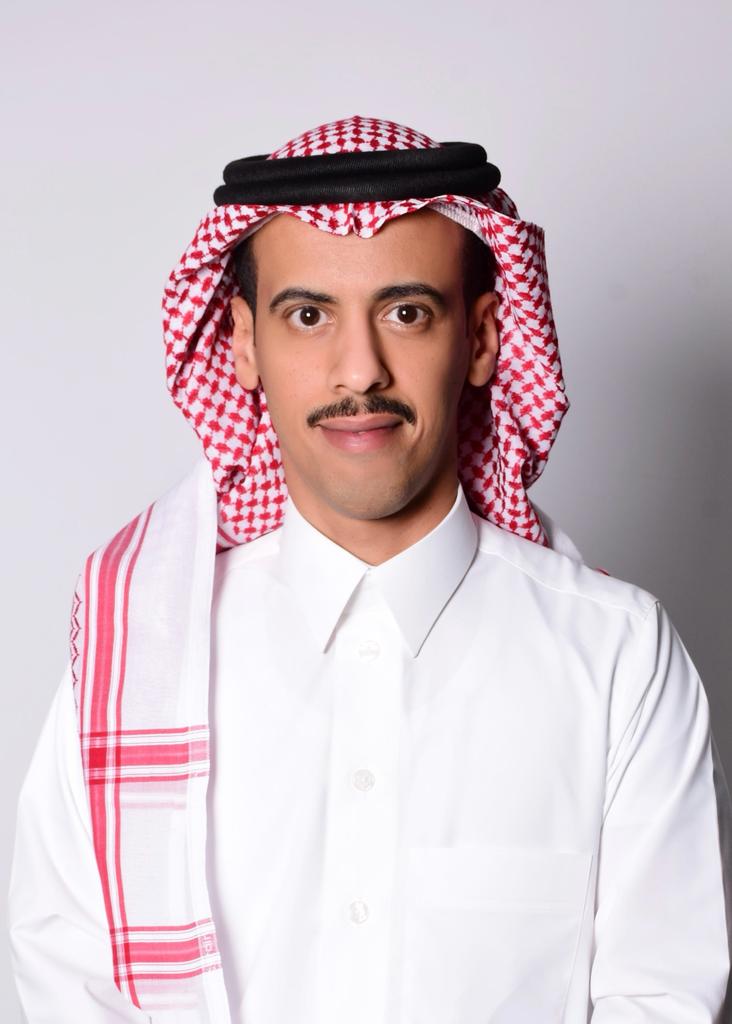


Abdulrahman Alotaibi, director of SMEs Training for Capaity Building at Monsha’at

Alotaibi explained in an interview with Arab News that businesses at the time needed support to survive during the pandemic outbreak.

“We have a group of experts coming into research and identifying the course’s objectives. Then we start to develop the educational content. We do the research; we rely on good references,” he added.

According to Alotaibi, startups face challenges in accessing finance and generating customers. 

“Some challenges are related to human resources and finding the right team, and some have difficulties when it comes to managing the operation. I believe the main challenges are accessing finance and reaching out to customers,” he added.

Saif Alshammari is one of the thousands of beneficiaries of this academy. He enrolled with around 20 other participants earlier this year in courses involving contract formulations, project budgeting and estimation. 
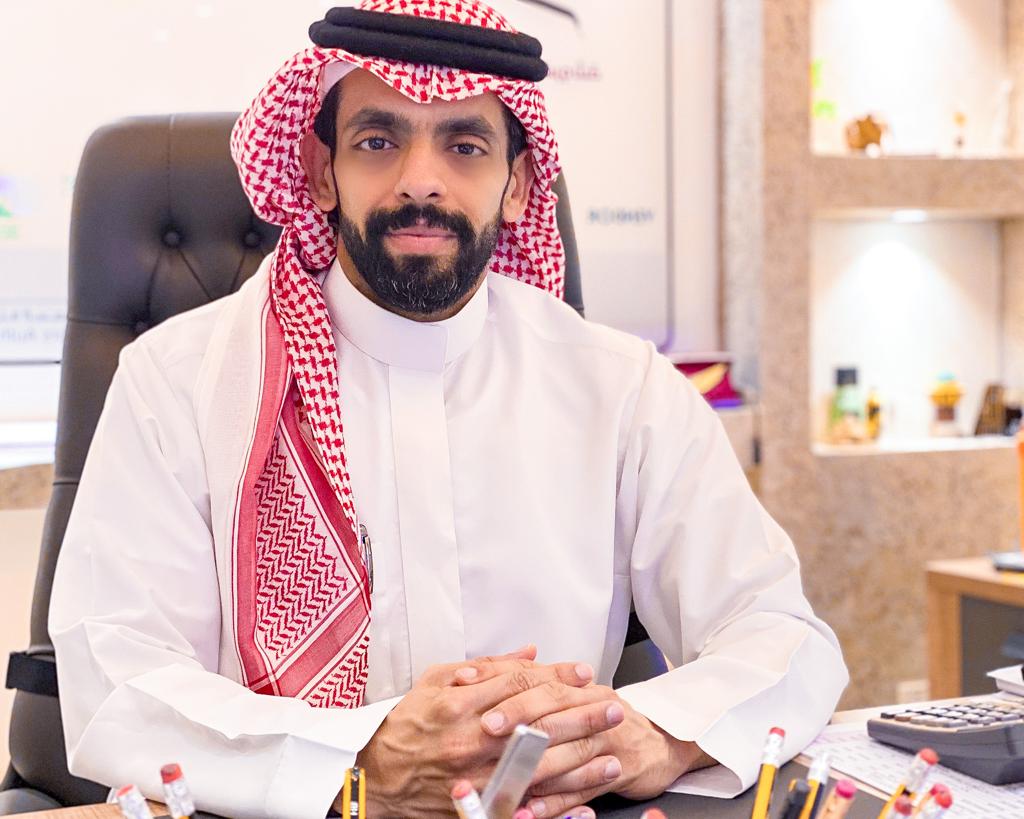


Saif Alshammari, founder and GM of RAK Construction

“The program developed the capability of entrepreneurs. It elaborated the concept of financial management, which is the heart of any business. We were taught about the types of commercial contracts, the differences between them, and which of them you should accept,” he added in an interview with Arab News.

Alshammari founded RAK Construction in 2007 in the city of Al Jubail, the eastern province of the Kingdom.

“I have a long experience managing my company, but Monsha’at gave me a theoretical aspect of management and added a new wave of operation,” he said.

Monsha’at enabled him to register his establishment as a vendor for a leading company in the sector called Thabat.

“Other participants and I were brought up on an open discussion with Thabat, and eventually we got approved vendors, and hopefully we will be rewarded with some projects soon,” Alshammari said.

Increasing roles for women

According to Monsha’at’s 2022 quarterly report, the Kingdom’s private sector has been a major beneficiary of the influx of dynamic female workers, with many female entrepreneurs grabbing new opportunities in the accommodation and food, wholesale and retail, and health and professional support service industries. 

Monsha’at works to develop policies and programs that empower women entrepreneurs across different industries. 

A group of female college entrepreneurs spoke to Arab News about their experience with Monsha’at regarding their next project.

Moodhy Aljouali and her colleagues are currently launching a grammar and spelling error detection and correction system for the Arabic language named Mubeen. 



Moodhy Aljouali, co-founder of Mubeen

“It uses artificial intelligence techniques such as deep learning and natural language processing for editing and correcting any mistakes in the text. It will produce high quality and error-free text,” Moodhy, co-founder of Mubeen, told Arab News.

Majoring in artificial intelligence, Moodhy is in her final semester at the Imam Abdulrahman Bin Faisal University in Riyadh. 

“We are working on improving what we have, and then create the website and publish it in two months,” she said.

Moodhy and four of her colleagues were part of a program run by Monsha’at called the University Entrepreneurship Camps, a competition where the participants get to pitch their projects.

According to Moodhy, their project was awarded the first prize, and Monsha’at offered them a workspace and a consultation from domain experts.

“We are planning to have courses in business from Monsha’at since all the team members only have technology backgrounds,” she added.

Kingdom’s vision for SMEs

Established in 2016 under the Vision 2030 blueprint, Monsha’at’s objective is to create an inspiring environment for SMEs to grow, unlock their potential and create a supportive entrepreneurial community.

Its SME Monitor follows an ecosystem that observes the ongoing progress of the Kingdom’s SME sector, issuing new statistics and case studies that support their observations.

“SMEs in the Kingdom are not yet major contributors to the country’s gross domestic product, especially compared to advanced economies,” said the Vision 2030 document.

The Saudi vision is to create suitable job opportunities for its citizens by supporting SME entrepreneurship, privatization and investments in new industries. 

SMEs will play a significant role in achieving Saudi Arabia’s objectives of lowering the unemployment rate from 11.6 percent to 7 percent, increasing women’s participation in the workforce from 22 percent to 30 percent and expanding SME contribution to 35 percent of the GDP by 2030.


Artificial intelligence is transitioning into a ‘digital employee’

Updated 27 February 2026
Follow

Artificial intelligence is transitioning into a ‘digital employee’

  • AI can be an effective tool, business leaders tell Arab News
  • Not about jobs, but ‘convergence of human capital and AI’

RIYADH:  Artificial intelligence is fundamentally reshaping the world of work, transitioning from a supporting tool to an active partner that is radically changing the nature of professions and productivity standards.

Amidst the current global transformations, an active regional digital environment is emerging.

This is being led by Saudi Arabia through Vision 2030 and massive investments in smart infrastructure, providing a living model for studying the implications of this partnership between humans and machines on the future of work in the region.

Arab News spoke to various business leaders about the emerging shape of the sector.

Salem Bagami, co-founder of Metatalent, said the ideal relationship between humans and machines at work should be complementary and collaborative.

Humans would bring creativity, emotional intelligence, and complex decision-making, while machines excel at processing big data and performing repetitive, precise tasks.

He believes that this type of balanced partnership would lead to unprecedented productivity and innovation.

While machines excel at processing big data and performing repetitive, precise tasks, humans would bring creativity, emotional intelligence, and complex decision-making. (Supplied)

Mohammad Al-Jallad, chief technologist and director at HPE, said AI has gone beyond being merely an executive tool to becoming a “digital employee” entrusted with automating routine tasks and providing insights based on data analysis.

He believes that the real opportunity lies not in the debate over job replacement, but in “the convergence of human capital and artificial intelligence.”

AI should augment human teams by taking on menial and routine tasks, enabling employees to focus on critical thinking, creativity, and ethical reasoning, significantly improving operational results.

Bagami also emphasized the complementary nature of this partnership. “The ideal relationship between humans and machines at work is one of collaboration, where each complements the others.”

He explained that humans bring creativity, emotional intelligence, and nuanced decision-making, while machines excel at processing big data and performing repetitive tasks efficiently, leading to increased productivity and innovation.

Opinion

This section contains relevant reference points, placed in (Opinion field)

Salem Alanazi, chairman of Jathwa Technology Co., notes a significant trend among Saudi Arabia companies toward using AI applications to provide faster services to customers at lower costs.

The emergence of the “virtual employee” available around the clock has eliminated the need for some traditional jobs in specific sectors.

Alanazi warns that some companies’ reluctance to adopt AI may expose them to real risks. “All those who hesitated to benefit from AI applications have a lack of understanding of these technologies.”

He said those who adopt these technologies will be able to offer lower-cost, higher-quality services, which will affect the market position of companies that lag behind.

Ali Aljumhour, CEO of VALUE Consultancy, said that the transition of AI into a partner has reshaped the list of most in-demand skills in the job market.

Skills such as “prompt engineering,” “human-machine integration,” and “digital ethics” are becoming increasingly important.

He added that AI has become an instantly available “technical knowledge base,” shifting the criteria for professional distinction toward those capable of smart interaction with these technologies.

In terms of ethics, transparency, and trust, Alanazi points to the complexities of global AI governance, where legislation overlaps and evolves rapidly to keep pace with potential risks, particularly in the areas of cybersecurity and privacy.

Ali Aljumhour, CEO of VALUE Consultancy. (Supplied)

Al-Jallad emphasizes this crucial dimension, noting that providing responsible and reliable AI solutions that meet the highest standards of transparency is a key priority, especially in regulated sectors.

Bagami believes there should be basic standards for the ethical use of Al, emphasizing the need for transparency, accountability, and fairness, along with using diverse data sets to prevent bias and protect privacy.

He believes that building trust between humans and machines requires clear explanations of how systems work, giving users the opportunity to provide feedback and conducting periodic performance reviews.

On performance evaluation, Aljumhour said: “I expect radical changes in standards, shifting from measuring individual effort to evaluating the quality of the partnership between humans and machines.”

There should be a focus on the quality of inputs provided to intelligent systems, the accuracy of review and modification, and complex decision-making based on outputs.

He warns, however, of new risks that may arise, such as over-reliance on AI or difficulty in determining responsibility for mistakes.

In the employment sector, Aljumhour expects fundamental changes in standards.

There will be questions and tests focusing on measuring skills in dealing with AI, such as asking candidates about their experiences of collaborating with these systems, or testing their ability to formulate effective requests for complex tasks.

Aljumhour identifies significant human challenges in this transition, with “fear, loss of power, and exclusivity of knowledge” being the biggest concerns for experienced employees.